Is a Whole-Home Surge Protector Worth It? Everything Colorado Homeowners Need to Know
You probably don't think much about power surges.
After all, your lights turn on. Your TV works. Your refrigerator hums along in the background. Everything seems fine.
Until one day it isn't.
Maybe a summer thunderstorm rolls through Colorado Springs. The power flickers a few times, then comes back on. Everything appears normal—until your microwave won't turn on, your garage door opener stops responding, or your HVAC system suddenly needs an expensive repair.
Most homeowners assume a power surge is a dramatic event that instantly destroys electronics. In reality, most surges are small, happen without you noticing, and slowly shorten the lifespan of the appliances and systems you rely on every day.
That's why more homeowners are asking an important question:
Is a whole-home surge protector actually worth it?
For many homes, the answer is yes.
Considering how much we rely on electronics—from smart thermostats and appliances to HVAC systems, home offices, and electric vehicle chargers—protecting your home's electrical system has never been more important.
Let's take a closer look at what whole-home surge protectors do, how they work, and whether installing one is the right investment for your home.
What Is a Whole-Home Surge Protector?
A whole-home surge protector is a device installed directly at your home's electrical panel.
Its job is simple:
Protect your home's electrical system from damaging voltage spikes before they reach your appliances and electronics.
Think of it as a gatekeeper.
When excess voltage enters your home, the surge protector redirects that energy safely to the ground instead of allowing it to travel through your electrical system.
Unlike individual power strips, which only protect the devices plugged into them, a whole-home surge protector helps safeguard virtually everything connected to your home's electrical panel.
That includes:
- HVAC equipment
- Refrigerators
- Ovens and ranges
- Dishwashers
- Washing machines
- Dryers
- Garage door openers
- Televisions
- Computers
- Wi-Fi equipment
- Smart home devices
- Lighting circuits
- Security systems
- Electric vehicle chargers
It's one of those upgrades homeowners rarely think about—until they need it.
What Causes Power Surges?
Many people immediately think of lightning.
While lightning can absolutely create massive surges, it's actually not the most common cause.
In fact, most power surges originate much closer to home.
Common causes include:
Large Appliances Cycling On and Off
Every time major appliances start up, they create small electrical fluctuations.
Examples include:
- Air conditioners
- Refrigerators
- Heat pumps
- Sump pumps
- Well pumps
- Compressors
These tiny surges happen regularly.
Individually, they're usually harmless.
Over years of operation, however, repeated surges can slowly wear down sensitive electronics.
Utility Company Grid Switching
Power companies routinely perform maintenance and switching operations.
When electricity is restored after an outage—or when the grid shifts power distribution—temporary voltage spikes can occur.
Most homeowners never notice them.
Your electronics do.
Lightning Strikes
Although less frequent, lightning remains one of the most powerful sources of electrical surges.
A nearby strike doesn't have to hit your home directly.
Electrical energy can travel through utility lines and create damaging voltage spikes.
Colorado's summer thunderstorms make this a real concern for local homeowners.
Faulty Wiring
Loose or aging electrical connections can also contribute to voltage irregularities.
While these situations aren't technically the same as external surges, they can still damage equipment over time.
Are Small Power Surges Really a Problem?
Absolutely.
This surprises many homeowners.
People often imagine one catastrophic event.
In reality, repeated small surges are often the bigger issue.
Imagine bending a paper clip.
One bend doesn't break it.
Repeated bends eventually do.
Electronics work similarly.
Every small voltage spike places stress on delicate internal components.
Over months and years, that cumulative damage may shorten the lifespan of:
- Refrigerators
- HVAC systems
- Smart appliances
- Computers
- Televisions
- Routers
- Home automation equipment
The appliance may not fail today.
It may simply fail years earlier than expected.
Today's Homes Have More Electronics Than Ever
Twenty years ago, protecting a television and desktop computer may have been enough.
Today's homes are completely different.
Many households now rely on dozens of connected devices.
Think about everything plugged into your home:
- Smart thermostats
- Video doorbells
- Security cameras
- Wi-Fi routers
- Streaming devices
- Gaming systems
- Smart refrigerators
- Microwave ovens
- Electric ranges
- HVAC control boards
- Garage door openers
- USB charging stations
- Home office equipment
- Smart lighting
- Voice assistants
Each of these contains sensitive electronics.
Many also contain expensive circuit boards.
Replacing a control board inside a furnace or air conditioner can cost hundreds—or even thousands—of dollars.
Protecting those systems starts looking like a smart investment.
Isn't a Surge Protector Power Strip Enough?
This is probably the biggest misconception.
Power strips and whole-home surge protectors serve different purposes.
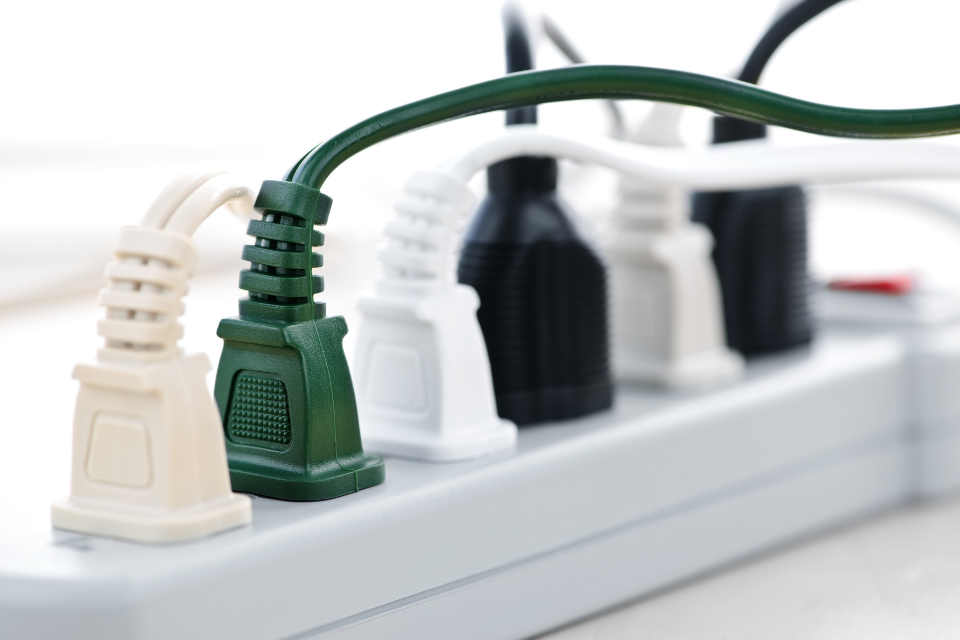
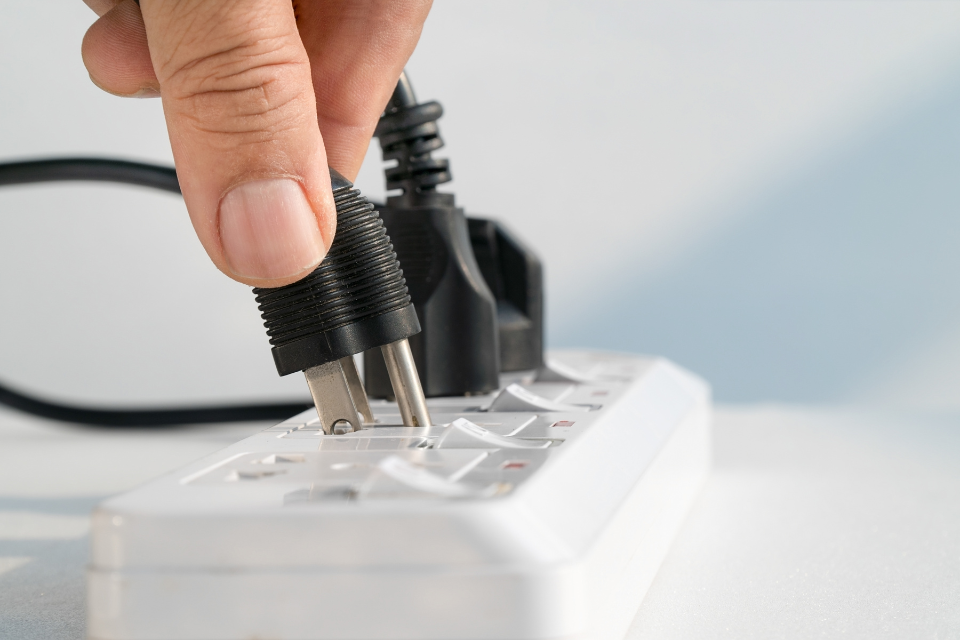
A surge-protecting power strip provides localized protection for devices plugged directly into it.
Examples include:
- Computers
- TVs
- Game consoles
A whole-home surge protector protects your home's electrical system at the source.
That means protection extends far beyond the outlets in your living room.
Many homeowners actually benefit from using both.
The whole-home protector provides the first line of defense.
Quality point-of-use surge protectors offer additional protection for especially sensitive electronics.
What Can a Whole-Home Surge Protector Help Protect?
Homeowners are often surprised by how many expensive systems depend on modern electronics.
Potentially protected equipment includes:
HVAC Systems
Modern furnaces and air conditioners contain sophisticated circuit boards.
These components are expensive to replace.
Kitchen Appliances
Today's appliances function more like computers than mechanical machines.
Refrigerators, dishwashers, ovens, and microwaves all rely on electronic controls.
Voltage spikes can damage these components without affecting the appliance immediately.
Laundry Equipment
High-efficiency washers and dryers also depend on electronic control boards.
Replacing these components can become surprisingly expensive.
Smart Home Technology
As homes become increasingly connected, surge protection becomes even more valuable.
Devices include:
- Smart thermostats
- Security systems
- Cameras
- Smart switches
- Wi-Fi networks
Many homeowners don't realize just how many devices rely on sensitive electronics until they start counting.
Home Office Equipment
Working from home has become increasingly common.
Protecting:
- Computers
- Monitors
- Networking equipment
- Printers
helps reduce the risk of unexpected interruptions or equipment replacement.
How Long Does a Whole-Home Surge Protector Last?
Like any protective device, surge protectors don't last forever.
Every surge they absorb slightly reduces their remaining capacity.
Most quality units provide years of protection under normal conditions.
However, lifespan depends on factors including:
- Number of surges experienced
- Severity of surges
- Local weather conditions
- Overall electrical activity
Some units include indicator lights that show whether protection remains active.
Routine electrical inspections can also verify proper operation.
Is a Whole-Home Surge Protector Worth the Cost?
Consider what you're protecting.
One HVAC repair.
One refrigerator control board.
One damaged television.
One garage door opener.
One home office computer.
The combined value of these systems often reaches tens of thousands of dollars.
Compared to that investment, adding whole-home surge protection is relatively inexpensive.
For many homeowners, it's less about preventing one massive disaster and more about protecting everyday investments from gradual electrical wear.
That's where the real value often lies.
Do New Homes Need Whole-Home Surge Protectors?
Many homeowners assume surge protection is only necessary for older homes.
Actually, newer homes often benefit the most.
Why?
Because today's homes contain far more sensitive electronics than homes built even 15 years ago.
Modern electrical systems power:
- Smart appliances
- Wi-Fi-connected devices
- HVAC control boards
- Tankless water heaters
- Electric vehicle chargers
- Whole-home generators
- Security systems
- Smart lighting
- Home automation systems
While newer homes typically have updated electrical panels, they aren't immune to voltage spikes.
A modern electrical system still experiences surges from:
- Utility company switching
- Large appliances cycling on and off
- Lightning
- Neighborhood power outages
- Electrical grid fluctuations
In other words, a newer home may actually have more expensive electronics to protect.

Signs Your Home Could Benefit From a Whole-Home Surge Protector
Not every homeowner thinks about surge protection until after something breaks.
Instead of waiting, ask yourself a few simple questions.
Do you own expensive appliances?
If replacing your refrigerator, furnace, air conditioner, washer, dryer, or oven would strain your budget, surge protection may make sense.
Do you work from home?
Laptops.
Monitors.
Networking equipment.
Wi-Fi systems.
Losing these unexpectedly isn't just inconvenient—it can interrupt your livelihood.
Have you invested in smart home technology?
Today's homes commonly include:
- Smart locks
- Doorbell cameras
- Voice assistants
- Security systems
- Smart thermostats
- Automated lighting
Every connected device relies on sensitive electronic components.
Do thunderstorms frequently affect your neighborhood?
Colorado homeowners know weather changes quickly.
Summer thunderstorms can arrive with little warning.
Even when lightning doesn't directly strike your home, nearby electrical activity may create damaging voltage spikes.
Have you experienced power outages?
When electricity returns after an outage, voltage fluctuations can occur.
These brief spikes may damage electronics without immediately causing noticeable problems.
Are You Installing an EV Charger?
Electric vehicle ownership continues to grow.
Many homeowners are adding Level 2 charging stations in their garages.
These chargers represent another significant electrical investment worth protecting.
What Doesn't a Whole-Home Surge Protector Protect Against?
It's important to understand what surge protection is—and isn't.
A whole-home surge protector helps defend against voltage spikes.
It does not:
- Restore power during an outage
- Act as a backup generator
- Replace proper grounding
- Fix faulty wiring
- Protect against every possible electrical event
Think of it as one part of a complete electrical protection strategy.
Whole-Home Surge Protector vs. Generator
This is a common question.
Homeowners sometimes confuse the two because both involve protecting the home during electrical events.
The reality is they're designed for completely different purposes.
A whole-home surge protector helps prevent damage from sudden voltage spikes.
A whole-home generator supplies electricity when utility power is unavailable.
One protects your equipment.
The other keeps your home running.
In many homes, the two work together.
If you're considering adding backup power, surge protection can help safeguard both your home's electrical system and the equipment connected to it.
Everything You Need to Know About a Whole-Home Generator
Does Homeowner's Insurance Cover Power Surge Damage?
The answer depends on your insurance policy.
Some policies may cover certain types of electrical damage.
Others may have limitations, exclusions, or deductibles.
Even when damage is covered, homeowners still face:
- Insurance claims
- Deductibles
- Equipment replacement delays
- Temporary inconvenience
Preventing damage is often easier than dealing with the aftermath.
If you're unsure about your coverage, it's worth reviewing your policy with your insurance provider.
Common Myths About Whole-Home Surge Protectors
Myth #1: "I Have Power Strips."
Power strips protect individual outlets.
Whole-home surge protectors protect your home's electrical system at the panel.
They're designed for different jobs.
Myth #2: "I've Never Had a Surge."
Actually, you probably have.
Most surges are too small to notice.
Your electronics notice them—even if you don't.
Myth #3: "Only Lightning Causes Surges."
Lightning is only one possible source.
The majority of surges come from everyday electrical activity inside or near your home.
Myth #4: "They're Only for Large Homes."
Home size isn't the deciding factor.
The number and value of electronics matter much more.
Even modest homes contain thousands of dollars in electrical equipment.
Myth #5: "Surge Protection Is Too Expensive."
When homeowners compare installation costs to replacing:
- HVAC circuit boards
- Refrigerators
- Smart appliances
- Electronics
- Garage door openers
the investment often becomes much easier to justify.
Why Whole-Home Surge Protection Makes Sense in Colorado
Colorado presents unique challenges for homeowners.
Frequent thunderstorms.
Lightning activity.
Heavy snow.
Strong winds.
Rapid weather changes.
These weather patterns don't just affect roofs and siding.
They also place stress on electrical infrastructure.
That's one reason many Colorado homeowners choose to invest in preventative upgrades rather than waiting for problems to occur.
Other Ways to Protect Your Home's Electrical System
Whole-home surge protection works best as part of a broader maintenance plan.
Homeowners should also consider:
- Scheduling periodic electrical inspections
- Replacing damaged outlets
- Updating aging electrical panels when necessary
- Using quality surge-protecting power strips for sensitive electronics
- Keeping HVAC equipment maintained
- Addressing electrical issues promptly
Preventative maintenance almost always costs less than emergency repairs.
What Home Maintenance Should I Do Every Month?
Should You Install a Whole-Home Surge Protector Yourself?
Because surge protectors connect directly to your home's electrical panel, installation should be performed by a licensed electrician.
Proper installation helps ensure:
- Safe operation
- Correct grounding
- Manufacturer compliance
- Reliable protection
Electrical work isn't an area where homeowners should guess.
Professional installation provides peace of mind that the system is working as intended.
Frequently Asked Questions
Will a whole-home surge protector protect every outlet?
It helps protect the electrical system supplying your outlets, but some highly sensitive electronics may still benefit from additional point-of-use surge protection.
Can a power surge damage appliances without me noticing?
Yes.
Some surges cause immediate failure.
Others gradually reduce the lifespan of electronic components over time.
How often should a surge protector be replaced?
It depends on the model and how many surges it has absorbed.
Many quality units last for years, but periodic inspections can confirm they're still functioning properly.
Can surge protection help protect my HVAC system?
Yes.
Modern heating and cooling equipment contains sensitive electronics that can be vulnerable to voltage spikes.
Is surge protection worth it if I've never had a problem?
Many homeowners install surge protection before problems occur.
Like smoke detectors or seatbelts, it's designed to reduce risk—not respond after damage has already happened.
Final Thoughts
Most homeowners don't think about electrical surges until something expensive stops working.
Unfortunately, by then, the damage has already been done.
A whole-home surge protector is one of those upgrades you rarely see—but one that quietly works behind the scenes every day.
It helps protect the appliances, electronics, and systems your family relies on, whether it's your HVAC equipment, kitchen appliances, home office, smart devices, or security system.
Is it the right investment for every home?
That depends on your electrical system, your home's equipment, and your priorities.
But for many Colorado homeowners, the cost of adding surge protection is small compared to the value of everything it's designed to protect.
At HOMEfix, we believe the best home improvements aren't always the most noticeable.
Sometimes they're the ones that help prevent costly surprises before they happen.
Whether you're upgrading your electrical system, remodeling your home, installing a whole-home generator, or simply looking for ways to better protect your investment, our licensed electricians are here to help you make informed decisions that keep your home safe, efficient, and ready for whatever Colorado weather brings.