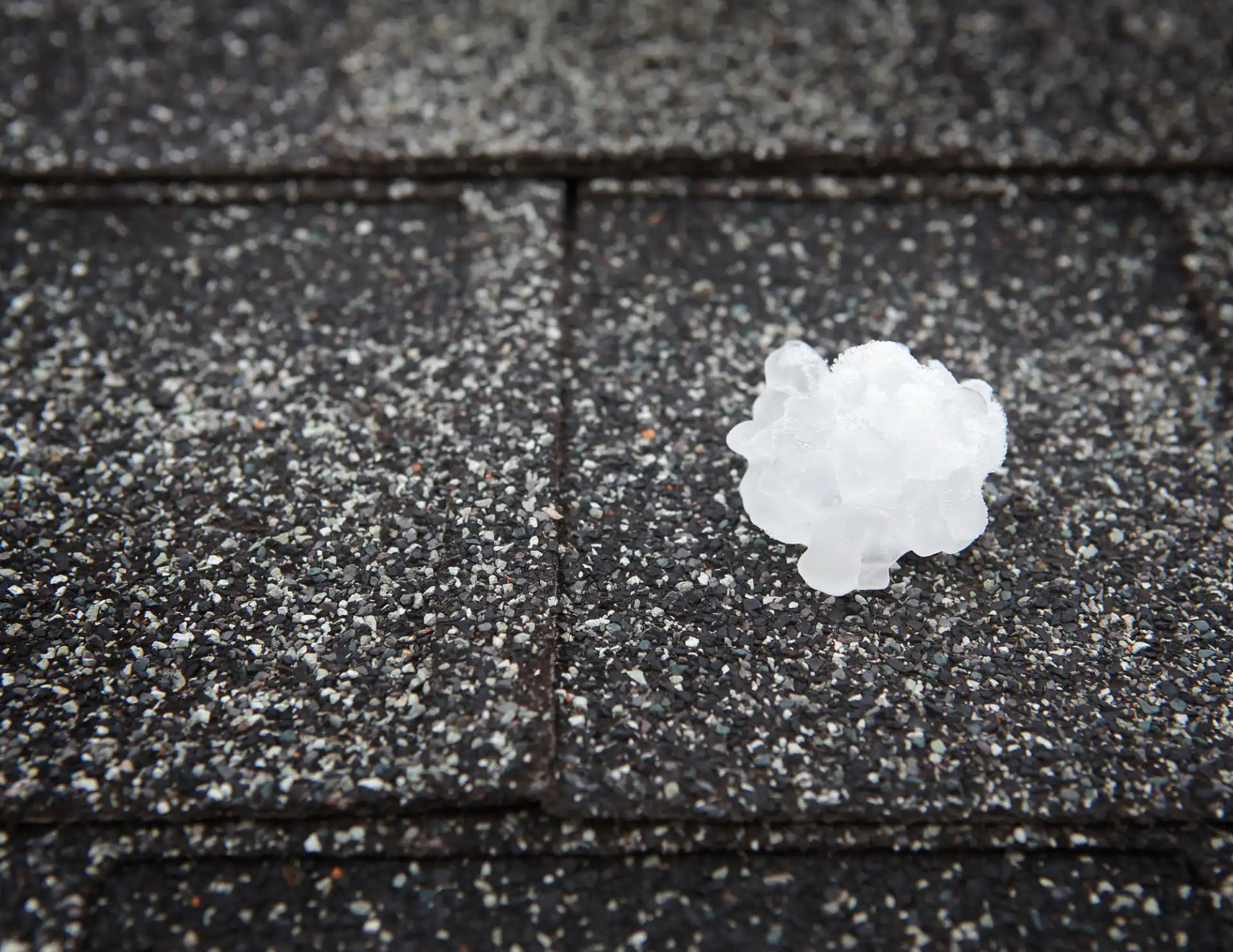
Every year, homeowners in Colorado Springs brace themselves for hail season.
You hear the forecast. The sky darkens. The storm rolls through. Ice pellets hammer your roof, gutters, siding, windows, and landscaping. Then the sun comes back out, the storm passes, and life goes on.
At least that's what most homeowners hope.
The problem is that hail damage doesn't always announce itself.
You don't need a hole in your roof or water pouring through the ceiling for damage to exist. In fact, some of the most expensive roofing repairs start with damage that's nearly impossible to spot from the ground.
A few missing granules. A bruised shingle. A small crack in flashing.
The roof still looks fine.
Until it doesn't.
By the time visible leaks appear inside the home, moisture may have already been working its way beneath roofing materials for months.
That's why understanding how hail damage works—and how to identify it early—is one of the smartest things Colorado homeowners can do.
Why Hail Is Such a Big Deal in Colorado
Colorado consistently ranks among the most hail-prone regions in the United States.
Between spring and late summer, Front Range communities frequently experience storms capable of producing hail large enough to damage roofing systems.
And while dramatic storms often make the news, it's not always the baseball-sized hail that causes the most problems.
Even smaller hailstones can create cumulative damage over time.
That's because modern asphalt shingles rely heavily on their protective granule layer.
When hail impacts those granules repeatedly, shingles become increasingly vulnerable to:
- UV exposure
- Moisture intrusion
- Cracking
- Premature aging
- Wind damage
In many cases, the roof continues functioning normally after a storm.
But its lifespan may have been significantly shortened.
What Hail Actually Does to a Roof
Most homeowners picture hail damage as obvious holes or missing shingles.
While severe storms can certainly create dramatic damage, the majority of roofing claims involve more subtle forms of deterioration.
The most common types include:
Granule Loss
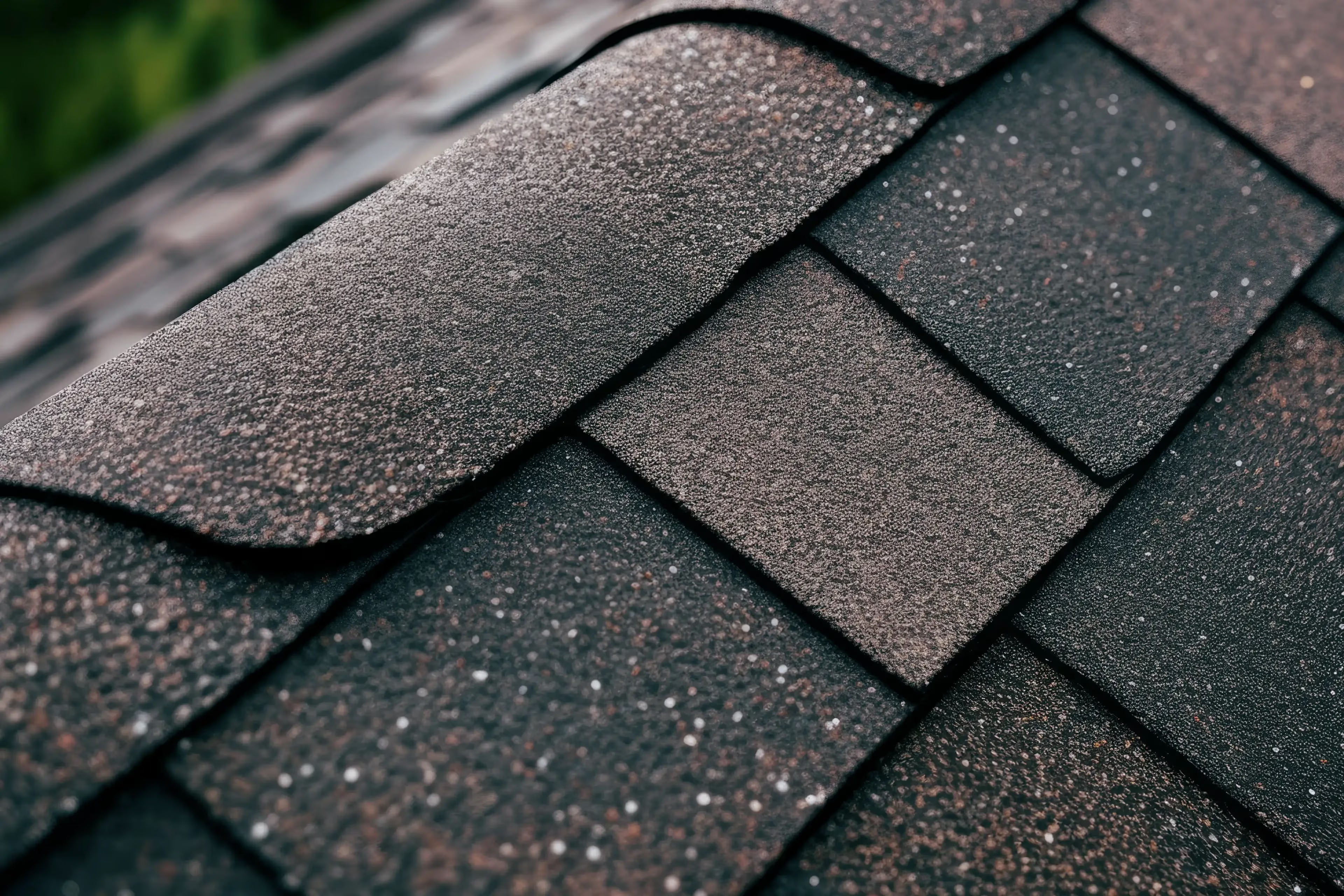
Asphalt shingles are coated with protective mineral granules.
These granules shield the underlying material from ultraviolet radiation and environmental wear.
When hail strikes the roof, those granules can become dislodged.
Initially, this may seem insignificant.
However, once the protective layer is compromised, shingles deteriorate much faster.
Over time, exposed areas become brittle and increasingly vulnerable to cracking.
Bruising
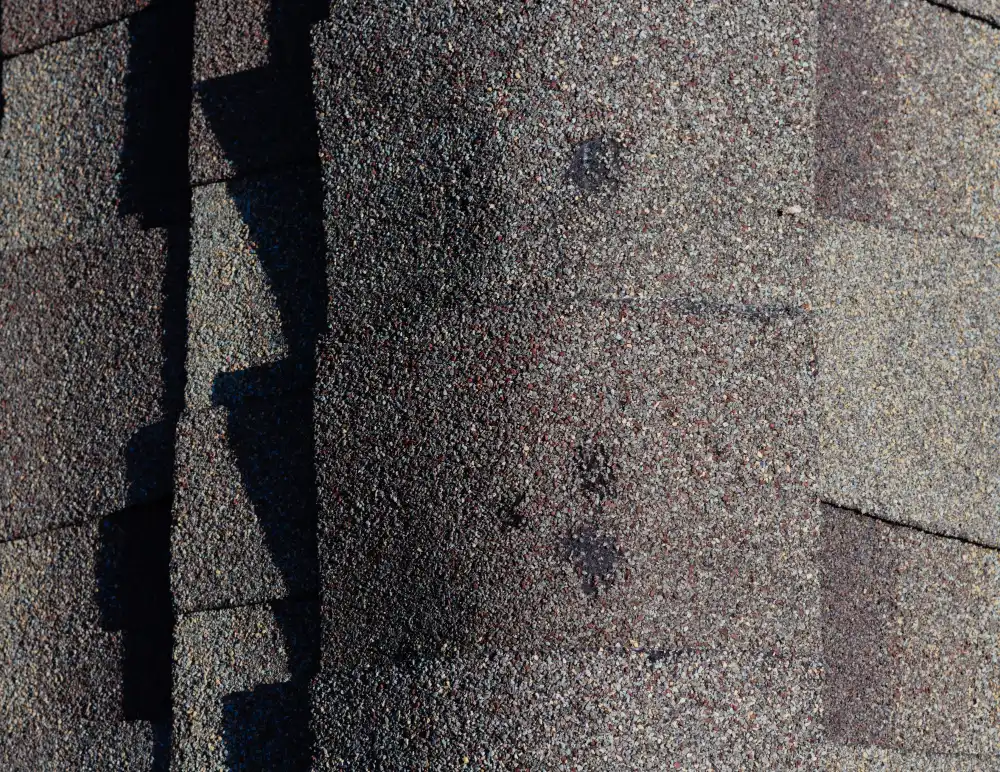
One of the most common forms of hail damage is bruising.
When hail impacts a shingle, it can compress the underlying material without creating obvious surface damage.
Think of it like a bruise on an apple.
The exterior may appear intact, but damage exists underneath.
Bruised shingles often:
- Lose structural integrity
- Age faster
- Crack more easily
- Become vulnerable to leaks
This type of damage is particularly difficult for homeowners to identify from ground level.
Cracking
Larger hailstones can create fractures in shingles.
These cracks may start small but expand over time due to:
- Sun exposure
- Wind
- Freeze-thaw cycles
- Thermal expansion
Once cracking begins, water intrusion becomes far more likely.
Flashing Damage
Flashing protects vulnerable areas where roofing materials meet chimneys, vents, skylights, and walls.
Hail impacts can dent, crack, or loosen flashing components.
Because flashing protects transition points, even minor damage can eventually create pathways for water.
Why Many Homeowners Miss Hail Damage
One of the biggest misconceptions surrounding hail damage is that significant damage should be obvious.
Unfortunately, roofing systems don't work that way.
Most homeowners inspect their roofs from the driveway.
From that perspective, everything may appear completely normal.
What they can't see includes:
- Bruising
- Granule displacement
- Minor cracking
- Flashing damage
- Seal failures
Many homeowners only discover hail damage when:
- A leak appears
- An inspection is performed
- Insurance requires documentation
- Another contractor identifies it
That's often months—or even years—after the storm occurred.
Signs Your Roof May Have Hail Damage
While some damage requires professional evaluation, homeowners can still look for warning signs.
Check Your Gutters
After significant storms, inspect your gutters and downspouts.
Large accumulations of roofing granules often indicate shingle damage.
Granules resemble coarse black or gray sand.
While some granule loss occurs naturally with aging, excessive accumulation after a hailstorm deserves attention.
Look for Dented Metal Components
Inspect:
- Gutters
- Downspouts
- Metal flashing
- Roof vents
- AC condenser units
Visible dents often indicate hail large enough to impact roofing materials as well.
If metal surfaces show damage, your shingles may have experienced impacts too.
Inspect Siding and Exterior Surfaces
Hail frequently damages more than just roofs.
Check:
- Siding
- Trim
- Garage doors
- Window frames
- Deck railings
Exterior impacts can provide clues about storm severity and potential roof damage.
Watch for Interior Warning Signs
Although interior symptoms usually appear later, they should never be ignored.
Look for:
- Ceiling stains
- Bubbling paint
- Musty odors
- Attic moisture
- Discolored drywall
These symptoms may indicate that roof damage has already progressed beyond the exterior surface.
The Long-Term Cost of Ignoring Hail Damage
Many homeowners delay inspections because the roof seems fine.
The problem is that roofing damage rarely remains isolated.
Small vulnerabilities often expand into larger issues affecting multiple parts of the home.
What starts as shingle damage can eventually impact:
- Roof decking
- Insulation
- Drywall
- Interior finishes
- Structural framing
That's why roofing issues often appear on lists of the most expensive home repairs.
How Colorado Weather Makes Hail Damage Worse
Hail isn't acting alone.
Colorado weather continuously amplifies existing vulnerabilities.
After a storm damages roofing materials, roofs remain exposed to:
Intense UV Radiation
Colorado's elevation increases UV exposure.
Areas already weakened by hail deteriorate faster under direct sunlight.
Strong Winds
Wind can exploit damaged shingles by:
- Lifting edges
- Breaking seals
- Removing loose granules
- Expanding existing cracks
Freeze-Thaw Cycles
Moisture enters damaged areas.
Temperatures drop.
Water freezes and expands.
Tiny imperfections become larger vulnerabilities.
Repeated cycles accelerate deterioration throughout the roofing system.
→ Read: How Colorado Weather is Really Affecting Your Roof
What Happens During a Professional Roof Inspection?
Many homeowners assume roof inspections are simply visual walkarounds.
A thorough inspection goes much deeper.
Inspectors typically evaluate:
- Shingle condition
- Granule loss
- Impact marks
- Flashing integrity
- Ventilation systems
- Roof penetrations
- Gutter performance
- Evidence of moisture intrusion
The goal isn't just identifying existing leaks.
It's identifying vulnerabilities before leaks occur.
Preventative evaluations often uncover issues that would otherwise remain hidden for years.
Common Myths About Hail Damage
Myth #1: No Leaks Means No Damage
Leaks are often late-stage symptoms.
Damage can exist long before moisture reaches the interior.
Myth #2: Small Hail Can't Damage a Roof
Impact severity depends on:
- Wind speed
- Hail density
- Roofing age
- Material type
Even moderate hail can create meaningful deterioration.
Myth #3: New Roofs Can't Be Damaged
Newer roofs generally perform better, but no roofing system is immune to severe weather.
Myth #4: Damage Is Always Visible From the Ground
Many forms of hail damage require close inspection to identify accurately.
Can Hail Damage Affect Home Value?
Potentially, yes.
Unaddressed roofing damage may:
- Shorten roof lifespan
- Create inspection concerns during sales
- Reduce buyer confidence
- Lead to future repair costs
Buyers often view roofing condition as one of the most important aspects of a home's overall maintenance.
A well-maintained roof can provide reassurance, while visible deterioration can raise concerns about hidden issues elsewhere.
Protecting Your Roof After a Storm
Homeowners can reduce long-term risk by taking a proactive approach.
After significant hail events:
- Inspect visible exterior components
- Document obvious damage
- Check gutters and downspouts
- Look for interior warning signs
- Schedule professional evaluation if concerns exist
The goal isn't panic.
It's prevention.
The Importance of Regular Roof Maintenance
Roofs don't fail overnight.
Most deterioration occurs gradually through years of exposure.
Routine maintenance helps:
- Extend roof lifespan
- Identify vulnerabilities early
- Improve performance
- Reduce repair costs
- Protect interior systems
Preventative maintenance remains one of the most cost-effective investments homeowners can make.
Final Thoughts
Colorado homeowners don't get to choose whether their roofs experience hail.
But they can choose how quickly they respond to it.
The reality is that hail damage often begins quietly.
No dramatic leaks.
No missing sections of roof.
No immediate emergencies.
Just subtle wear that gradually worsens with every season.
At HOMEfix, we've seen how small roofing issues become major repairs when they're ignored—and how affordable they can remain when they're caught early.
Because the best time to address hail damage isn't after water reaches your living room.
It's before it ever gets the chance.