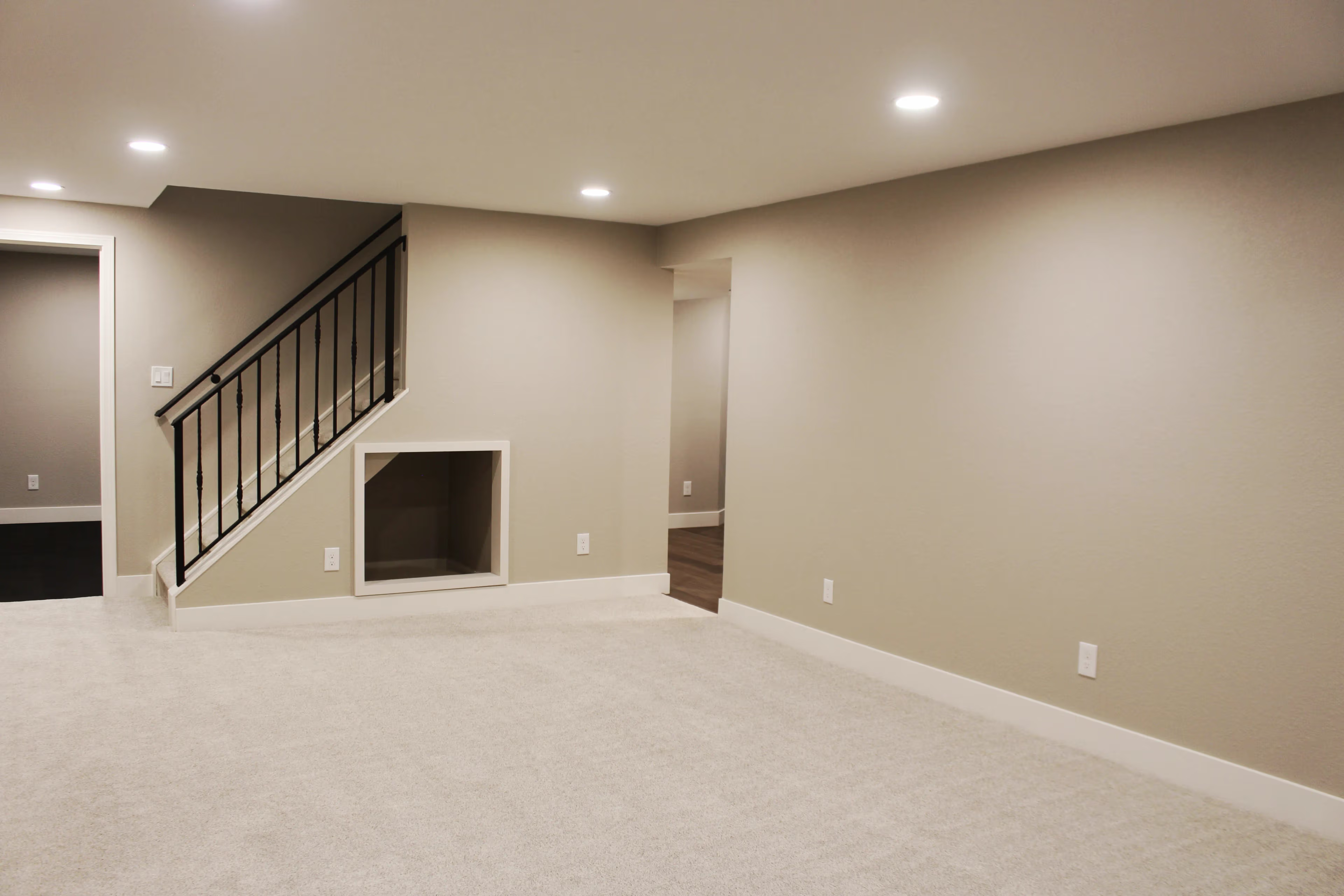
Let’s be honest—your basement probably isn’t doing much for you right now.
It might be where you keep your laundry, store holiday decorations, or where your dog disappears when there’s a thunderstorm. But what if I told you it could be your business's new HQ?
We help countless Colorado Springs homeowners turn their dark, underused basements into bright, practical, and comfortable workspaces. And it makes sense. Working from home isn’t a trend anymore—it’s a lifestyle. And your surroundings can either fuel your productivity… or drain it.
Step 1: Know Your Goals (and the Rules)
Before we swing a hammer or order a single 2x4, we need to understand what you're trying to do down there.
- Are you a therapist who needs a quiet, client-ready space?
- A photographer looking for a mini studio?
- A remote worker who just wants a space where the kids and the fridge aren’t constant distractions?
This helps us map out everything from soundproofing to lighting to legal considerations (yep, those matter).
Know your zoning:
In Colorado Springs, if you're seeing clients, or using the space for a registered business, there may be specific codes or permits to consider. We’ll help you sort that out up front so there are no surprises.
Step 2: Moisture and Insulation
Before we start building walls or installing flooring, we need to make sure your basement is dry and well-insulated. Otherwise, you’re setting yourself up for mold, musty smells, and regret.
Here’s what we usually check:
- Cracks in the foundation
- Humidity levels
- Proper drainage around the house
- Vapor barriers and waterproof coatings
If your basement gets that classic “basement smell” after a heavy rain, that’s something we can (and should) fix before you go any further.
Step 3: Layout and Lighting
Let’s talk layout.
Even if your basement is small or oddly shaped, you can get clever with how you use the space. A good basement office remodel almost always includes:
- A main workstation area
- Some built-in storage or shelving
- Room for equipment or inventory if you run a product-based business
- If clients will visit: a small seating area or private entrance if possible
Step 4: Soundproofing
This might be the most overlooked part of home office remodeling.
Whether you're hopping on Zoom all day or just trying to drown out upstairs chaos, good sound control makes or breaks your space. We usually recommend:
- Sound-dampening insulation in ceilings and shared walls
- Solid-core doors
- Even white noise machines or acoustic panels if you're recording content
Step 5: Make It Inspiring (Yes, Even in a Basement)
Your workspace should feel good to be in. Period.
That might mean:
- Adding custom built-ins for your gear or books
- A feature wall with natural wood, brick, or reclaimed materials
- Comfortable flooring—LVP is a top choice because it’s durable and moisture resistant
- Smart lighting and climate control for year-round comfort
We can even integrate dual zones—one side for serious work, the other for relaxing, reading, or creative stuff.
Final Thoughts
I’ll shoot straight with you—working from home is awesome if your space supports it. If you’re building a business, managing remote teams, or just need a door you can close, remodeling your basement is one of the smartest home upgrades you can make.
If you’re curious, give us a call. We’ll come out, take a look, and tell you what’s possible. Let’s make your basement work as hard as you do.