When you’re planning a remodel, there’s always that one feature that starts as a “maybe” and quickly turns into the thing you can’t stop thinking about.
For a lot of homeowners in Colorado Springs, that feature is a home bar.
Not because it’s necessary. Because it changes how you use your home.
Movie nights feel more complete. Hosting gets easier. Basements become destinations instead of storage space. Even a small entertaining area suddenly feels intentional.
But before you start picking backsplash tile or browsing beverage fridges, there’s one important question:
Should you build a wet bar or a dry bar?
At first glance, they seem pretty similar. Cabinets. Countertops. Storage. A place to pour a drink or serve guests.
But the differences matter more than most homeowners realize—especially when it comes to cost, functionality, maintenance, and long-term value.
Here’s what to know before deciding which one fits your home best.
What Is a Wet Bar?
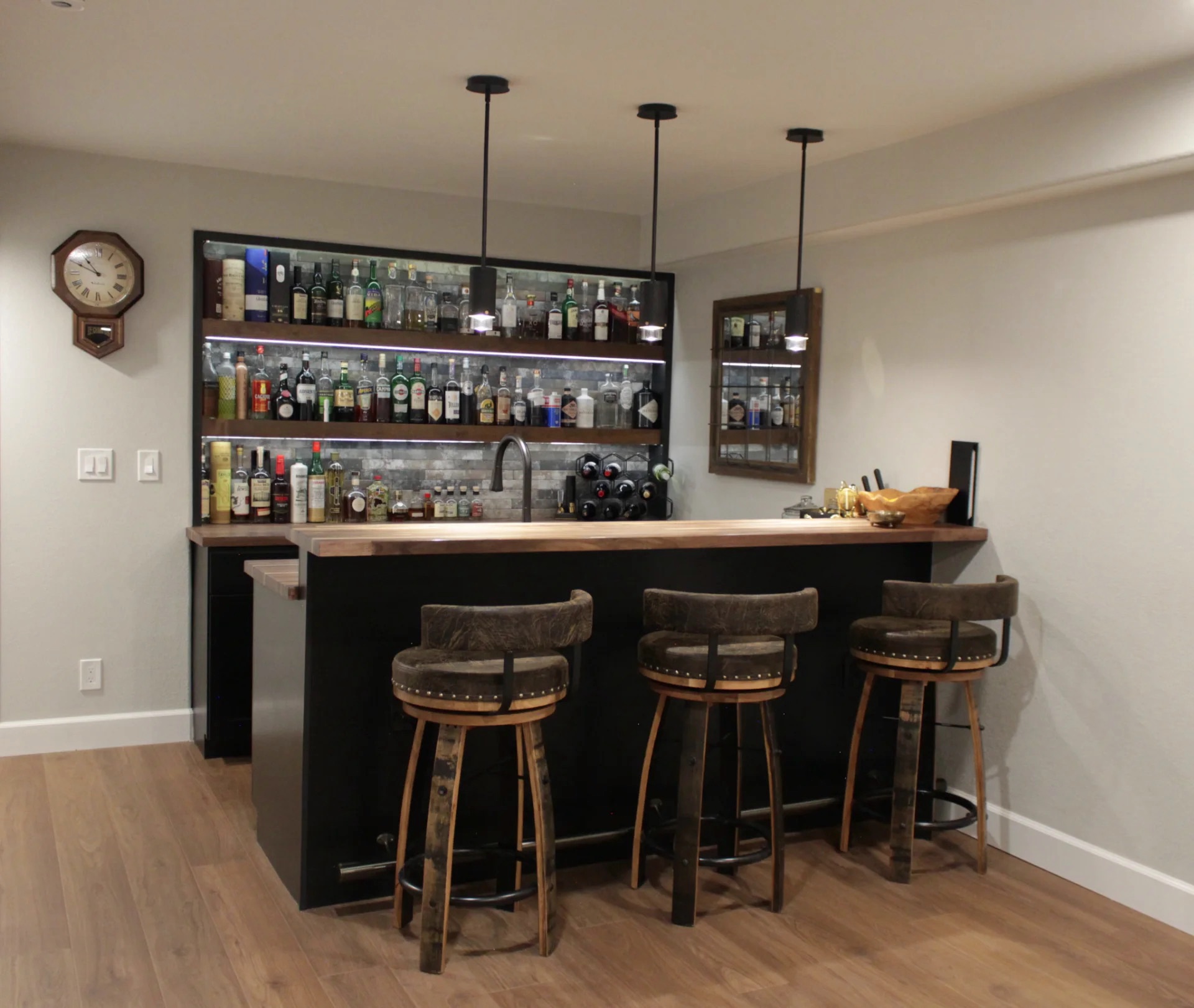
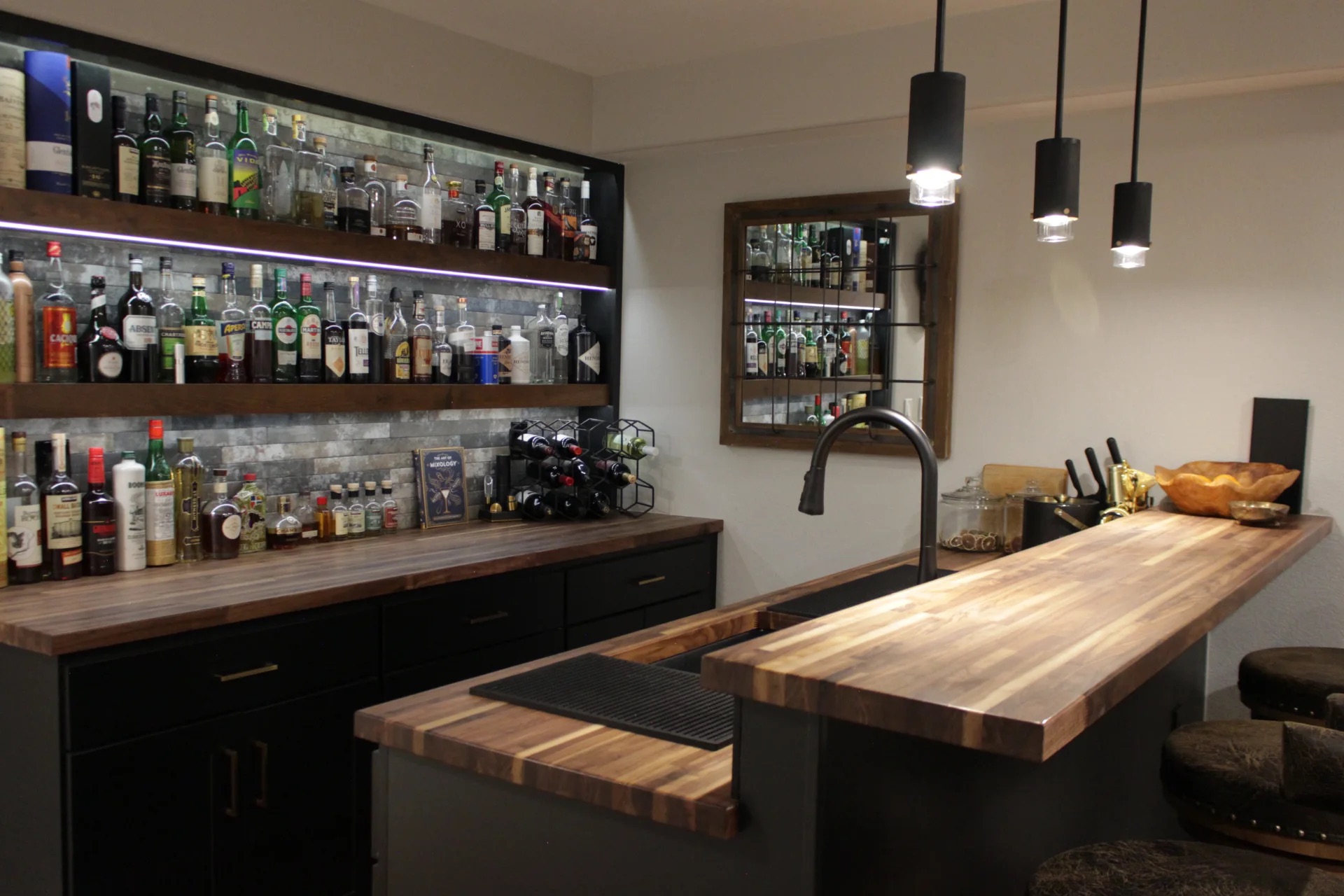
A wet bar is essentially a compact entertaining station with plumbing.
The defining feature is the sink, which allows for running water, easier cleanup, drink prep, and the addition of appliances like ice makers or beverage coolers.
Wet bars are commonly built into:
- Finished basements
- Bonus rooms
- Home theaters
- Outdoor living areas
- Large open-concept spaces
In many modern remodels, wet bars function almost like a secondary kitchen—just designed more around hosting than cooking.
Common Wet Bar Features
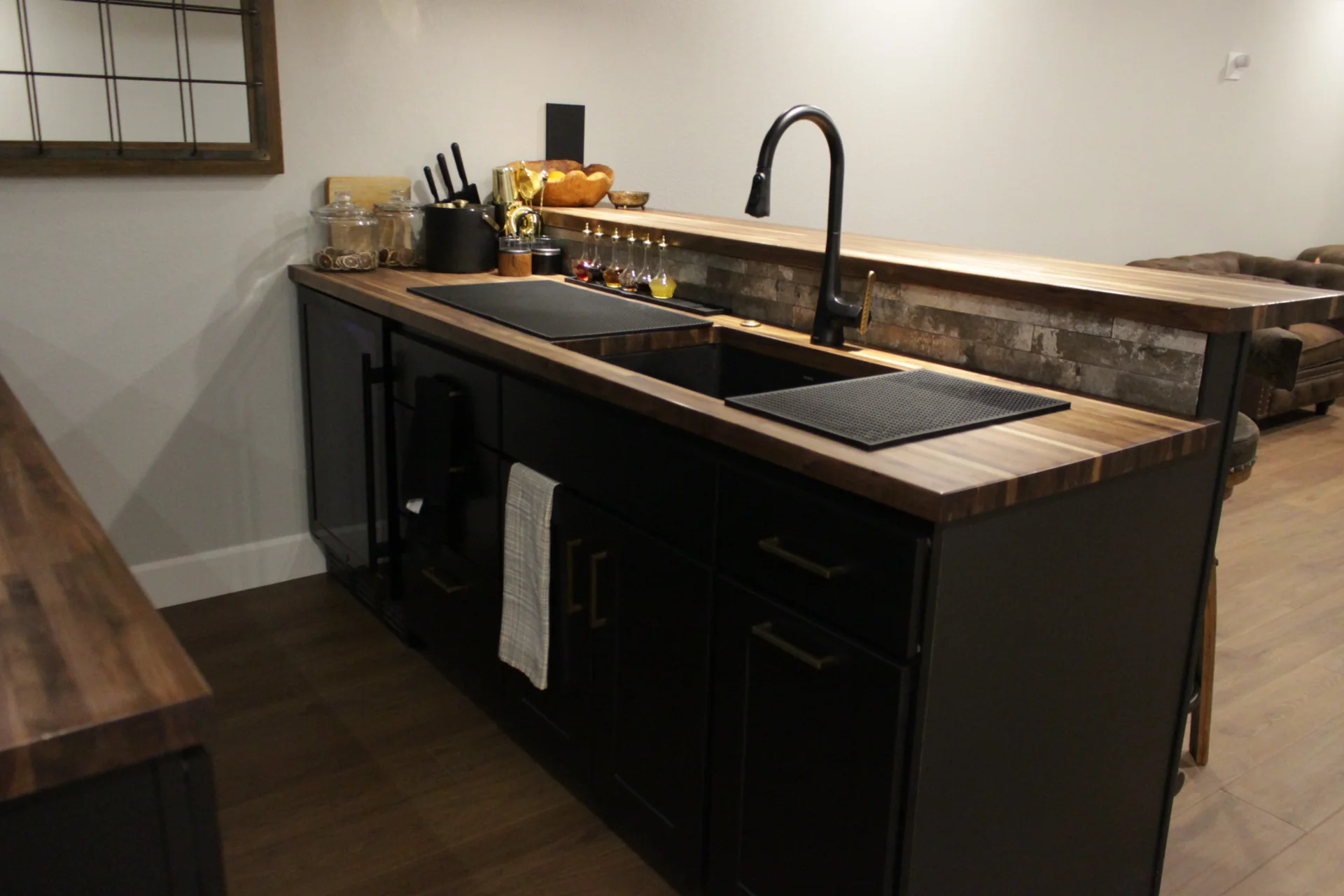
- Sink with running water
- Custom cabinetry
- Beverage refrigerator or wine fridge
- Quartz or stone countertops
- Open shelving or glass display cabinets
- Ice makers or compact dishwashers
- Accent lighting and tile backsplashes
Today’s wet bars are also becoming more design-forward. Instead of looking like a “mini kitchen,” many homeowners are leaning into warmer finishes, integrated lighting, fluted wood accents, statement tile, and furniture-style cabinetry.
What Is a Dry Bar?
A dry bar gives you the entertaining aesthetic and storage functionality—without the plumbing.
No sink. No water lines. No drainage.
That makes dry bars simpler, more flexible, and often much more budget-friendly.
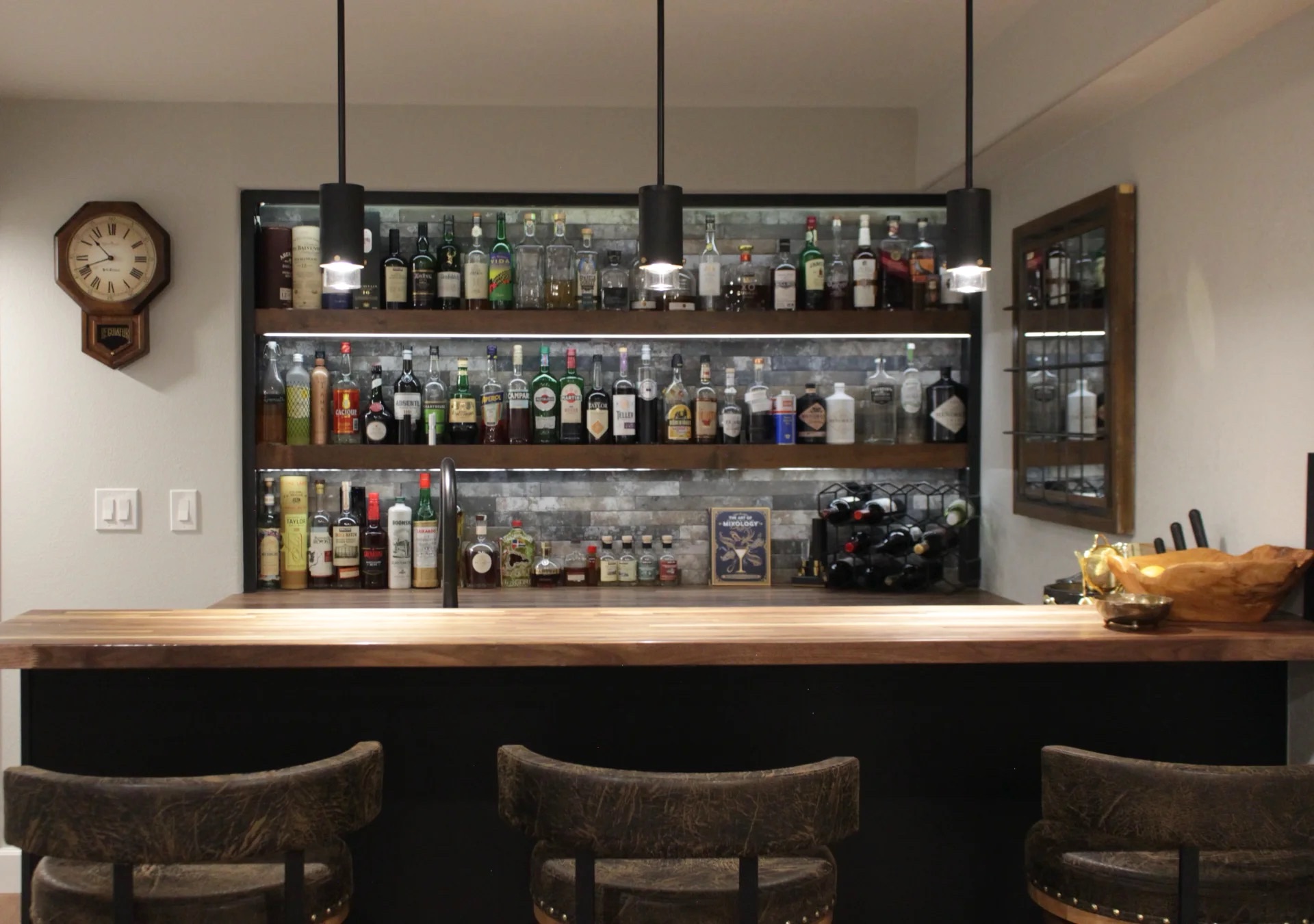
A dry bar can be as simple as a built-in cabinet with a countertop and floating shelves, or as custom as a full statement wall with wine storage, display lighting, and integrated beverage appliances.
You’ll often see dry bars in:
- Dining rooms
- Living rooms
- Hallway nooks
- Smaller basements
- Condos or townhomes
- Open-concept kitchens
For many homeowners, a dry bar is less about “hosting efficiency” and more about creating a polished, elevated space.
Wet Bar vs. Dry Bar: The Biggest Differences
The biggest difference comes down to this:
A wet bar changes functionality.
A dry bar changes aesthetics.
One creates convenience. The other creates atmosphere.
Both can absolutely improve your home—but in different ways.
Why Homeowners Choose Wet Bars
Convenience During Entertaining
This is the biggest reason people go wet.
Having a sink nearby means:
- Easier cleanup
- Faster drink prep
- No constant trips back to the kitchen
- Less mess moving through the house
If you host often, the convenience adds up quickly.
Better Basement Functionality
In Colorado Springs homes, basements are often full secondary living spaces.
They’re where:
- Game days happen
- Kids hang out
- Guests stay
- Movie nights happen
- Families gather during holidays
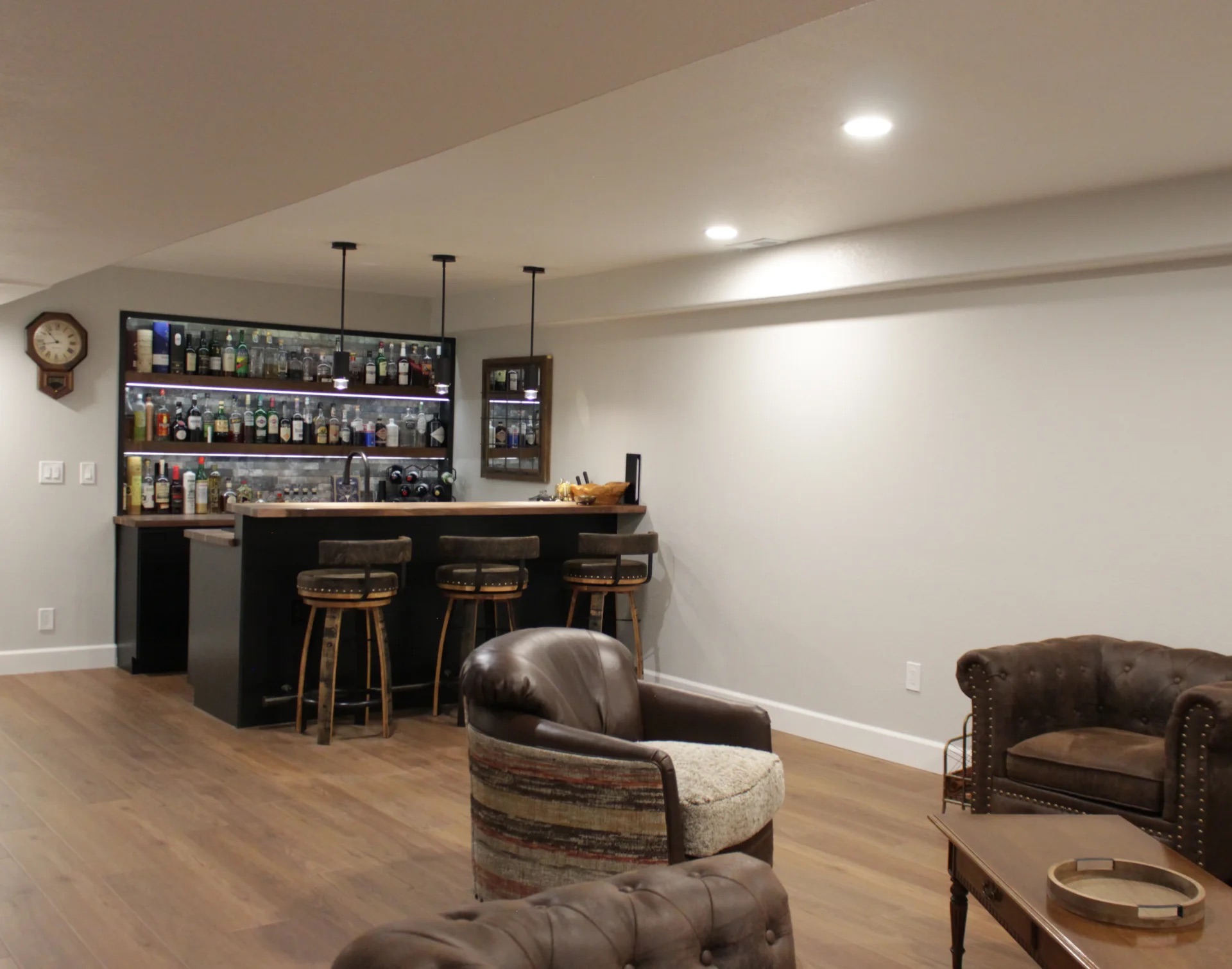
A wet bar helps that space function independently instead of relying on the upstairs kitchen.
And honestly? Nobody wants to carry drinks, snacks, or dishes up and down basement stairs all night.
Increased Home Appeal
Finished basements with wet bars tend to feel more complete and more custom.
For buyers, it creates the feeling of a thoughtfully designed entertainment space rather than “extra square footage.”
That perceived upgrade can absolutely help a home stand out.
The Downsides of a Wet Bar
Wet bars aren’t automatically the right move for every remodel.
Higher Cost
Plumbing changes everything.
Adding water lines, drains, ventilation, electrical work, and cabinetry increases both labor and material costs.
Depending on the space, installation can become significantly more complex—especially in older homes or retrofitted basements.
More Space Required
A wet bar generally needs:
- More cabinetry
- More counter space
- Clearance for appliances
- Access to plumbing lines
In smaller layouts, it can start to feel crowded fast.
More Maintenance
More plumbing means:
- More fixtures
- More cleaning
- More opportunities for leaks or maintenance over time
Not a huge downside—but something worth considering if you prefer simplicity.
Why Homeowners Choose Dry Bars
Lower Cost, Bigger Design Impact
Dry bars deliver a lot of visual impact without requiring major construction.
Because there’s no plumbing involved, you avoid:
- Pipe installation
- Drain lines
- Sink fixtures
- Additional permitting complexity
That makes dry bars one of the easier ways to elevate a space during a remodel.
Flexible Placement
This is where dry bars shine.
Since there’s no plumbing requirement, they can go almost anywhere:
- Dining room corners
- Under staircases
- Loft spaces
- Entry-adjacent entertaining areas
- Small basement walls
That flexibility opens up a lot more design possibilities.
Modern Design Statement
A lot of today’s dry bars are less about alcohol and more about lifestyle.
Coffee bars. Mocktail stations. Wine walls. Espresso setups. Built-in beverage centers.
The trend has shifted toward creating dedicated “experience spaces” inside the home—and dry bars fit perfectly into that movement.
The Downsides of a Dry Bar
Less Functional
Without a sink, you’re still relying on the kitchen for:
- Cleanup
- Filling ice buckets
- Rinsing glasses
- Water access
For homeowners who entertain heavily, this can eventually become frustrating.
Slightly Lower Perceived Value
While dry bars absolutely look high-end, buyers often view wet bars as the more premium upgrade because of the added functionality.
That doesn’t mean a dry bar lacks value—it just serves a different purpose.
What’s Trending Right Now in Colorado Springs Homes?
A few bar design trends are showing up constantly in modern remodels:
Warm Wood Finishes
White cabinetry is giving way to richer wood tones, natural textures, and warmer finishes.
Hidden Beverage Storage
Integrated beverage refrigerators and appliance garages keep spaces cleaner and more streamlined.
Multifunction Spaces
Homeowners want bars that function as:
- Coffee stations
- Wine storage
- Snack areas
- Entertaining hubs
—not just cocktail setups.
Outdoor Entertaining Areas
With Colorado’s climate and sunshine, outdoor bars and serving stations are becoming increasingly popular additions to patios and covered decks.
So… Which One Should You Choose?
The answer usually comes down to three things:
1. How Often You Entertain
If you regularly host friends, family gatherings, holidays, or game nights, a wet bar may be worth the investment.
If entertaining is more occasional, a dry bar often delivers enough functionality without the added cost.
2. Your Available Space
Smaller homes or tighter layouts usually benefit more from dry bars.
Larger basements and bonus spaces can better support wet bar layouts without feeling cramped.
3. Your Budget Priorities
If your remodel budget is already stretched across flooring, cabinetry, lighting, or structural work, a dry bar can still create a major visual upgrade while keeping costs more manageable.
Final Thoughts
At HOMEfix, we’ve designed everything from compact dry bars tucked into dining room alcoves to full custom wet bars that completely transformed unfinished basements.
And honestly, the “best” option usually isn’t the most expensive one.
It’s the one that fits how you actually live.
A wet bar makes sense when convenience and entertaining are priorities. A dry bar makes sense when you want style, flexibility, and impact without major construction.
Either way, the right design can make your home feel more intentional, more functional, and a lot more enjoyable to spend time in.
And that’s really what a good remodel should do.