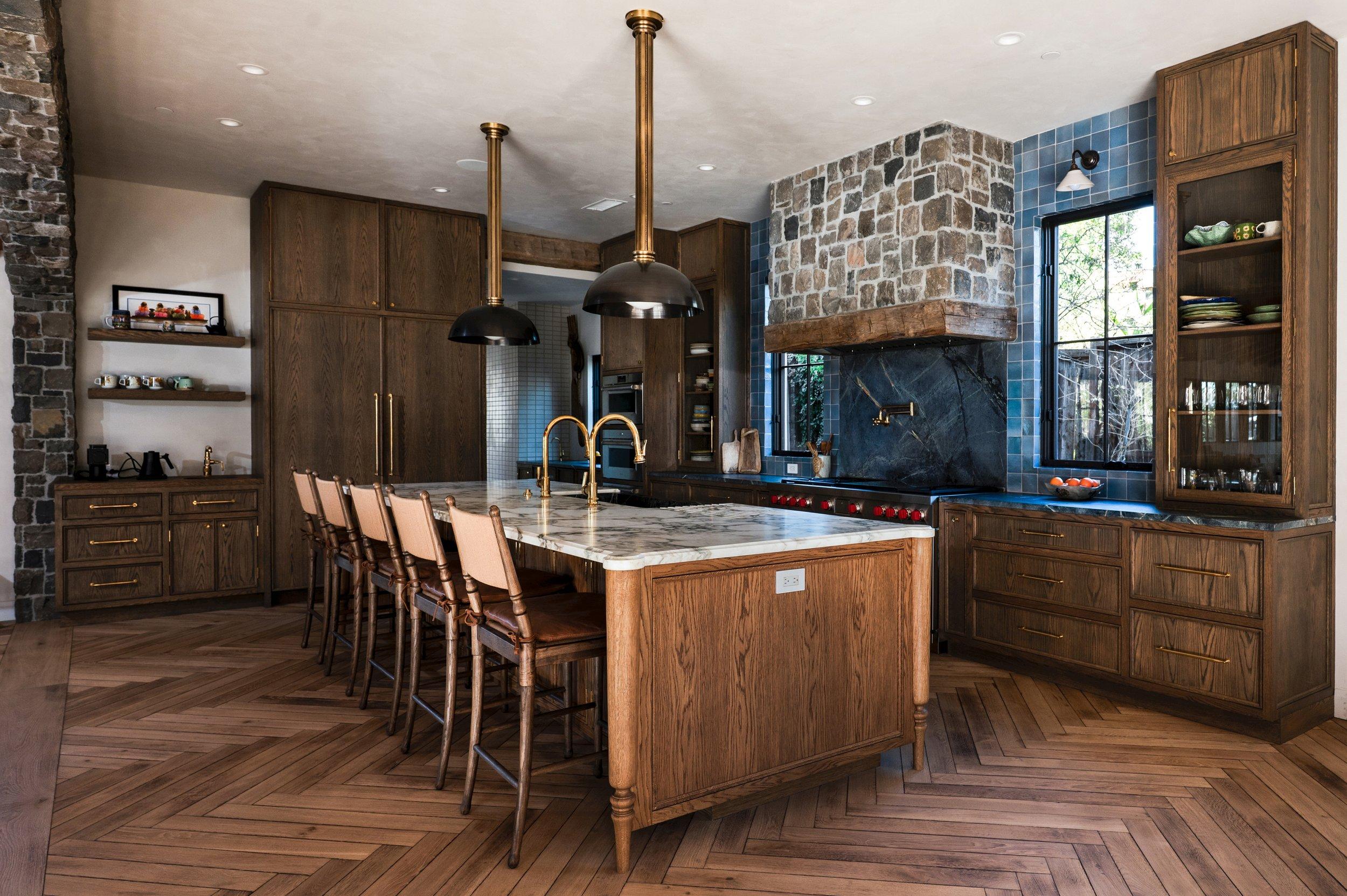
A home remodel doesn't have to come with a luxury-sized price tag to look expensive.
In fact, some of the most impressive kitchens, bathrooms, living spaces, and whole-home renovations aren't defined by the most expensive countertops, designer fixtures, or custom everything. They feel expensive because the design is intentional. Materials work together. Proportions feel right. Details look finished. Nothing feels random or like it was added as an afterthought.
On the other hand, a remodel can have a substantial budget and still feel underwhelming if the design lacks cohesion.
So what actually makes a home remodel feel expensive?
The answer usually comes down to a combination of scale, consistency, material selection, lighting, craftsmanship, and the small details that most homeowners don't think about until they're missing.
Whether you're planning a kitchen remodel, bathroom renovation, basement finish, or larger home renovation, these are 10 design details that can make a significant difference in the finished result.
1. A Cohesive Color Palette
One of the fastest ways to make a remodel feel more sophisticated is to create a cohesive color palette.
That doesn't mean everything in the room needs to be the same color. In fact, a room with too little contrast can feel flat. Instead, an elevated design usually has a deliberate relationship between its colors.
Think about a kitchen, for example. You might have:
- Painted cabinetry
- A natural or stone-look countertop
- A backsplash with subtle variation
- Wood-look flooring
- Metal hardware
- Wall paint
- Lighting fixtures
- Upholstery and décor
Every one of these elements contributes to the overall appearance of the space.
When they're selected independently, the room can feel disjointed. When they're selected as a group, the result feels intentional.
A useful approach is to establish a few foundational colors and then introduce contrast through materials and finishes.
For example, warm neutral cabinetry can work beautifully with a light countertop, a slightly darker wood-look floor, and black or aged metal accents. The colors don't have to match perfectly. They simply need to make sense together.
Don't confuse neutral with boring
A sophisticated color palette doesn't necessarily mean an all-white room.
Warm whites, taupes, creams, muted greens, soft blues, natural wood tones, and earthy neutrals can all create a high-end feeling when they're balanced correctly.
The key is intentionality.
If you're remodeling your home, don't choose your cabinet color today, your countertop next week, and your backsplash after the cabinets are installed. Look at the major materials together before making final selections.
That's how you create a room that feels designed rather than assembled.
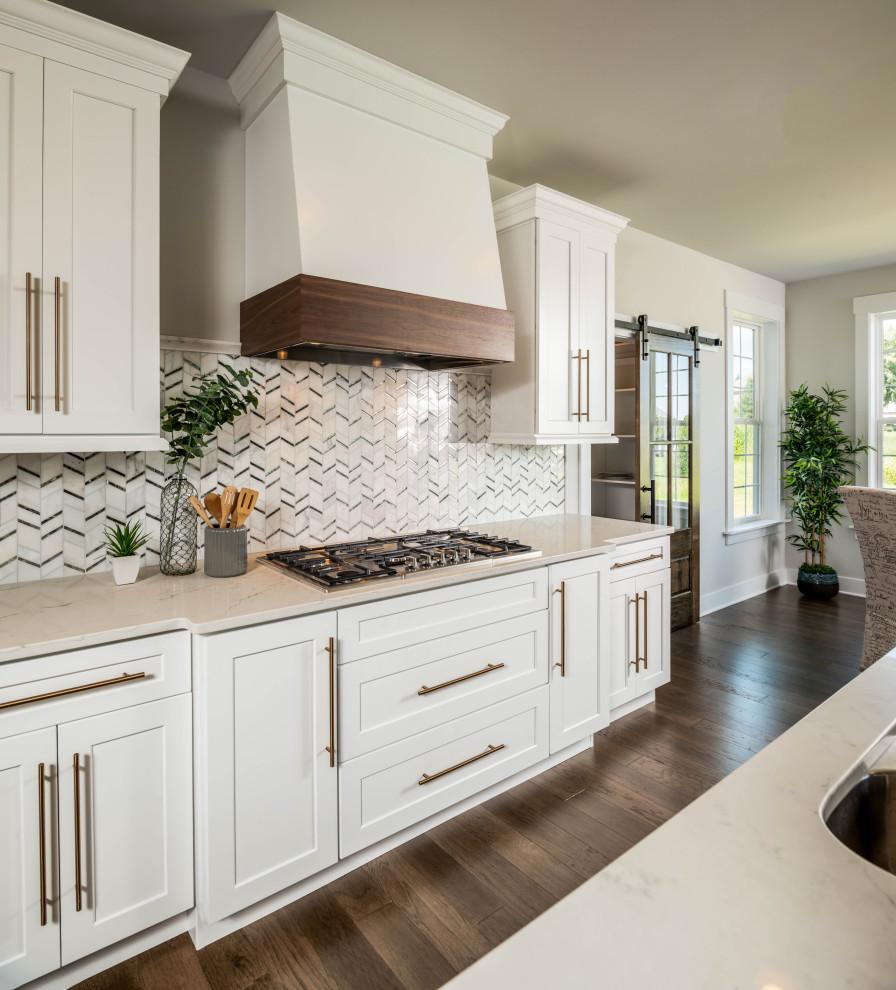
2. Getting the Scale and Proportions Right
You can have beautiful materials and still end up with a room that doesn't feel expensive.
Why?
Because scale matters.
A tiny pendant over an oversized island can look awkward. A massive mirror above a small vanity can overwhelm the room. Cabinet hardware that's too small can make beautiful cabinetry feel less substantial.
Designers spend a lot of time thinking about proportion because homeowners tend to notice when something feels "off" even if they can't identify why.
Consider a kitchen island.
The island isn't just a piece of cabinetry. Its length, depth, countertop overhang, pendant lights, seating, and surrounding walkways all need to work together.
The same principle applies in bathrooms.
A large-format tile can make a bathroom feel more expansive because there are fewer grout lines. But the size of the tile still needs to make sense for the room. A pattern that looks beautiful in a showroom may not translate well to every space.
Think in relationships
Instead of asking, "Is this fixture beautiful?" ask:
"Is this fixture the right size for this space?"
Instead of asking, "Do I love this mirror?" ask:
"Does the size and shape work with the vanity, lighting, and wall?"
The individual pieces matter, but the relationships between them matter just as much.
3. High-Quality-Looking Materials Don't Have to Be the Most Expensive Materials
A common misconception is that a high-end remodel requires the most expensive materials available.
It doesn't.
What matters more is choosing materials that look intentional, coordinate well, and are appropriate for the space.
There are beautiful options at a wide range of price points, including porcelain tile, engineered surfaces, luxury vinyl flooring, painted cabinetry, decorative hardware, and manufactured materials that replicate the appearance of natural stone or hardwood.
The trick is knowing where to spend and where to save.
For example, you might choose to invest more in the cabinetry because it's one of the most visually dominant elements in the kitchen. Then you could select a more budget-conscious flooring option that still delivers the appearance and durability you want.
Or you might splurge on a statement light fixture while choosing a simpler mirror.
This is often how thoughtful remodel budgets work: not everything is premium, but everything feels like it belongs.
Material repetition creates a custom feel
Another trick is repeating materials throughout the room.
If you use a particular metal finish on the faucet, consider carrying that finish into the cabinet hardware, lighting, or mirror frame.
If your flooring introduces a warm wood tone, look for other opportunities to bring that tone into the space.
Repetition creates visual continuity, which makes a room feel more sophisticated.
4. Consistent Hardware and Metal Finishes
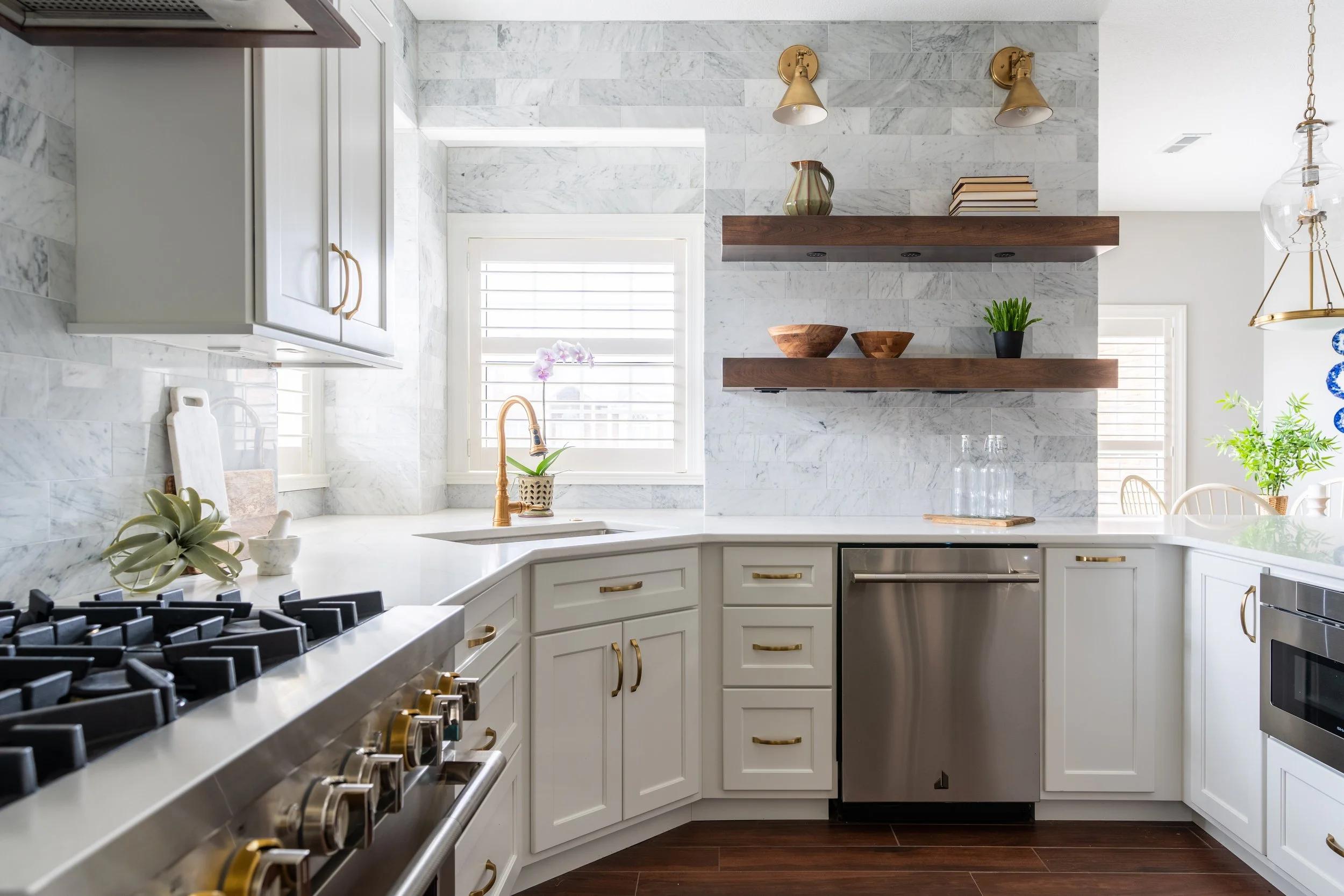
Hardware may be small, but it can have a surprisingly large impact on the overall appearance of a remodel.
Cabinet pulls, faucets, shower fixtures, towel bars, mirrors, lighting, and door hardware all contribute to the visual language of a room.
One of the easiest ways to make a remodel feel more polished is to be intentional about these finishes.
That doesn't necessarily mean every metal in your home needs to match.
Mixing metals can look fantastic when it's deliberate.
The problem occurs when finishes appear to have been selected independently without considering the rest of the room.
For example, a polished chrome faucet paired with matte black cabinet hardware, brass lighting, and brushed nickel accessories may feel chaotic unless there is a clear design reason behind the combination.
A more intentional approach might use one primary metal and one secondary accent.
Think beyond the faucet
When selecting a metal finish, look at the entire room.
In a bathroom, consider:
- Faucet
- Shower trim
- Hand shower
- Tub filler
- Cabinet hardware
- Mirror frame
- Lighting
- Towel hardware
In a kitchen, consider:
- Cabinet hardware
- Faucet
- Lighting
- Appliances
- Bar hardware
- Decorative accents
These details don't have to be identical, but they should feel like part of the same design.
5. Statement Lighting
Lighting is one of the most underrated elements of a home remodel.
A room can have gorgeous cabinetry and beautiful tile, but poor lighting can make the entire project feel less impressive.
Good remodel design typically incorporates multiple layers of lighting rather than relying on one overhead fixture.
These layers can include:
Ambient lighting: General illumination throughout the room.
Task lighting: Lighting where you perform specific activities, such as under-cabinet lighting over kitchen countertops or vanity lighting in a bathroom.
Accent lighting: Lighting used to highlight architectural features, shelving, artwork, tile, or other details.
And then there is decorative lighting.
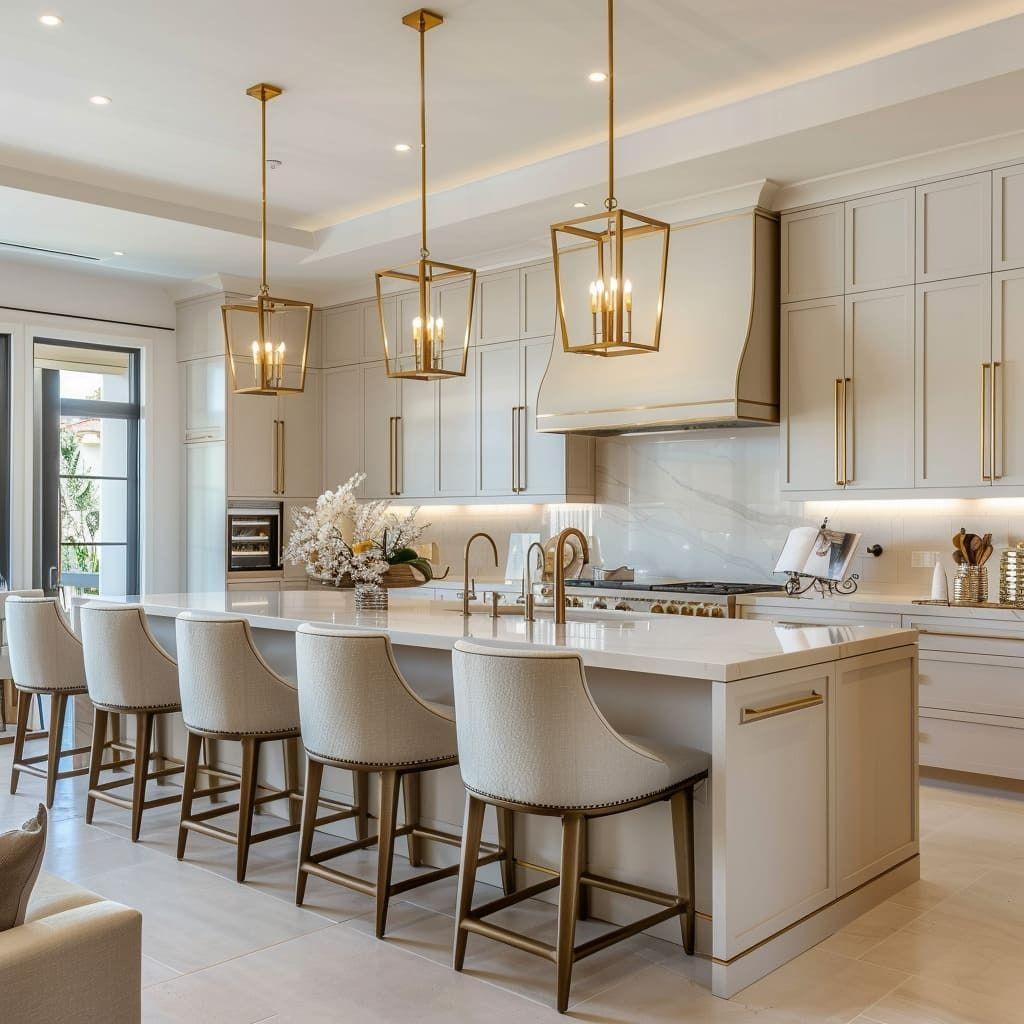
A beautiful pendant over a kitchen island or a striking chandelier in a dining room can function almost like jewelry for the space.
It doesn't necessarily need to be the most expensive fixture in the room. It simply needs to be appropriately scaled and thoughtfully placed.
Don't forget what lighting does to materials
Lighting also changes how your materials look.
A textured backsplash can look completely different under warm evening lighting than it does under bright showroom lights.
Cabinet colors can shift. Countertops can look warmer or cooler. Tile patterns can become more or less prominent.
That's why lighting should be considered during the design process, not after everything else has been selected.
6. Custom Details That Look Built for the Home
One of the biggest differences between a basic renovation and a truly elevated remodel is the sense that the space was designed specifically for the home.
Custom details can create that feeling.
This could include:
- Built-in cabinetry
- Custom storage
- A tailored kitchen island
- Integrated shelving
- A custom fireplace surround
- A built-in wet bar
- A thoughtfully designed shower niche
- Architectural arches
- Decorative millwork
- Custom-sized cabinetry
- Purpose-built organization
These details don't have to be extravagant.
In many cases, the most effective custom details solve a practical problem while simultaneously improving the appearance of the room.
For example, a built-in cabinet that perfectly fills an awkward wall can look dramatically better than trying to force a standard piece of furniture into the space.
Likewise, a shower niche designed around the tile layout can feel much more intentional than a generic niche placed wherever there happens to be room.
Custom doesn't always mean complicated
A common mistake is assuming that "custom" means adding more features.
Sometimes it's actually about doing less—but doing it precisely.
A clean transition, properly sized cabinet, aligned tile pattern, or built-in storage solution can make a bigger difference than an elaborate decorative feature.
7. Tile Layout and Grout Details
Tile is one of the areas where thoughtful design can make an enormous difference.
Two bathrooms could use the exact same tile and have completely different results depending on how that tile is installed.
Consider:
- Tile size
- Orientation
- Pattern
- Grout color
- Edge details
- Transitions
- Niche placement
- Alignment
- Where cuts occur
Large-format tile can create a clean, contemporary appearance. A classic subway tile can feel timeless. A decorative mosaic can become a focal point.
But the installation pattern matters.
A beautiful tile can lose its impact if awkward cuts are scattered around the room or if grout lines don't align with surrounding elements.
Design the tile before installing it
Tile layout should be considered before installation begins.
Where should the pattern start?
Where will the cuts fall?
How will the tile meet the niche?
Where will the tile transition to another material?
How will it align with the vanity?
These decisions may seem minor, but they're exactly the kinds of details that separate an average remodel from one that feels professionally designed.
And don't underestimate grout.
Grout isn't just a technical necessity. It's part of the design.
A contrasting grout color can emphasize a tile pattern, while a closely matched grout can create a quieter, more seamless appearance.
8. Clean Lines and Fewer Visual Distractions
Luxury design often feels calm.
That's not necessarily because it has fewer things in it. It's because the visual hierarchy is clear.
When every element competes for attention, nothing feels particularly special.
An elevated remodel usually has a few intentional focal points.
Maybe it's the range wall in the kitchen.
Maybe it's a dramatic shower tile.
Maybe it's a freestanding tub.
Maybe it's a custom fireplace.
Maybe it's a statement light fixture.
The rest of the room supports those focal points rather than competing with them.
Storage is part of the design
This is one reason good storage can make a remodel feel more expensive.
When everything has a place, countertops stay cleaner. Open shelves don't become cluttered. Bathroom vanities aren't overwhelmed with products.
In other words, organization improves the visual design of the room.
This is especially important in kitchens and bathrooms, where everyday life can quickly create visual clutter.
Thoughtful cabinetry, drawers, built-ins, and storage solutions can help the finished space maintain that clean, intentional appearance long after the remodel is complete.
9. Architectural Details and Trim
Not every home needs elaborate millwork, but architectural details can add depth and character when they're appropriate for the space.
Consider:
- Wall paneling
- Wainscoting
- Crown molding
- Door casing
- Built-in shelving
- Arched openings
- Curved cabinetry
- Coffered ceilings
- Beams
- Fireplace details
- Decorative trim
The key is choosing details that complement the home's architecture.
A traditional home may benefit from classic molding and detailed trim. A modern home might look better with simpler lines and minimal transitions.
And architectural details don't have to be historically accurate or overly ornate.
Even something as simple as changing a rectangular opening into an arch can completely alter the personality of a space.
Repetition matters here, too
If you introduce an architectural curve in one part of the room, consider whether another element could subtly reference it.
The same principle applies to wood tones, shapes, colors, and materials.
Repetition tells the eye that the design was intentional.
10. Exceptional Finishing Details
Finally, the detail that can make or break an expensive-looking remodel is often the least glamorous:
the finish work.
Beautiful design cannot compensate for sloppy execution.
Crooked cabinet doors, uneven trim, messy caulk lines, poorly aligned hardware, inconsistent grout lines, unfinished transitions, and visible gaps can immediately make a remodel feel less refined.
On the other hand, precise finishing details create a sense of quality.
Look closely at a professionally finished space and you'll often notice things like:
- Consistent reveals between cabinets
- Properly aligned hardware
- Clean caulk lines
- Precise tile transitions
- Thoughtful trim connections
- Straight grout lines
- Clean countertop edges
- Carefully finished corners
- Properly fitted doors and drawers
These details may not be the first thing you notice when you walk into a room.
But they contribute significantly to how the space feels.
That's the difference between "This is a nice remodel" and "Wow, this looks really well done."
What Makes a Remodel Feel Expensive Isn't Always What Costs More
The biggest takeaway is that an expensive-looking remodel isn't necessarily about spending more money.
It's about spending money intentionally.
A thoughtful design can make a relatively simple material palette feel sophisticated. Meanwhile, a collection of expensive finishes can feel disconnected if there isn't a cohesive plan behind them.
Before starting a remodel, think about the entire space rather than making decisions one at a time.
Ask:
- What is the overall style?
- What are the primary colors?
- Which materials will be the focal points?
- Where should I spend more of the budget?
- Where can I save without sacrificing the look?
- How will the finishes work together?
- What size should each element be?
- How will lighting affect the materials?
- What storage does the room actually need?
- Which details will make the space feel custom?
These questions can have a bigger impact on the finished result than simply choosing the most expensive option in every category.
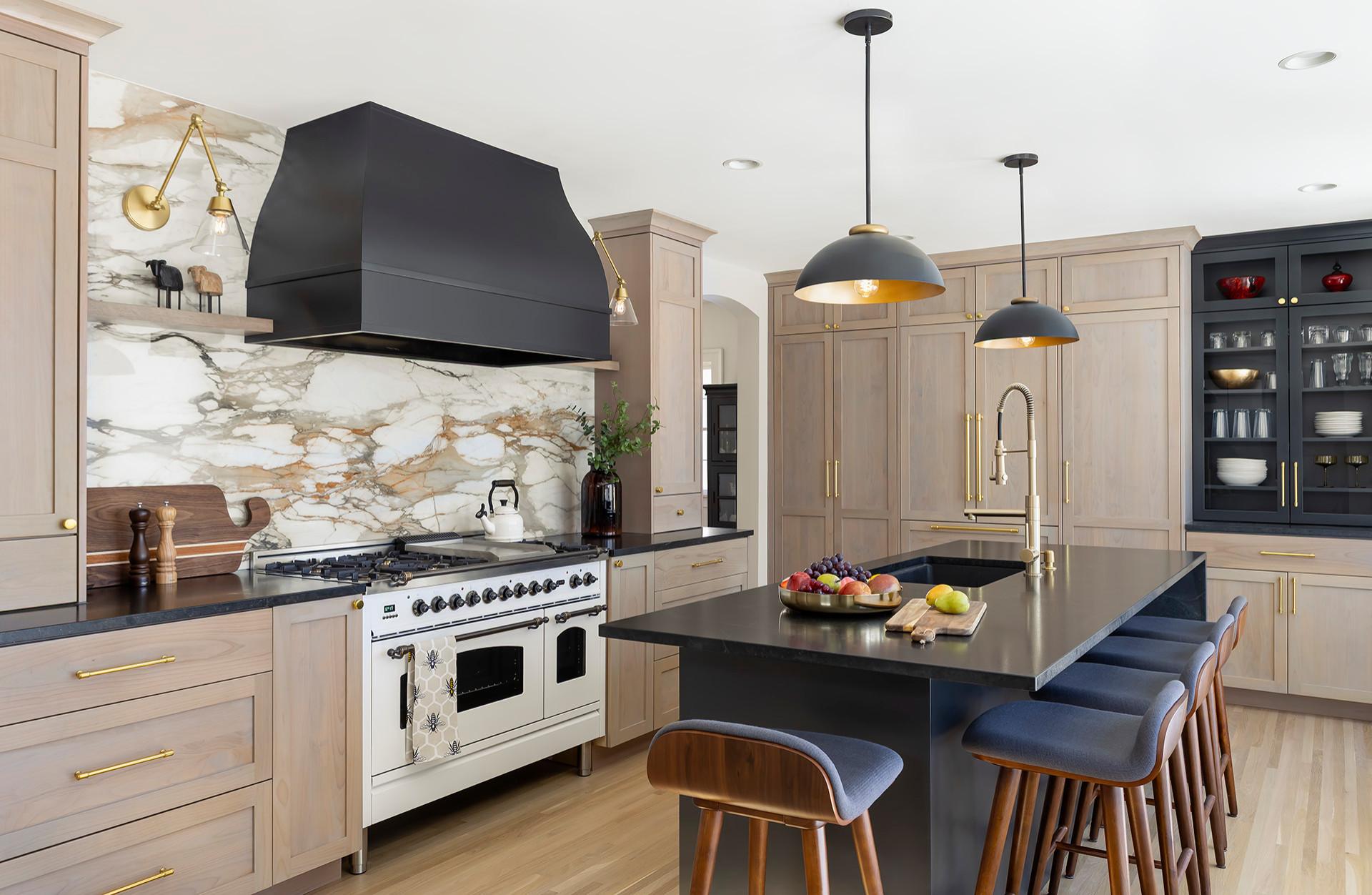
Where Should You Spend More on a Home Remodel?
If your remodeling budget isn't unlimited—and let's be honest, most aren't—prioritization becomes important.
Generally, it's worth focusing your budget on elements that are either highly visible, difficult to replace, or used constantly.
In a kitchen, that might mean prioritizing:
- Cabinetry
- Layout and functionality
- Countertops
- Lighting
- Hardware and fixtures
In a bathroom, you might prioritize:
- Layout
- Waterproofing and installation quality
- Tile
- Vanity and storage
- Plumbing fixtures
- Lighting
Meanwhile, there may be opportunities to save on decorative elements that can be changed later.
For example, it's relatively easy to replace décor, paint, or even a light fixture down the road. Changing the layout of a kitchen or replacing poorly planned cabinetry is much more expensive.
This is why good remodeling design isn't just about making a space beautiful.
It's about making smart decisions in the right order.
The Most Expensive-Looking Homes Are Usually the Most Intentional
When homeowners talk about a remodel feeling "high-end," they're often describing something they can't quite put their finger on.
The room feels balanced.
The colors work.
The materials complement one another.
The lighting is right.
The proportions make sense.
The storage is thoughtfully designed.
The details are finished properly.
Nothing feels accidental.
That's what makes a home remodel feel expensive.
You don't necessarily need marble everywhere, custom millwork in every room, or the most expensive fixtures available. You need a design that considers the entire space from the beginning.
The best remodels don't simply replace old materials with new ones. They create a home where the individual pieces work together to produce something that feels cohesive, functional, and uniquely yours.
And sometimes, the smallest details are what make the biggest difference.
Planning a Home Remodel?
If you're considering a kitchen, bathroom, basement, or whole-home remodel, starting with the design can help you make better decisions before construction begins.
At HOMEfix, we believe a successful remodel should combine good design, quality workmanship, and a plan that makes the process easier for the homeowner.
From cabinetry and countertops to tile, lighting, fixtures, and finishing details, having one team coordinate the project can help ensure that all of the individual decisions come together as one cohesive space.
Because when it comes to remodeling, the goal isn't simply to spend more.
It's to make every decision count.
If you're ready to start planning your next home improvement project, contact HOMEfix to talk through your ideas and see what's possible for your home.