If you’ve been researching cabinet materials, you’ve probably come across TFL (Thermally Fused Laminate).
→ Should you replace or reface your cabinets?
And depending on where you look, you’ll see a wide range of opinions.
Some people treat it like a budget fallback. Others use it in high-end, modern builds.
So which is it?
The reality is this:
TFL isn’t a compromise. It’s a specific type of solution.
And when it’s used in the right way, it delivers a level of consistency, efficiency, and clean design that’s hard to replicate with other materials.
What Is TFL (And How Is It Made)?
TFL stands for Thermally Fused Laminate, and the name describes exactly how it’s created.
A decorative paper layer (printed to look like wood grain or a solid color) is fused directly onto a core material (typically particleboard or MDF) using high heat and pressure.
This process creates a panel that is:
- Fully finished on the surface
- Uniform across every sheet
- Ready for fabrication without additional finishing
Unlike painted cabinets or stained wood, there’s no separate finishing step.
What you see is what’s permanently bonded to the panel.
Why That Manufacturing Process Matters
This is where TFL starts to separate itself.
Because the finish is applied in a controlled environment (not on-site), you get:
- Consistent color across all pieces
- No variation between doors, panels, and fillers
- No curing issues, drips, or imperfections from field finishing
For homeowners who want a clean, modern look, this level of control is a major advantage.
Why TFL Has Become More Popular in Modern Homes
Design trends have shifted over the past decade.
More homeowners are prioritizing:
- Flat-panel, slab-style cabinetry
- Neutral tones and natural textures
- Minimal variation and visual noise
At the same time, people want:
- Faster project timelines
- More predictable costs
- Materials that hold up to everyday life
TFL sits right at the intersection of those priorities.
It’s not trying to imitate traditional cabinetry, it’s built for a different style of design.
The Key Advantages of TFL Cabinets
1. A Clean, Uniform Aesthetic That’s Hard to Replicate
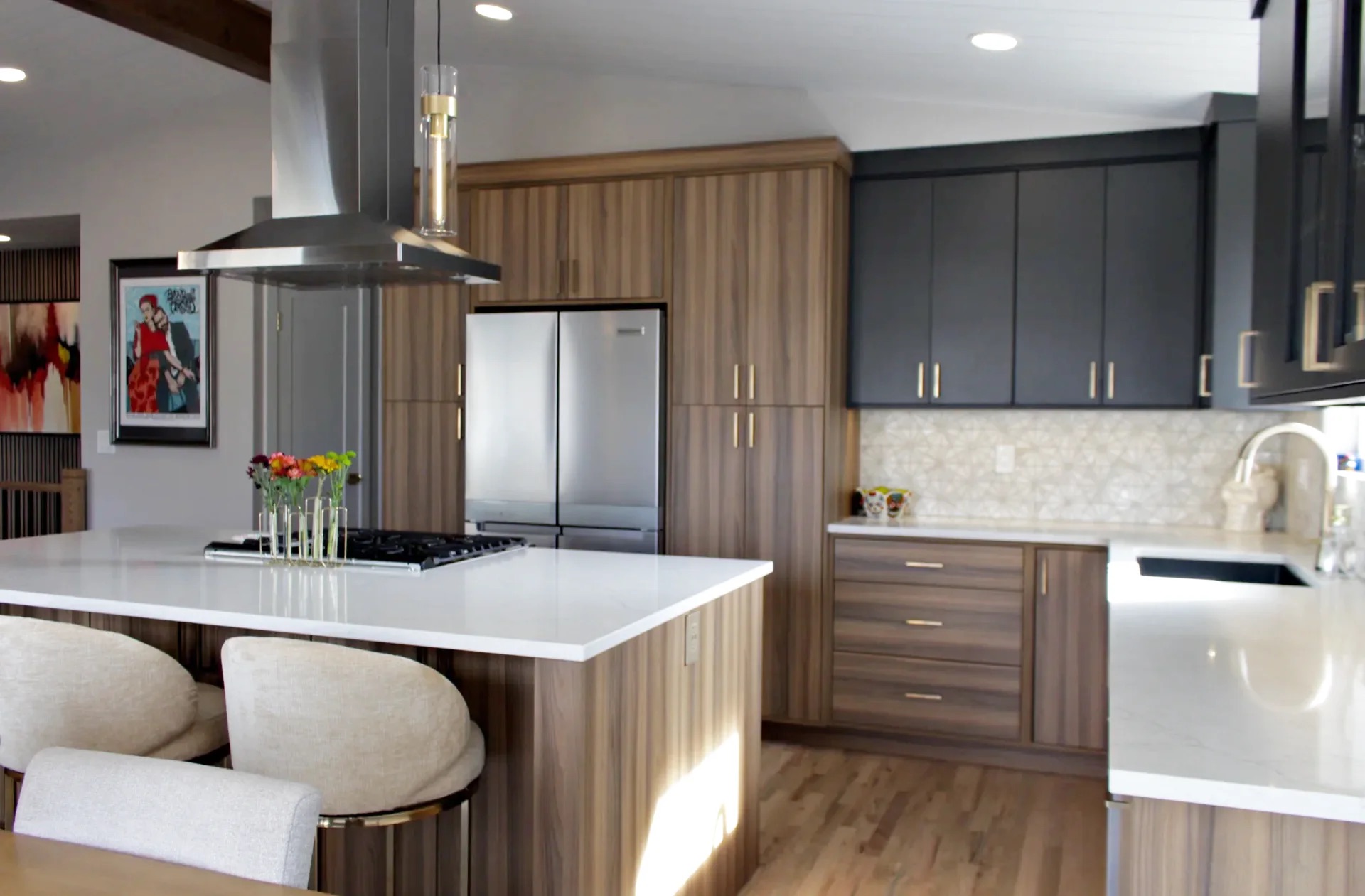
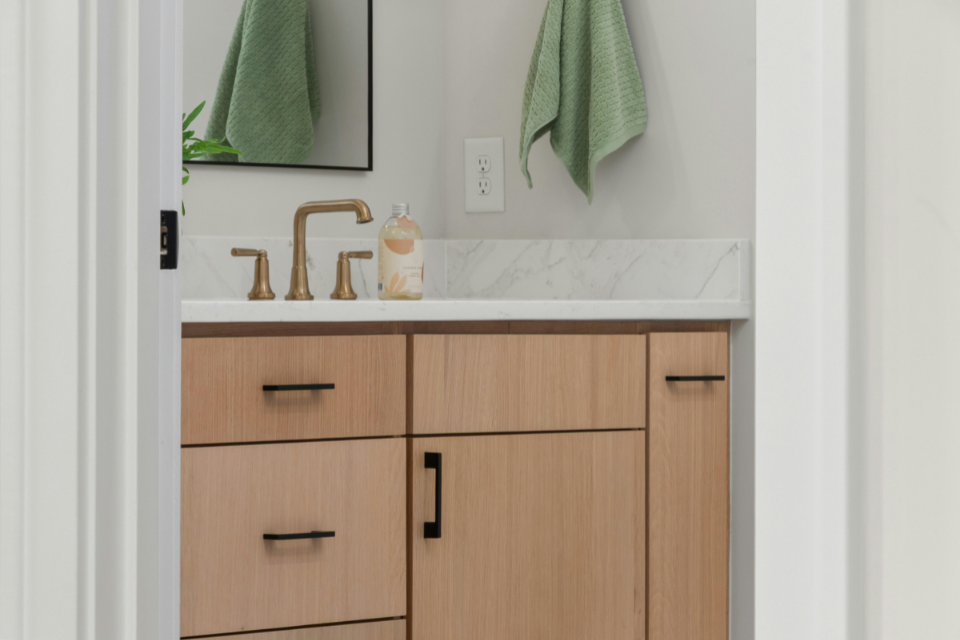
If you’ve ever seen a kitchen where everything feels perfectly aligned—color, tone, finish—that’s often the result of a material like TFL.
Because it’s manufactured:
- Every panel matches
- Every door is consistent
- Every section looks intentional
There’s no “this piece looks slightly different in this lighting” effect you sometimes get with wood or painted finishes.
For modern kitchens, that consistency creates a more polished, architectural look.
2. Built for Everyday Durability
TFL performs well under normal household use.
The surface is designed to resist:
- Scratches from daily wear
- Stains from spills and food prep
- General surface abrasion
It’s not indestructible—but it’s built for real life, not just showroom conditions.
That makes it especially appealing for:
- Busy households
- Rental or multi-use spaces
- Areas that see constant use
3. Low Maintenance (No Ongoing Upkeep Required)
One of the biggest advantages of TFL is what it doesn’t require.
There’s no need for:
- Repainting
- Sealing
- Special cleaning products
You’re not maintaining a finish, and for many homeowners, that simplicity is just as important as the look.
4. Cost Control Without Sacrificing Design
Cabinet costs can escalate quickly, especially when you factor in:
- Labor-intensive finishing
- Custom paint or stain processes
- Material waste and variability
TFL helps streamline that.
Because it’s pre-finished and consistent:
- Fabrication is more efficient
- Installation is more predictable
- Overall costs are easier to manage
5. Ideal for Precision Fabrication
This is one of the most overlooked advantages (and one of the most important).
TFL panels and CNC machining allow for:
- Exact, repeatable cuts
- Tight tolerances
- Seamless integration across components
That’s how you achieve:
- Perfectly aligned cabinetry
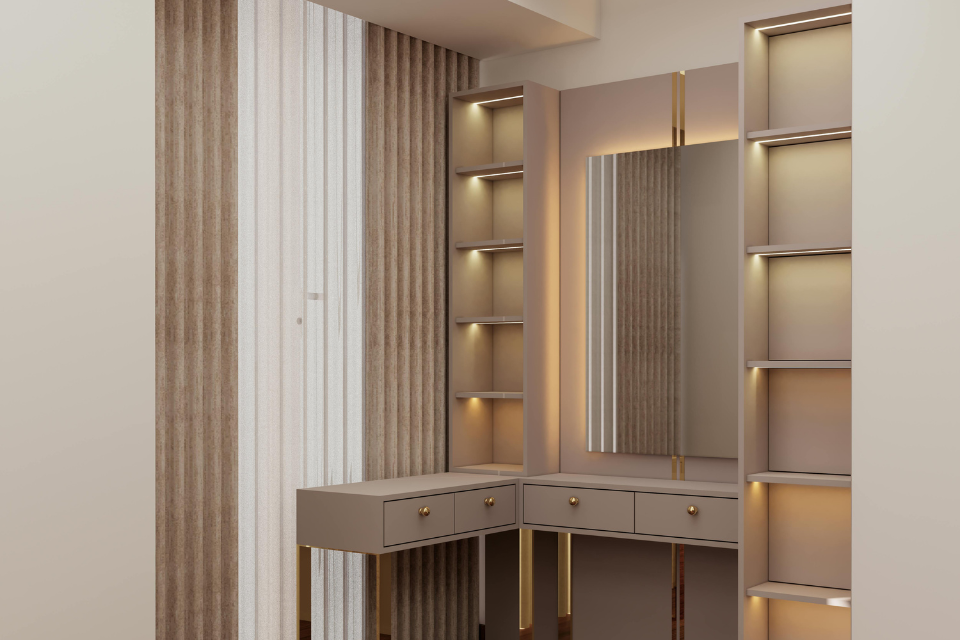
- Built-ins that look truly custom
- Clean, modern lines without gaps or inconsistencies
When fabrication is done in-house, the level of control goes even further.
→ Truly custom kitchen cabinets
6. Strong Performance in Large or Multi-Room Projects
Because of its consistency and efficiency, TFL is especially effective for:
- Whole-home cabinetry projects
- Closets and storage systems
- Offices and built-ins across multiple rooms
You get a unified look across the entire space, without the variation that can happen with other materials.
Understanding the Core: Particleboard vs. MDF
TFL isn’t just about the surface—the core matters too.
Most TFL panels use either:
- Particleboard (cost-effective, stable, widely used)
- MDF (Medium Density Fiberboard) (denser, smoother, slightly heavier)
Both are engineered for stability and consistency.
The key difference is:
- MDF offers a smoother, more refined base
- Particleboard is lighter and more economical
In most cases, the choice depends on the application—not a strict “better vs worse” scenario.
Edge Banding: The Detail That Makes or Breaks the Look
Because TFL panels are manufactured sheets, exposed edges need to be finished with edge banding.
When done correctly, edge banding:
- Matches the face of the panel
- Creates a seamless appearance
- Protects the core material
High-quality fabrication ensures:
- Tight adhesion
- Clean corners
- Long-term durability
This is one of the biggest factors separating average results from high-end ones.
Where TFL Works Best
TFL is an excellent fit for:
Modern Kitchens
Especially slab-style or European-inspired designs where consistency is key.
Custom Closets
Clean, durable, and ideal for large systems with repeated components.
Built-Ins & Storage
Entertainment centers, mudrooms, office cabinetry—anywhere you want a cohesive look.
Multi-Use Spaces
Basements, rentals, and secondary living areas where durability and efficiency matter.
What to Consider Before Choosing TFL
TFL performs extremely well—but like any material, it works best when used intentionally.
A few things to keep in mind:
- It’s designed to be installed and left as-is (not refinished later)
- Proper installation is key to long-term performance
- Like all cabinetry, it should be protected from excessive moisture exposure
None of these are drawbacks—they’re just part of choosing the right material for the right application.
→ How to choose finishes you won't regret in 5 years
TFL vs. Other Cabinet Options
Here’s how TFL compares in practical terms:
- Vs. Painted Cabinets:
More durable and lower maintenance, with less risk of chipping or wear over time - Vs. Wood Veneer:
More consistent and predictable, while veneer offers more natural variation - Vs. Solid Wood:
More cost-efficient and stable, while wood offers traditional aesthetics and refinishing potential
Each option has its place—TFL just excels in efficiency, consistency, and modern design.
Why Execution Matters More Than the Material
One of the biggest misconceptions about TFL is that the material alone determines the outcome.
In reality, the final result depends heavily on:
- Design planning
- Fabrication quality
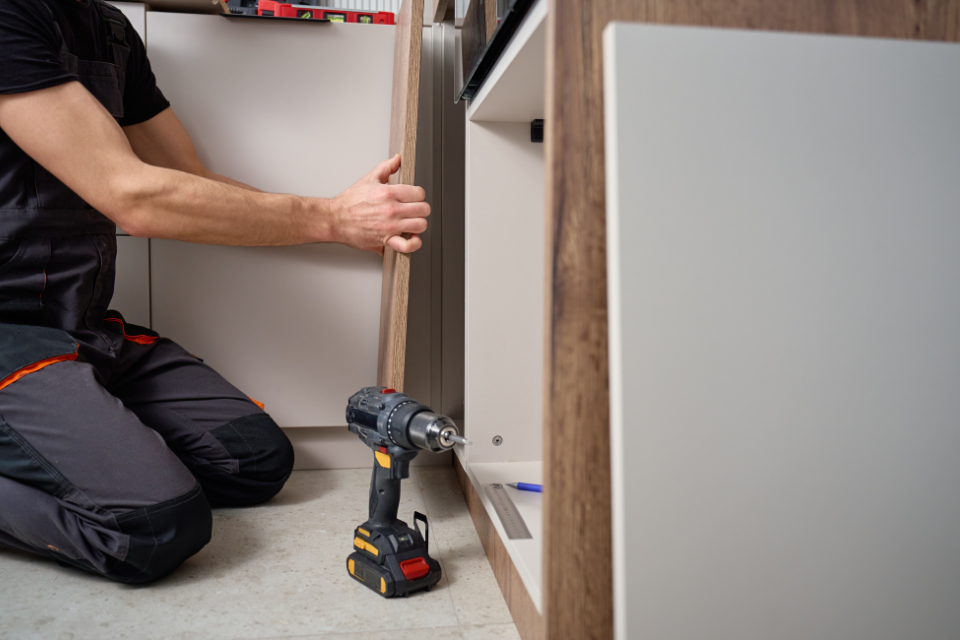
- Installation precision
Well-designed, properly fabricated TFL cabinetry can look and perform at a very high level.
Poorly executed work—regardless of material—will always show.
The Bottom Line
TFL isn’t a shortcut—it’s a smart, intentional choice.
It’s ideal for homeowners who want:
- A clean, modern aesthetic
- Reliable, everyday durability
- Low maintenance over time
- Efficient, custom-built solutions
And when it’s paired with the right design and fabrication process, it delivers a result that feels cohesive, polished, and built to last.