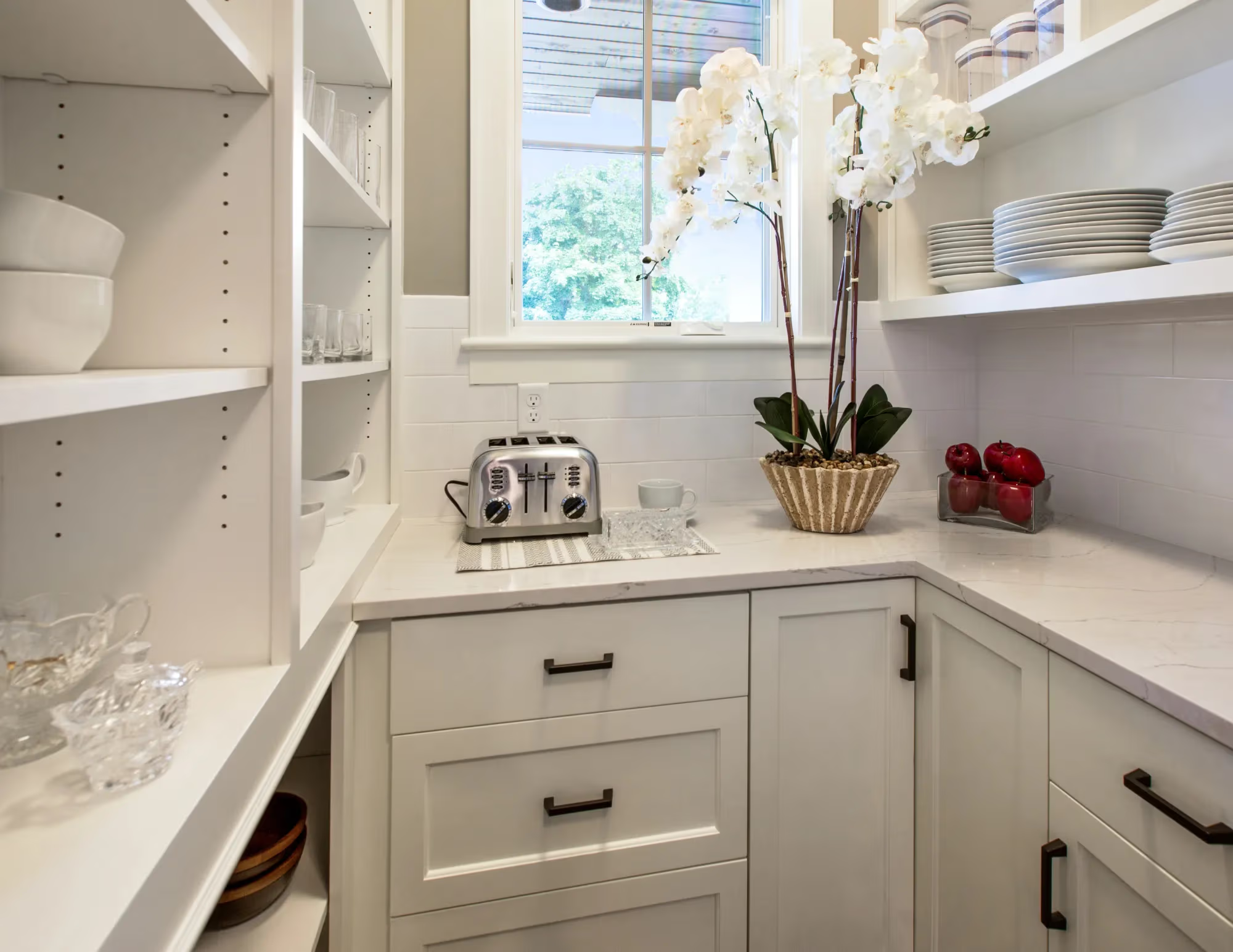
If you’ve been dreaming about a walk-in pantry for your kitchen remodel, you’re not alone. For many homeowners, it’s the holy grail of kitchen upgrades—a spot to hide the mess, store the bulk Costco haul, and keep countertops clear.
But here’s the thing: just because you can have a walk-in pantry doesn’t mean it will automatically be functional. We’ve seen gorgeous pantries that end up being a black hole for expired cereal and mystery cans. The key is planning—down to the shelf depth, lighting placement, and even the way the door swings.
Let’s break down how to make your walk-in pantry actually work for you, based on what we’ve learned from remodeling kitchens all over Colorado Springs.
1. Start with How You Shop & Cook
A good pantry isn’t about fitting everything—it’s about fitting your things. Do you shop in bulk? Stock up on snacks? Keep a dozen varieties of hot sauce?
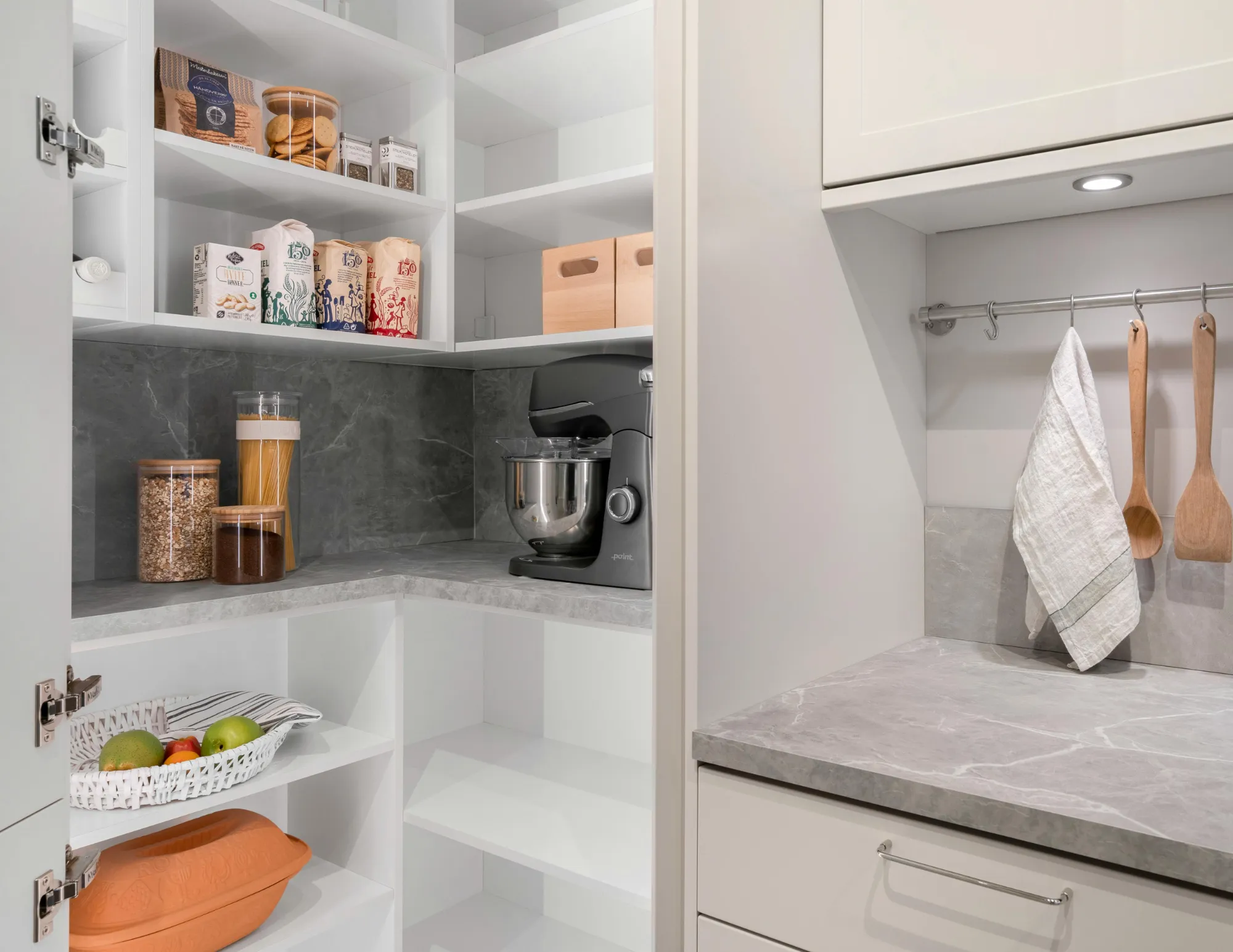
Take inventory before you even touch a tape measure. If you buy cases of sparkling water, you’ll want a dedicated floor-level spot to stack them. If you bake often, you might want deeper shelves for flour bins and a pull-out for your stand mixer.
2. Get the Shelf Depth Right
This is where most pantries go wrong. Too deep, and you’ll lose things in the back. Too shallow, and you’ll constantly be rearranging.
- Upper shelves: 10–12 inches deep for smaller items (cans, jars, spices)
- Mid-level shelves: 14–16 inches for cereal boxes, snack containers
- Lower shelves/floor space: 18–24 inches for appliances, bulk storage
Pro tip: Adjustable shelves are worth it. Your storage needs will change over time—especially if you go through a kitchen gadget phase (we’ve all been there).
3. Don’t Forget Lighting
Natural light is a bonus, but most walk-in pantries don’t have windows. That means you need good lighting so you can see everything at a glance:
- Recessed LED lighting for even coverage
- Under-shelf lighting for deep or lower shelves
- Motion-sensor lights so you’re never fumbling for a switch with arms full of groceries
4. Make the Door Work for You
The way your pantry door swings matters more than most people think. If it opens inward, it can block shelf space or make the room feel cramped.
Options we love:
- Outward swinging hinged door to keep the inside clear
- Pocket door for tight spaces
- Frosted glass door if you want it to feel more connected to the kitchen (bonus: it looks great when lit from inside)

5. Include Counter Space (If You Can)
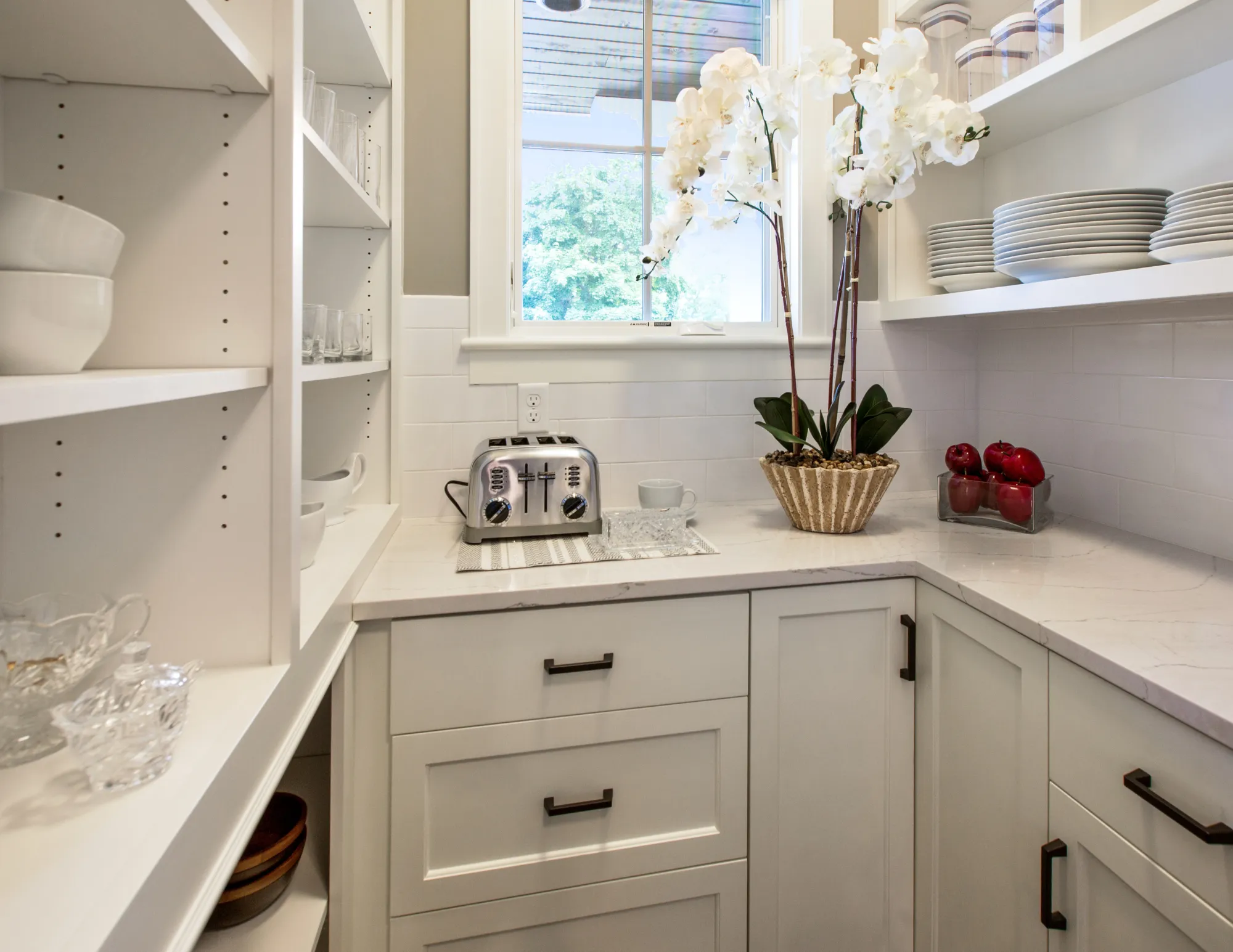
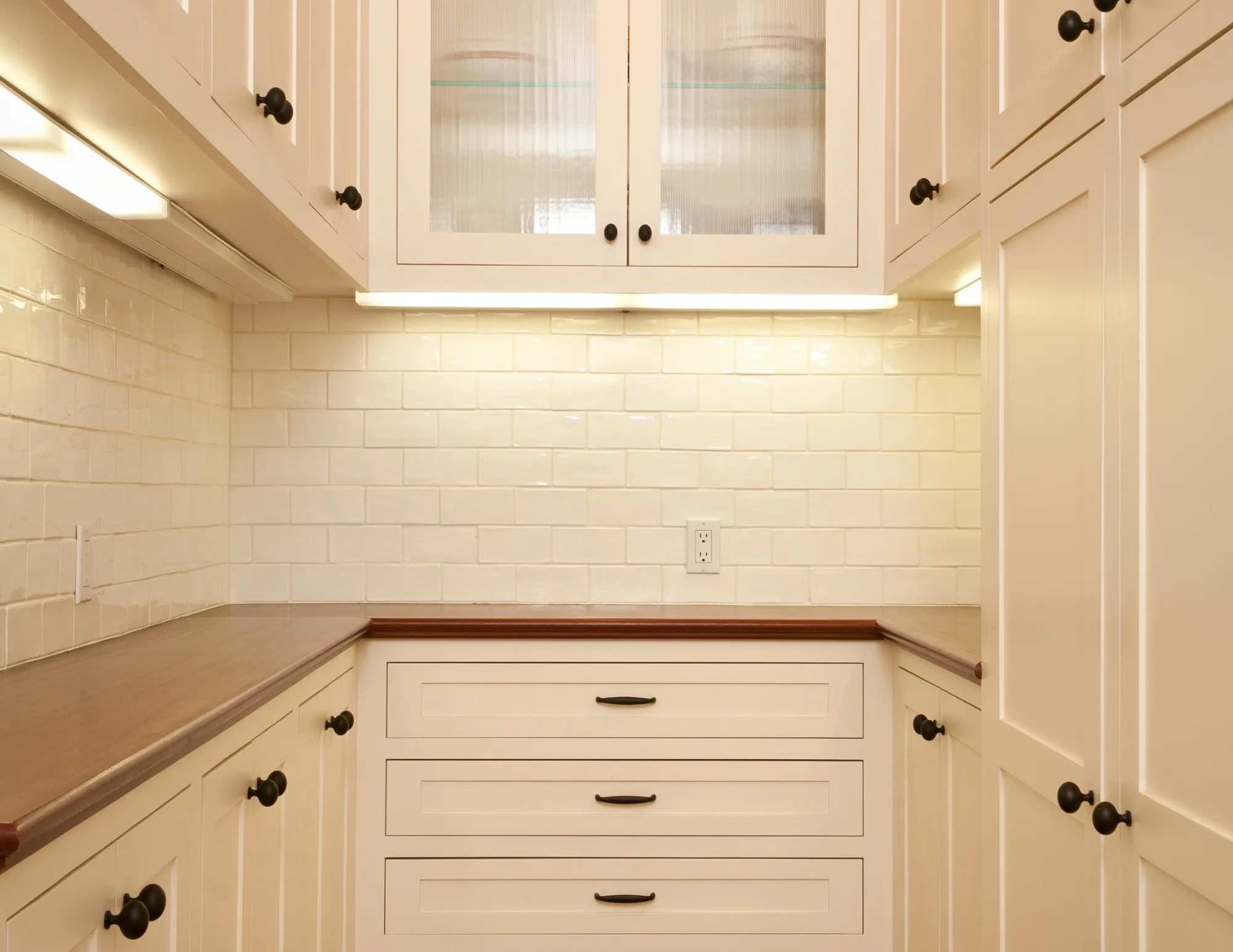
If your pantry is big enough, consider adding a short run of countertop. This becomes your hidden prep zone—perfect for unloading groceries, plugging in small appliances, or even hiding a coffee maker.
We’ve done pantries where the toaster, blender, and stand mixer all live behind closed doors, freeing up the main kitchen counters completely.
6. Keep Airflow in Mind
Colorado’s dry climate helps, but even here, airflow matters. Stale, stuffy pantries can lead to faster spoilage for produce and make the space feel musty.
A simple vent, small ceiling fan, or even a louvered door can help keep air circulating.
7. Add Some Style
It’s still part of your kitchen, so don’t make your pantry an afterthought. Matching trim, nice hardware, and a fresh coat of paint can make it feel intentional. We’ve even installed wallpaper in pantries for a fun surprise when you open the door.
Final Thoughts
A walk-in pantry isn’t just a storage space—it’s an extension of your kitchen. Plan it with the same care you give to your cabinets, countertops, and appliances, and it’ll quickly become your favorite part of the house.
At HOMEfix, we’ve built pantries for kitchens of every shape and size here in Colorado Springs. If you want one that’s not only beautiful but functional for your life, we’d be happy to help design and build it.