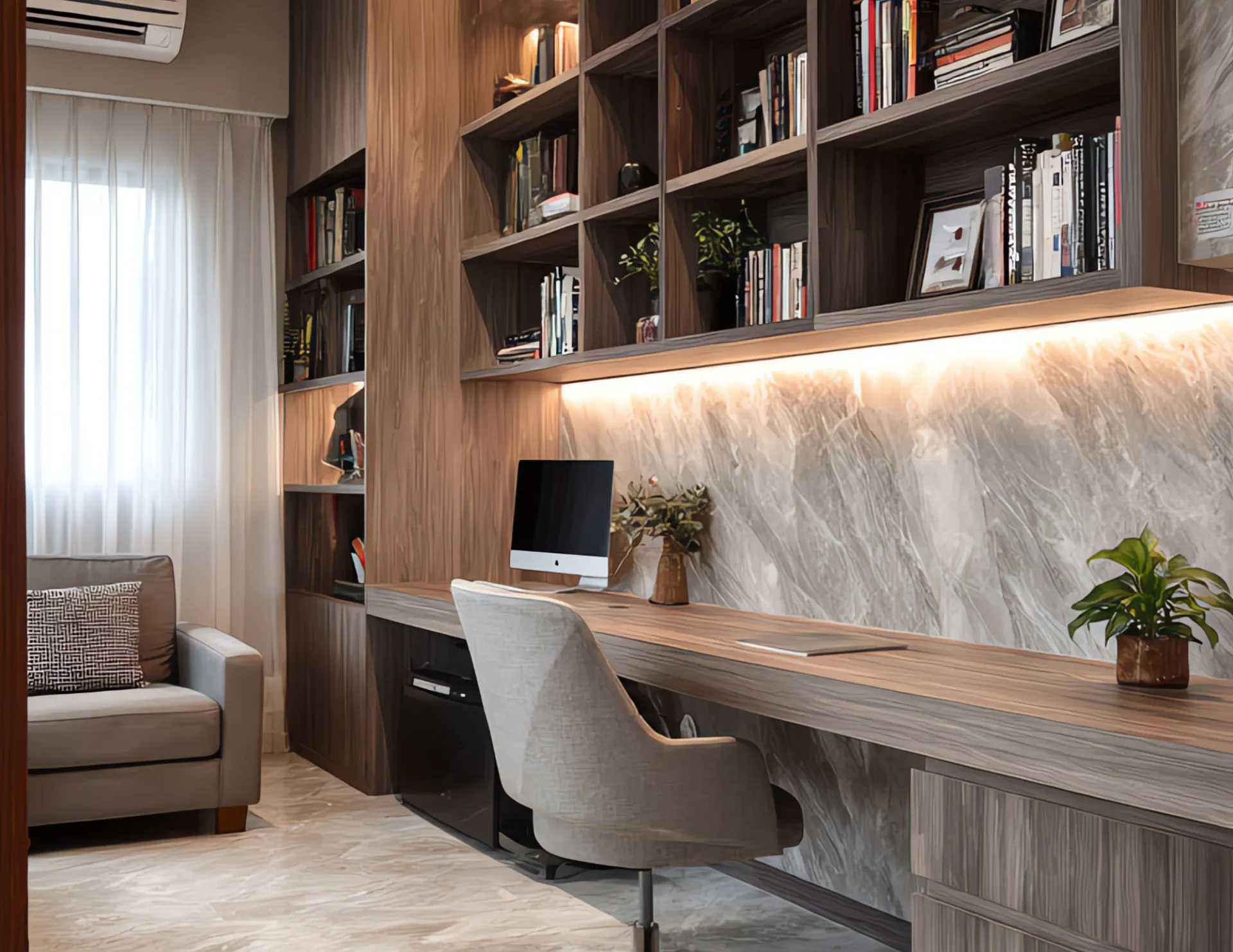
In fact, some of the most inviting homes have plenty of variety. One room might have a dramatic tile choice, another might lean warm and traditional, and a third might have a more modern feel. What makes the entire home work together is that there are visual connections between the spaces.
Creating a cohesive home design isn't about making every room match. It's about creating a sense of flow.
When colors, materials, finishes, proportions, and design details relate to one another from room to room, your home feels more intentional—and often more custom.
This becomes especially important when you're remodeling. If you're renovating a kitchen, bathroom, basement, or several spaces at once, it's easy to choose every finish individually and end up with a collection of beautiful rooms that don't feel like they belong in the same house.
The good news? You don't need to use the same flooring, paint color, hardware, or countertop everywhere to create a cohesive look.
You simply need a plan.
Here are 12 ways to create a cohesive look throughout your home without making every room look identical.
1. Start With an Overall Design Direction
Before choosing individual materials, decide how you want your home to feel.
This doesn't necessarily mean choosing a strict design style like "modern farmhouse" or "transitional." Instead, think about the overall characteristics you want to carry throughout the house.
Do you want your home to feel:
- Warm and inviting?
- Clean and contemporary?
- Classic and timeless?
- Light and airy?
- Moody and dramatic?
- Natural and relaxed?
- Refined and sophisticated?
These words can become your design filter.
For example, if you want a warm, elevated home, you might consistently gravitate toward warm wood tones, softer neutrals, natural textures, and classic hardware.
If you prefer a clean, contemporary look, you might lean toward simpler cabinetry, streamlined lighting, fewer competing finishes, and a more restrained color palette.
The important thing is to establish your direction before you start choosing individual products.
Otherwise, it's easy to fall in love with one material at a time without thinking about how everything will work together.
Think beyond trends
You don't have to avoid trends altogether. But if every room follows a completely different trend, your home can quickly feel disjointed.
Instead, use trends selectively and let your underlying design direction remain consistent.
A trendy tile can work beautifully in a bathroom without dictating the entire home's aesthetic.
2. Choose a Whole-Home Color Palette
One of the easiest ways to create visual continuity is through color.
That doesn't mean painting every room the same color.
Instead, choose a small group of colors that can repeat throughout your home in different ways.
A whole-home palette might include:
- One primary neutral
- One or two secondary neutrals
- A wood tone
- One or two accent colors
- A consistent metal finish
- A few complementary natural colors
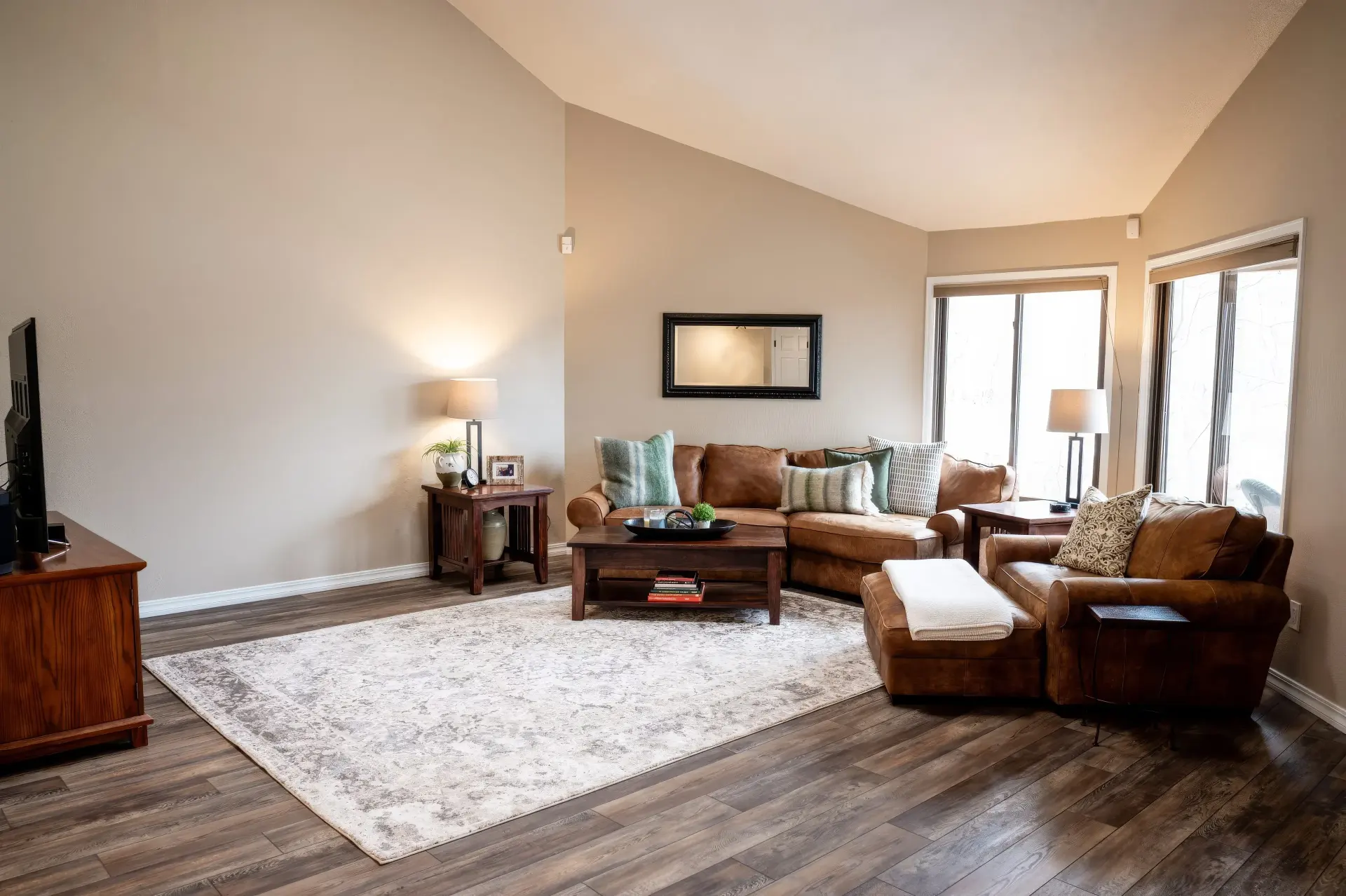
For example, a home might use warm beige walls as its primary neutral, white trim and ceilings, medium-tone wood throughout, matte black accents, and muted blue or green in select rooms.
You don't need every color in every room.
Maybe the kitchen has blue cabinetry accents, while the bathroom has a blue-gray tile. The colors don't have to match exactly. They simply need to feel related.
Use color repetition strategically
If you introduce a color in one space, consider repeating it somewhere else.
This could be as subtle as:
- Blue tile in the bathroom and blue artwork in the living room
- Warm wood cabinetry in the kitchen and wood accents in the entry
- Black lighting in the kitchen and black plumbing fixtures in the bathroom
- Cream upholstery in the living room and cream-colored tile elsewhere
These repeated elements create connections that your eye picks up without necessarily realizing why the home feels cohesive.

3. Pick Your Flooring With the Entire Home in Mind
Flooring has a major impact on how connected your rooms feel.
If every room has a completely different floor, the transitions can make your home feel visually chopped up.
That doesn't mean you have to use one flooring material everywhere. Bathrooms, laundry rooms, and other spaces often benefit from different flooring for practical reasons.
But where possible, choose flooring materials that complement one another.
For example, you might use the same flooring throughout the main living areas and transition to tile in bathrooms. Or you could select different materials that share similar undertones.
Pay attention to undertones
This is one of the most overlooked aspects of cohesive home design.
A floor might look "gray" at first glance, but it could have blue, green, beige, or brown undertones.
The same applies to:
- Paint
- Countertops
- Tile
- Cabinetry
- Upholstery
- Wood
Two materials can technically be different colors while still working beautifully together because their undertones are compatible.
Conversely, two materials that appear similar in a showroom can clash when placed next to each other.
Always look at samples together before making a final decision.
4. Repeat Materials Without Overdoing It
Repeating materials is another effective way to create continuity.
If you use a particular wood tone in your kitchen, consider bringing that tone into another area of the house.
If you choose a particular stone for a fireplace, you might use a similar natural material somewhere else.
But repetition doesn't mean duplication.
You don't need to use the exact same tile in every bathroom or the exact same countertop throughout the house.
Instead, look for relationships.
For example:
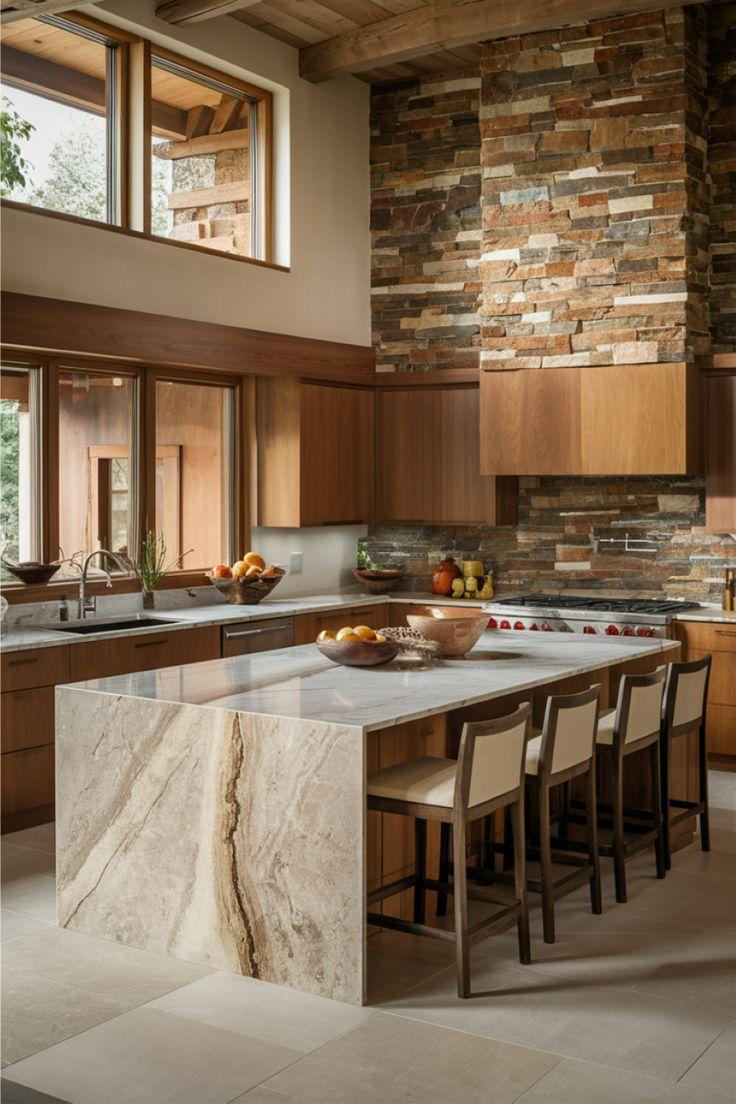
Kitchen: warm wood cabinets + light stone countertops
Bathroom: warm wood vanity + light stone-inspired tile
Living room: warm wood furniture + natural stone fireplace
Each room has its own identity, but the materials create a common thread.
This is especially effective in open-concept homes, where several spaces are visible from one another.
5. Be Intentional About Hardware and Metal Finishes
Your hardware might seem like a small detail, but when you have dozens of handles, faucets, light fixtures, hinges, and other metal elements throughout the home, those details add up.
That doesn't mean your entire home has to use one metal finish.
Mixed metals can absolutely work.
The key is to make them look intentional.
You might use:
- Matte black as your primary accent
- Brushed nickel in selected spaces
- Brass as a smaller decorative accent
The goal is to avoid having every room introduce a completely different combination of finishes without a reason.
Don't feel obligated to match everything
A common misconception is that your kitchen faucet, cabinet hardware, bathroom fixtures, door hardware, and light fixtures all have to be the same finish.
They don't.
Instead, think about visual hierarchy.
Choose a dominant finish and use other finishes as supporting accents.
This gives your home more depth while still maintaining a sense of consistency.

6. Create Consistency With Lighting
Lighting is one of the most powerful—and most overlooked—ways to create a cohesive home.
Your lighting doesn't need to look identical from room to room, but the fixtures should make sense together.
For example, if your home has a contemporary design direction, you probably don't want one room filled with ultra-modern fixtures and another filled with heavily traditional chandeliers unless there's a deliberate reason for the contrast.
Consider the shapes and finishes of your fixtures.
You might repeat:
- Matte black
- Brushed nickel
- Aged brass
- Clear glass
- Opal glass
- Simple geometric shapes
- Warm wood accents
You can then vary the actual fixture styles based on the room.
A kitchen might have pendants, while a hallway uses flush mounts and a dining room uses a chandelier.
The fixtures serve different purposes while still feeling like part of the same collection.
Don't forget light temperature
The color temperature of your bulbs can also affect the overall feel of your home.
If one room has warm, inviting lighting and another has noticeably cooler lighting, the transition can feel abrupt.
Using consistent lighting temperatures where appropriate can make your home feel more comfortable and visually connected.
7. Let Architectural Details Repeat
Design cohesion isn't only about finishes.
Architectural details can create some of the strongest visual connections throughout a home.
Think about:
- Arches
- Curved corners
- Wall paneling
- Wainscoting
- Trim profiles
- Built-ins
- Ceiling details
- Door styles
- Cabinet profiles
If you have an arched doorway between two spaces, you could repeat curved details in a bathroom mirror, lighting fixture, or furniture.
If your home has traditional trim, you might carry similar trim profiles into a remodel.
These details can make different rooms feel like they were designed together—even when the rooms have different finishes.
8. Use One or Two "Signature" Elements
A cohesive home shouldn't be boring.
One way to keep things interesting is to establish a few signature design elements.
Maybe your home consistently incorporates:
- Natural wood
- Arched details
- Black accents
- A particular shade of blue
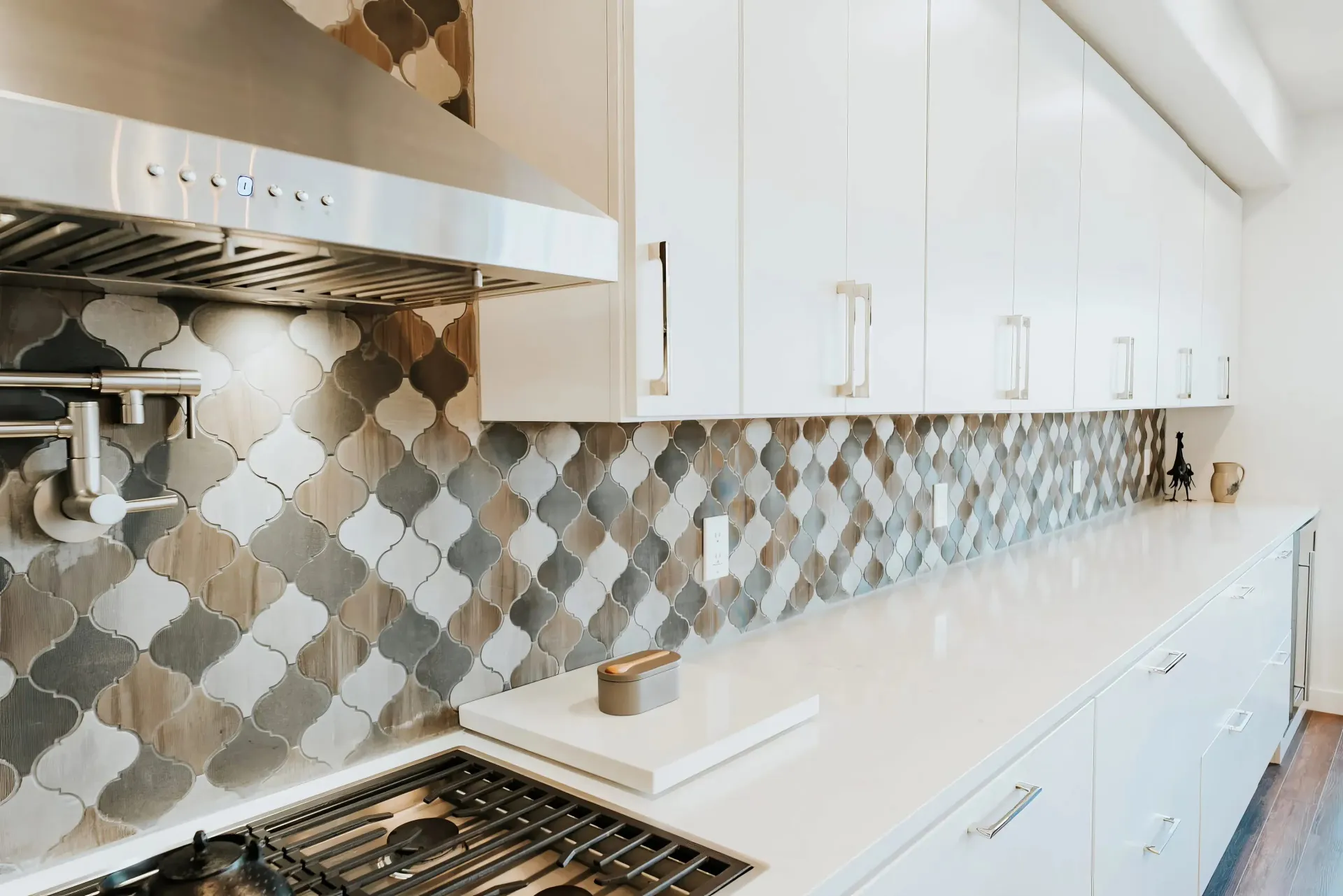
- Statement tile
- Warm stone
- Fluted or reeded textures
- Curved furniture
These elements become part of the home's visual identity.
The trick is to repeat them enough that they feel intentional, but not so much that they become predictable.
For example, if you love arches, you don't need an arch in every room.
An arched doorway in one area, an arched mirror in a bathroom, and a curved light fixture elsewhere may be enough to establish the connection.
9. Give Each Room Its Own Personality
Cohesive does not mean identical.
In fact, trying to make every room match can make your home feel flat.
Instead, think of your home like a collection of chapters.
Each room can have its own personality while still belonging to the same story.
Your kitchen might be bright and functional.
Your primary bathroom might be more dramatic.
Your living room might be warm and relaxed.
Your powder room might be the place where you take a design risk.
The common thread might be the color palette, hardware, flooring, wood tones, or architectural details.
Where to experiment
Smaller spaces are often great places to introduce more personality.
A powder room, for example, can handle a bolder wallpaper or tile because it's a contained space.
That gives you an opportunity to experiment without making the entire home feel visually disconnected.
10. Choose Cabinetry Styles That Work Together
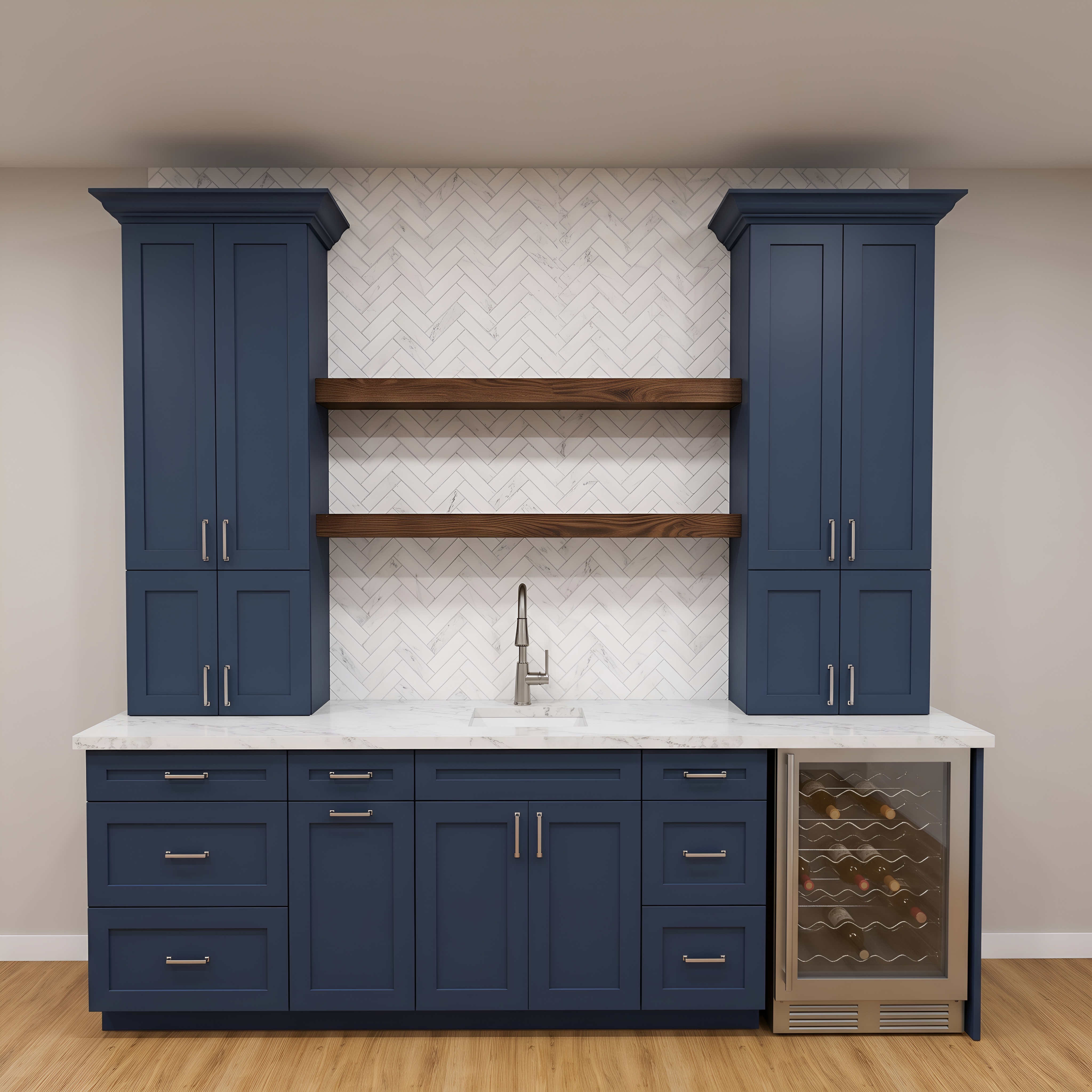
If you're remodeling multiple areas of your home, cabinetry can become another opportunity for continuity.
Your kitchen cabinets don't have to be identical to your bathroom vanities.
But they should generally feel like they belong to the same design world.
For example, if your kitchen uses a simple shaker profile, a bathroom vanity with a similarly clean profile can help maintain consistency.
You can change the color or finish while keeping the underlying style related.
This is particularly useful in homes with multiple bathrooms, a kitchen, a wet bar, a laundry room, or built-in storage.
Think about cabinetry as architecture
Cabinetry occupies a lot of visual space.
That means the door style, proportions, color, hardware, and surrounding materials can have a significant impact on the overall design.
Choosing these elements with the rest of the home in mind can prevent each room from feeling like its own unrelated project.
11. Connect Open Spaces With Repeated Visual Elements
Open-concept homes require particularly careful attention to cohesion.
When your kitchen, dining room, and living room are visible from one another, you don't have the same visual separation that you would in a traditional floor plan.
The spaces need to work together.
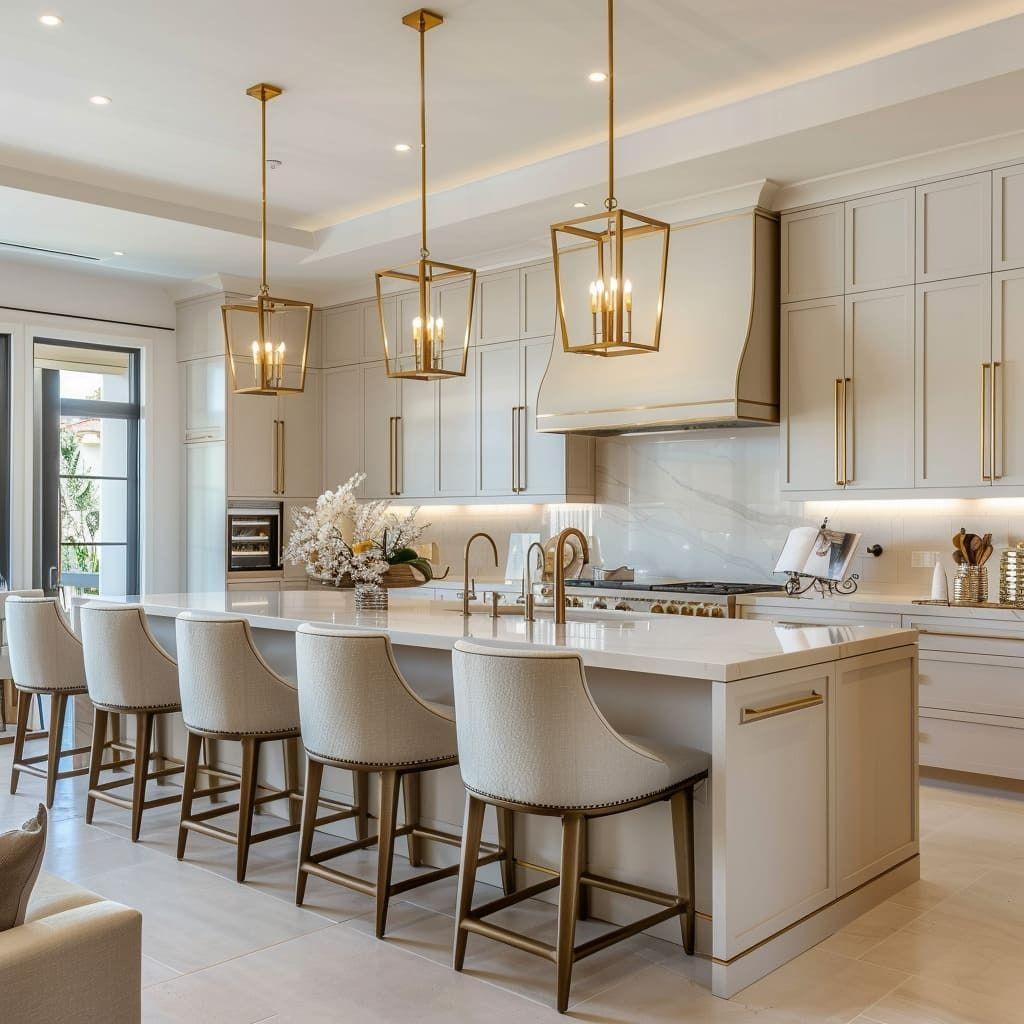
One of the easiest approaches is to create repetition across the connected areas.
For example:
Kitchen: black pendant lights + warm cabinetry
Dining: black chandelier + warm wood table
Living: black accents + warm wood furniture
You don't need to use identical furniture or fixtures.
Instead, you're creating a visual rhythm.
This allows each zone to feel distinct while still functioning as one larger space.
12. Plan the House Before You Plan Each Room
This may be the most important tip of all.
When you're remodeling, it's easy to make decisions one room at a time.
You pick a bathroom tile because you love it.
Then months later, you remodel the kitchen and choose something completely different.
Then you update the living room and introduce another wood tone.
Individually, every decision might look great.
Together, they may not.
That's why it helps to step back and create a whole-home design plan before making major selections.
You don't necessarily have to purchase everything at once.
But you should have an idea of:
- Your overall color palette
- Flooring direction
- Cabinet styles
- Wood tones
- Preferred metal finishes
- Lighting style
- Countertop materials
- Architectural details
- Overall design direction
This gives you a framework for making decisions later.
How to Make Different Design Styles Work Together
You don't have to commit to one design style throughout your entire home.
Many homeowners love a combination of styles.
Maybe you like traditional architecture but prefer modern finishes.
Maybe you love the warmth of transitional design but want a few contemporary elements.
Maybe your home has rustic architectural features but you want the interiors to feel clean and updated.
That's completely workable.
The key is to find common characteristics.
For example, a traditional home with modern updates might use:
- Classic cabinet profiles
- Clean-lined lighting
- Simple hardware
- Natural materials
- Neutral colors
- Traditional architectural details
The styles don't have to be identical. They simply need to coexist.
Common Mistakes That Make a Home Feel Disjointed
If your home doesn't feel cohesive, it may be because of one of these common issues.
Too many competing colors
Using a different color palette in every room can make the home feel fragmented.
Too many wood tones
Wood tones don't have to match perfectly, but too many unrelated tones can compete with one another.
Changing metal finishes constantly
Mixed metals can work beautifully, but randomly switching finishes from room to room can make the choices feel accidental.
Choosing finishes in isolation
A countertop may look great by itself but clash with your cabinets or flooring.
Always evaluate major finishes together.
Following trends room by room
A trendy kitchen, trendy bathroom, trendy living room, and trendy bedroom can create a home that feels like several different houses.
Ignoring the transitions
Pay attention to what happens between rooms.
Flooring transitions, paint colors, trim, doorways, and sightlines all affect how connected your spaces feel.
How to Create a Cohesive Home When Remodeling One Room at a Time
Not everyone is remodeling their entire house at once.
In fact, most homeowners aren't.
If you're tackling your home one project at a time, the solution is to create a design roadmap.
Before starting the next room, document what you've already chosen.
Keep track of:
- Paint colors
- Flooring
- Cabinet colors
- Hardware finishes
- Countertops
- Tile
- Lighting finishes
- Wood tones
- Trim colors
You can then use those decisions as a reference for future projects.
This doesn't mean every future room has to copy the previous one.
Instead, you'll have a starting point that helps you make new selections that complement what you've already done.
Don't Forget the Details That Tie Everything Together
Some of the smallest details can have a surprisingly large impact on a home's overall appearance.
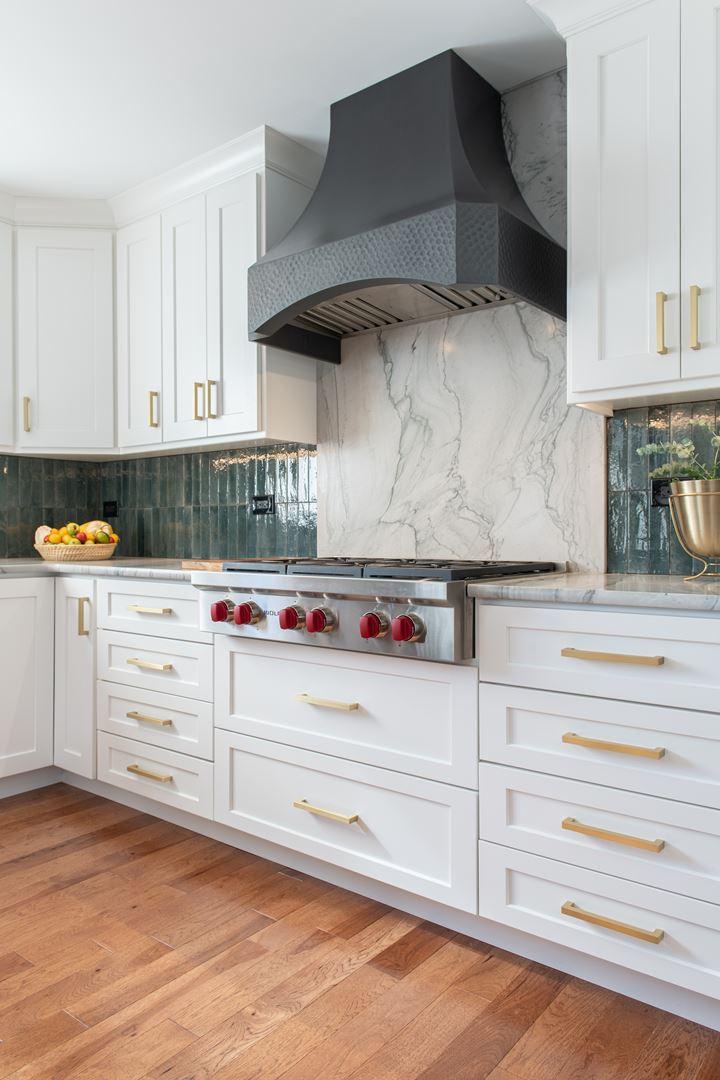
Consider repeating elements such as:
- Door hardware
- Light switch plates
- Cabinet hardware
- Plumbing finishes
- Interior doors
- Trim
- Mirrors
- Light fixtures
- Window treatments
- Wood accents
You don't have to make all of these identical.
But when they're thoughtfully coordinated, the home starts to feel much more intentional.
A Cohesive Home Should Still Feel Like Your Home
At the end of the day, your home doesn't need to look like a showroom.
The goal isn't perfection.
The goal is to create spaces that feel connected while still reflecting the people who live there.
A cohesive home can have bold artwork, unexpected tile, vintage furniture, modern lighting, and completely different personalities from room to room.
What matters is that there are enough shared elements to create visual continuity.
Think of it as a common language.
Your rooms don't have to say the same thing—but they should be able to understand each other.
Ready to Create a More Cohesive Home?
Whether you're remodeling one room or tackling multiple spaces, having a plan before choosing finishes can make the entire process easier.
At HOMEfix, our team helps Colorado Springs homeowners bring different pieces of a project together—from remodeling and custom cabinetry to electrical, plumbing, painting, flooring, and more.
Instead of coordinating multiple contractors and trying to make every decision independently, you can work with one team across your home improvement projects.
One team. Every service.
If you're ready to create a home that feels more intentional, functional, and uniquely yours, [contact HOMEfix] to start planning your next project.
Frequently Asked Questions
How do I make my house look cohesive?
Start with an overall design direction and a consistent color palette. From there, repeat complementary materials, wood tones, hardware finishes, lighting styles, and architectural details throughout the home. The rooms don't need to match exactly—the goal is to create visual connections.
Should every room in a house have the same color scheme?
No. A cohesive home can have different colors in different rooms. Using a consistent underlying palette or repeating accent colors can help the rooms feel connected without making them identical.
Do all the metals in a house need to match?
No. Mixing metals can add visual interest. However, choosing a dominant finish and using secondary finishes intentionally can make the combination feel more cohesive.
Should flooring be the same throughout the house?
Not necessarily. Using the same flooring across connected living areas can create continuity, while tile or other materials may make more sense in bathrooms, laundry rooms, or other areas. When using different flooring, consider how the colors and undertones work together.
How do you make an open-concept home feel cohesive?
Use repeated colors, materials, finishes, and design details across the connected spaces. Coordinating lighting, cabinetry, wood tones, and accent colors can help define individual areas while making the entire open space feel intentional.
Can different design styles work together in one house?
Absolutely. The key is finding common elements between the styles. Similar colors, materials, proportions, architectural details, or finishes can help different styles coexist without making the home feel disjointed.