Let’s talk about something that doesn’t get nearly enough attention: how the bones of your house age over time. It’s not new, it’s not shiny, but I’ll tell you what—it’ll save you thousands of dollars (and a few gray hairs) if you know how long things are supposed to last.
Think of your house like a car: if you don’t check the tires or change the oil, things wear out faster than they should. Same deal with your home. Most of us know a roof doesn’t last forever, but what about carpet? Or your water heater? Or that vinyl siding you haven’t thought about since the day it was installed?
This post breaks down the real-life lifespans of common home materials—from what I’ve seen in the field, not just what the brochures say. We’ll talk signs of aging, what to expect, and what to fix (or budget for) before it becomes a five-figure emergency.
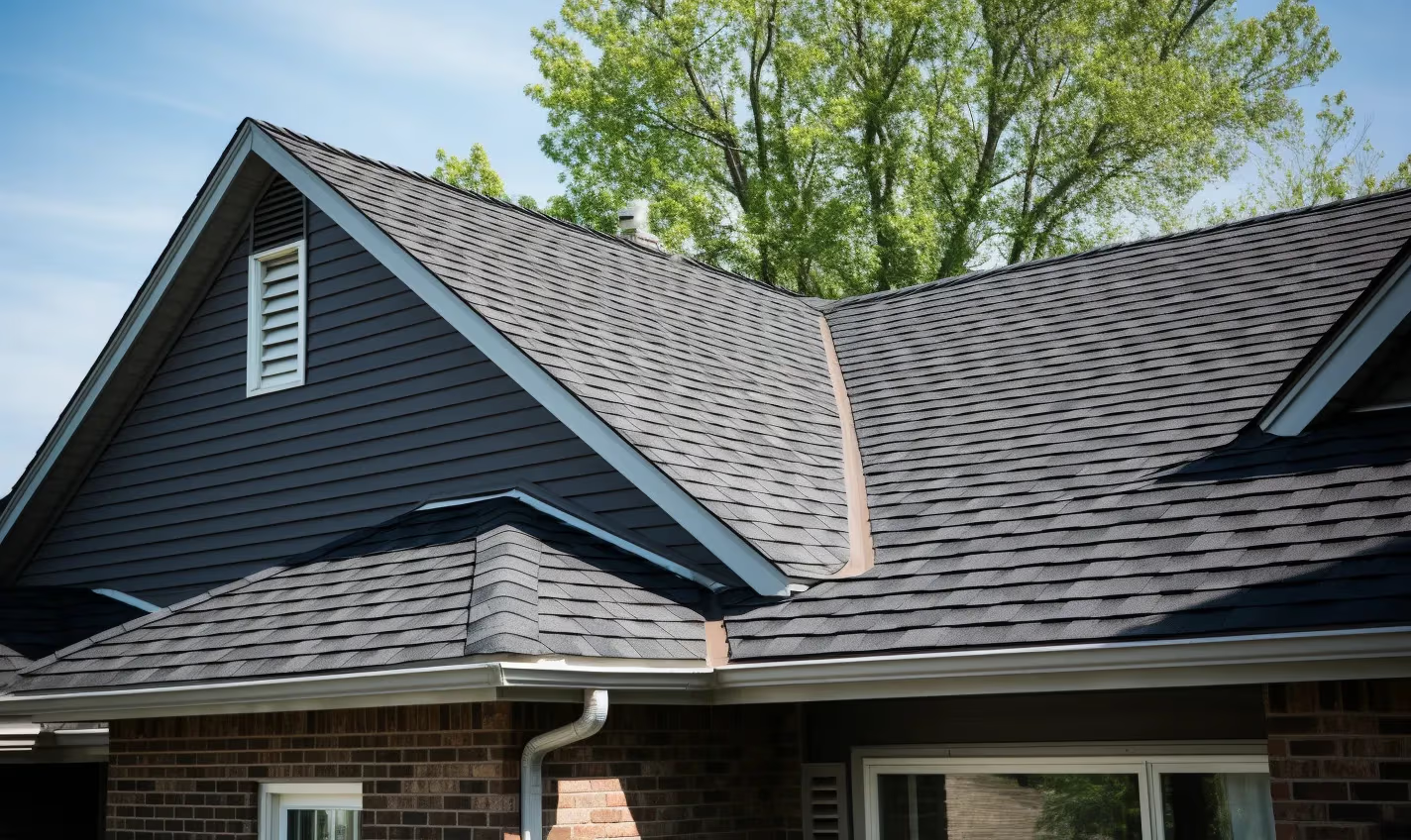
Roofing: Your Home’s First Line of Defense
Asphalt Shingles: 15–30 years (architectural shingles last longer than 3-tab.)
Metal Roofing: 40–70 years (expensive up front, but tough as nails.)
Wood Shakes: 20–40 years (beautiful, but high maintenance.)
Clay or Concrete Tile: 50–100 years (heavy, pricey, but nearly indestructible.)
Here in Colorado Springs, hailstorms are hard on shingles. I’ve seen 5-year-old roofs that looked 25 because of one bad summer. Pay attention to granule loss—if you see bald spots or shingle edges curling, you’ve got a problem.
Pro tip: Don’t just try to check your roof from the driveway. Call a pro (like us) for a spring/fall inspection. Preventative roofing is way cheaper than patching up leaks in drywall and ceilings later.
Flooring: More Than Just Something You Walk On
Carpet: 8–15 years (shorter if you have pets, kids, or a bad shoe policy.)
Hardwood: 25–100 years (depends on the wood and if you refinish it every 7–10.)
Laminate: 10–30 years (modern stuff holds up surprisingly well.)
Vinyl Plank (LVP/LVT): 15–25 years (waterproof, pet-proof, party-proof.)
Tile: 30–50 years (the grout is your weak link, not the tile.)
Laminate used to be junk, but today’s high-end LVP? We've installed it in rentals, kitchens, basements—you name it. Holds up like a champ. But hardwood is still king if you treat it right.
Pro tip: Your floor’s worst enemy is water and grit. Use rugs at entry points and mop up spills fast. And don’t use steam mops on wood or laminate—it’s like aging it in dog years.
Siding & Exterior Materials
Vinyl Siding: 20–40 years (fades and cracks with UV and hail.)
Fiber Cement (e.g. HardiePlank): 30–50 years (tough, but still needs painting every 10–15.)
Wood Siding: 15–30 years (beautiful, but high maintenance.)
Stucco: 50–80 years (cracks can show up in 5 if done wrong.)
Vinyl siding is cheap and cheerful—until it’s not. One hailstorm and you're replacing panels. Fiber cement is a solid upgrade, and well-installed stucco? That stuff ages like a fine wine if you maintain the sealant.
Pro tip: Keep an eye on caulking and paint. UV and moisture get in through the smallest cracks, and once water’s behind your siding, you’re into rot and mold territory. Ugly and expensive.
Major Systems: HVAC, Water Heaters, and Electrical Panels
Water Heater: 8–15 years (tankless units can go 20+ with maintenance.)
Furnace: 15–25 years (depends on filters, service, and how hard it's working.)
Air Conditioner: 10–20 years (low humidity helps extend life.)
Electrical Panel: 25–40 years (unless you’ve got an old Federal Pacific—replace now.)
Most water heaters die suddenly. You don't get a warning, you just get a flooded basement. If it’s over 10 years old, start planning now. Furnaces? They usually give clues—like weird noises, short-cycling, or rising energy bills.
Pro tip: Make a home systems log. Keep track of install dates and service records. It’ll help with resale and keep surprises to a minimum.
Kitchens & Baths: The Soft Underbelly of the House
Toilets: 20–50 years (but the internal parts—flappers, fill valves—need replacing every few.)
Faucets: 10–20 years (hard water kills ‘em faster.)
Cabinetry: 20–50 years (solid wood lasts. Particle board? Not so much.)
Countertops:
- Laminate: 10–20 years
- Granite: 30–100 years
- Quartz: 25–50 years
Cabinets that were custom-built in the 60s are still standing strong today. But MDF stuff from the ‘90s? Swollen, warped, peeling. Same with laminate counters—they age fast if not cared for.
Pro tip: Don’t underestimate the power of water and steam—especially in bathrooms. Keep caulk fresh and seal stone countertops regularly. Maintenance is cheaper than demolition.
Final Thoughts: Know the Age, Plan for the Future
Every material in your home has a shelf life. Knowing when stuff tends to fail helps you:
- Budget for upgrades
- Prioritize maintenance
- Avoid emergency repairs
Here’s a quick rule of thumb:
“If it’s over 10 years old, check it. If it’s over 20, plan to replace it. If it’s original to the house and the house is older than you are—replace it now.”
You can’t stop time, but you can be smarter about it. When in doubt, give us a shout!