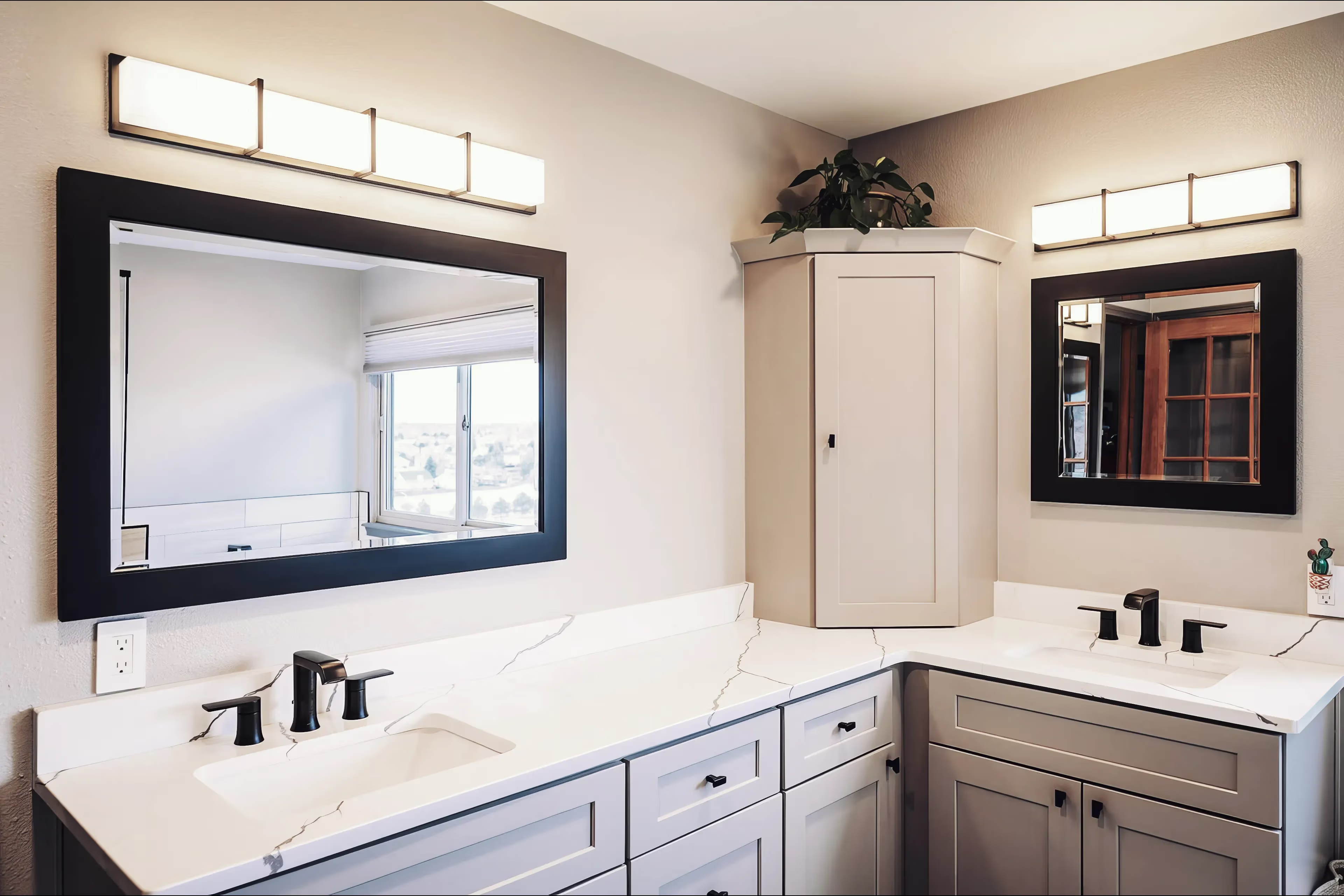
When you picture your dream bathroom, does it include a double vanity? For many homeowners, it’s one of the first “must-haves” that comes to mind. After all, having two sinks can mean no more fighting over counter space in the morning. But here’s the real question: Do you actually need one?
At HOMEfix, we’ve remodeled countless bathrooms in Colorado Springs, and the double vanity question comes up almost every time. The truth is, a double vanity isn’t the right solution for every bathroom—or every lifestyle. Let’s walk through the pros, cons, and design considerations so you can decide if it makes sense for your remodel.
What Is a Double Vanity, Really?
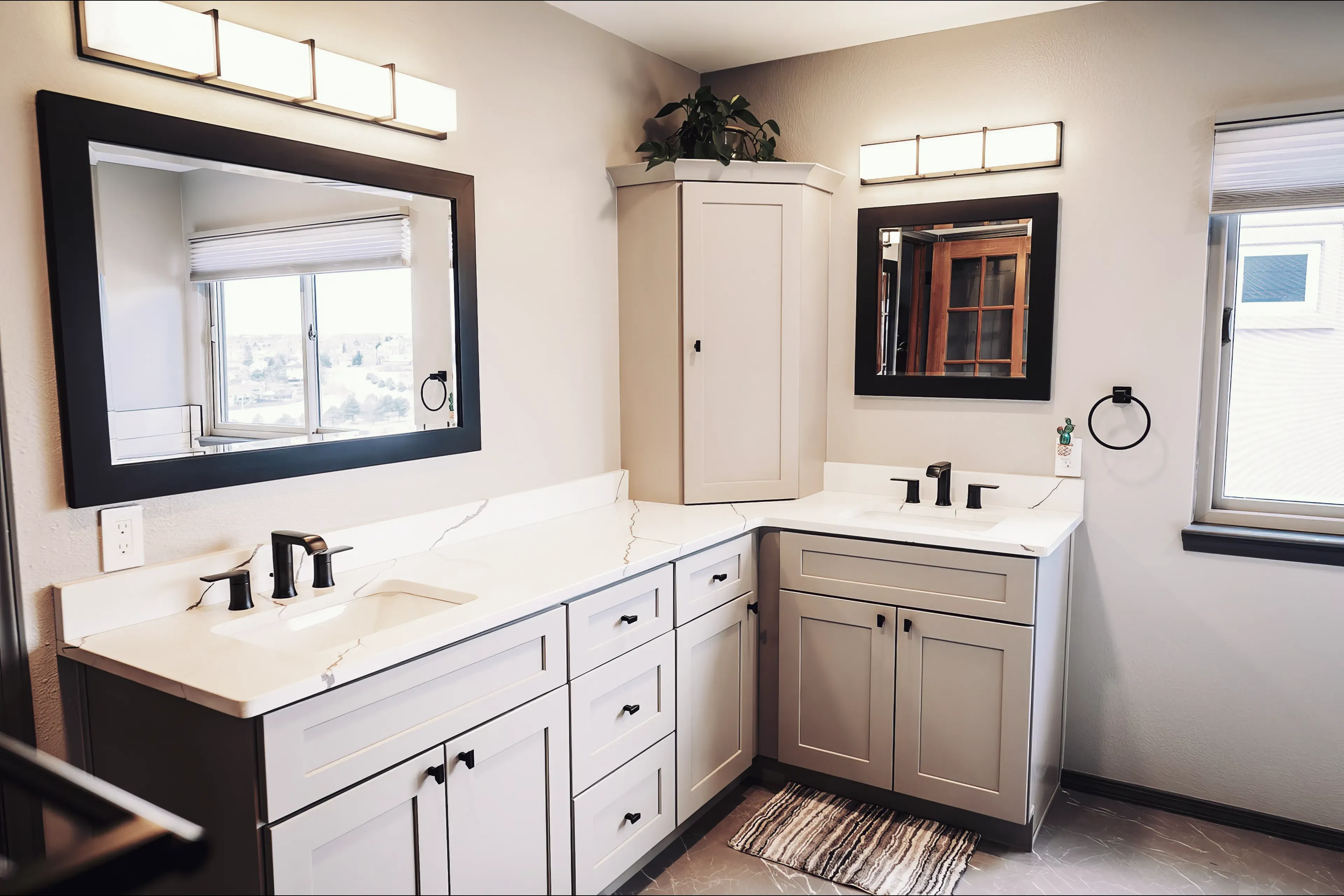
A double vanity is simply a bathroom cabinet with two sinks, usually with shared counter space and storage below. While it may sound straightforward, the design choices that come with it—size, plumbing, layout, and storage configuration—can dramatically affect your remodel.
The Case For a Double Vanity
1. Convenience for Couples or Families
If two people regularly use the bathroom at the same time, a double vanity can eliminate the morning traffic jam. Each person gets their own sink, mirror, and storage zone.
2. Added Storage and Counter Space
Most double vanities come with more cabinetry, drawers, and countertop area. That means more room for everything from hairdryers to toothpaste to skincare.
3. Resale Value
Many buyers consider a double vanity a premium feature, especially in primary bathrooms. It suggests thoughtful design and functionality—a small detail that can leave a big impression.
4. Balance in Design
Visually, two sinks can create symmetry, which often looks more “finished” in a larger bathroom. With the right mirrors and lighting, a double vanity can become the centerpiece of the room.
The Case Against a Double Vanity
1. Space Constraints
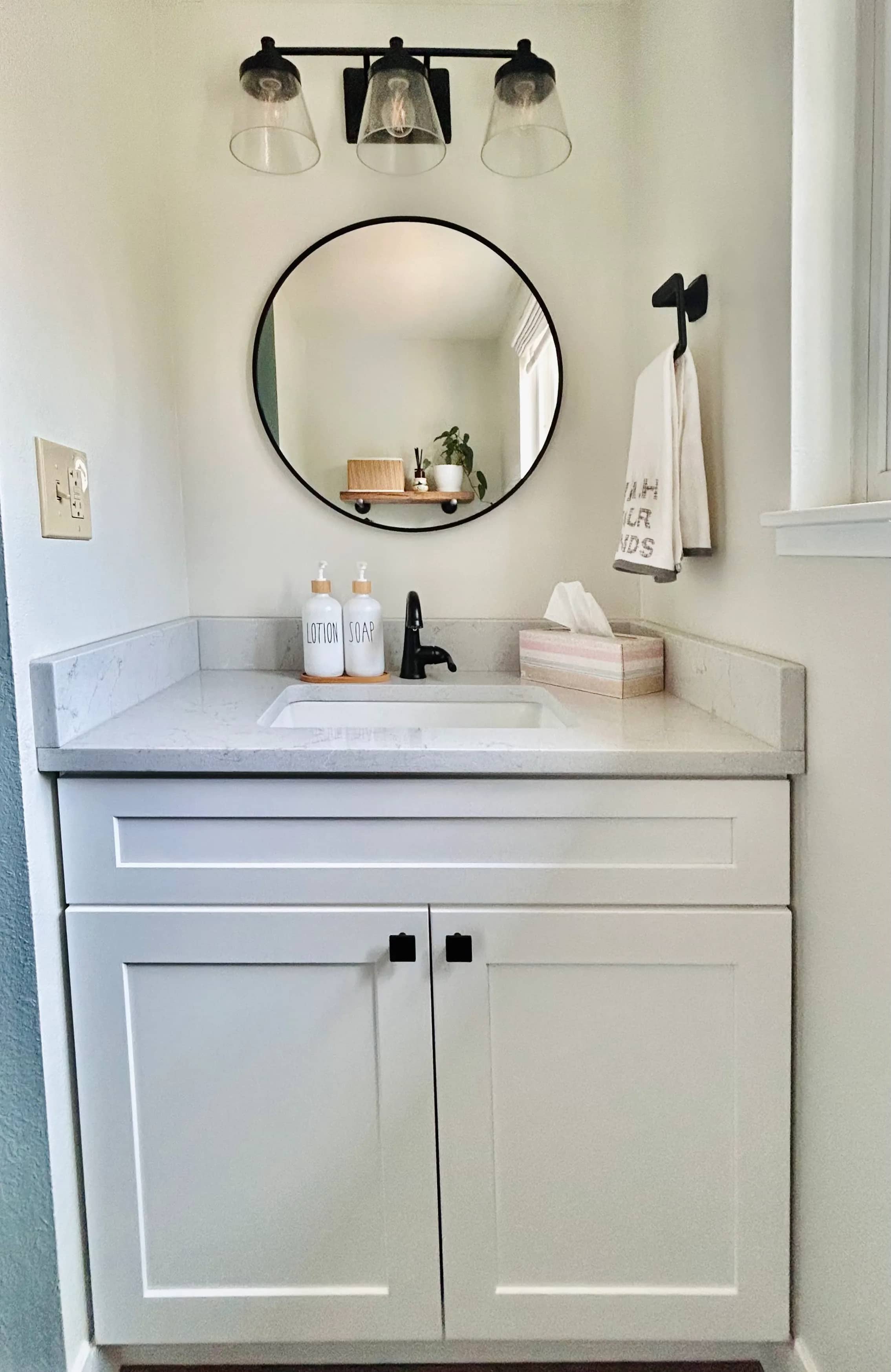
Double vanities work best in bathrooms that can comfortably fit at least 60 inches of cabinetry. In a smaller bathroom, squeezing in two sinks can make the space feel cramped and reduce counter space.
2. Plumbing Complexity
Each sink requires plumbing connections. If your current setup has just one, adding a second can require re-routing pipes. That takes up valuable storage room inside the cabinet and makes the vanity more complex.
3. Storage Trade-offs
Believe it or not, two sinks sometimes reduce storage. Why? Because the plumbing under each bowl eats into cabinet space. If storage is a top priority, a single sink with a wide vanity might give you more usable drawers and shelves.
4. Not Everyone Uses It
We’ve had homeowners say, “Honestly, we almost never use the second sink.” If you and your partner get ready at different times—or if one of you prefers the other bathroom—it might not be as beneficial as you’d think.
Design Factors to Consider
Bathroom Size & Layout
Ask yourself: does your bathroom comfortably allow for a double vanity without sacrificing flow? You should still have enough clearance to move around easily, open cabinet doors, and maintain traffic patterns.
Lifestyle & Habits
Do two people regularly use the space at the same time? Or are your routines naturally staggered? A bathroom designed around your lifestyle will feel far more functional than one designed for resale value alone.
Storage Priorities
If you have a lot of bathroom essentials, think carefully about storage. A single sink with extra drawers may be more functional than two sinks with less cabinet room.
Plumbing & Infrastructure
Sometimes the existing plumbing makes a double vanity straightforward. Other times, adding another sink means major changes behind the walls. That’s something your remodeler will walk you through before you commit.
Resale Goals
If you plan to sell your home in the near future, a double vanity in the primary bathroom can make your listing more attractive. But if this is your forever home, focus first on how you will use it.
Alternatives to the Traditional Double Vanity
If you love the idea of two sinks but aren’t sure about a full double vanity, consider these options:
- Extra-Wide Single Vanity: One large sink with plenty of counter space and drawers. Easier to clean, and more storage-friendly.
- Floating Vanities: Two smaller floating vanities can create a “his-and-hers” feel while preserving floor space.
- Integrated Makeup Station: Instead of a second sink, some homeowners opt for a seated vanity area with a mirror—perfect for getting ready without sacrificing cabinet storage.
- Shared Sink, Double Faucet: A newer design trend is one oversized sink with two faucets. You still get “dual access” without doubling up on bowls and plumbing.
When Does a Double Vanity Make Sense?
Based on our experience:
Best Fit: Primary bathrooms with enough space, where two people regularly use the space at the same time.
Not Necessary: Smaller bathrooms, guest baths, or situations where one person primarily uses the space.
Our philosophy? A double vanity should solve a problem—not just check a box. If it makes your mornings smoother, your bathroom more functional, and your home more appealing long-term, it’s a smart choice. If not, a single sink with better storage might serve you better.
Final Thoughts
Bathroom remodels are all about making your space work better for the way you actually live. A double vanity can be a game-changer in the right context—but it’s not the only way to create a functional, beautiful bathroom.
When you’re weighing the decision, think beyond the “dream home checklist.” Consider your routines, your storage needs, and the layout of your space. That’s where true design expertise makes the difference—and why working with a remodeler who listens first is so important.
At HOMEfix, we don’t just install what looks good on Pinterest. We help you design bathrooms that feel amazing, function perfectly, and last for years to come—whether that includes a double vanity or not.