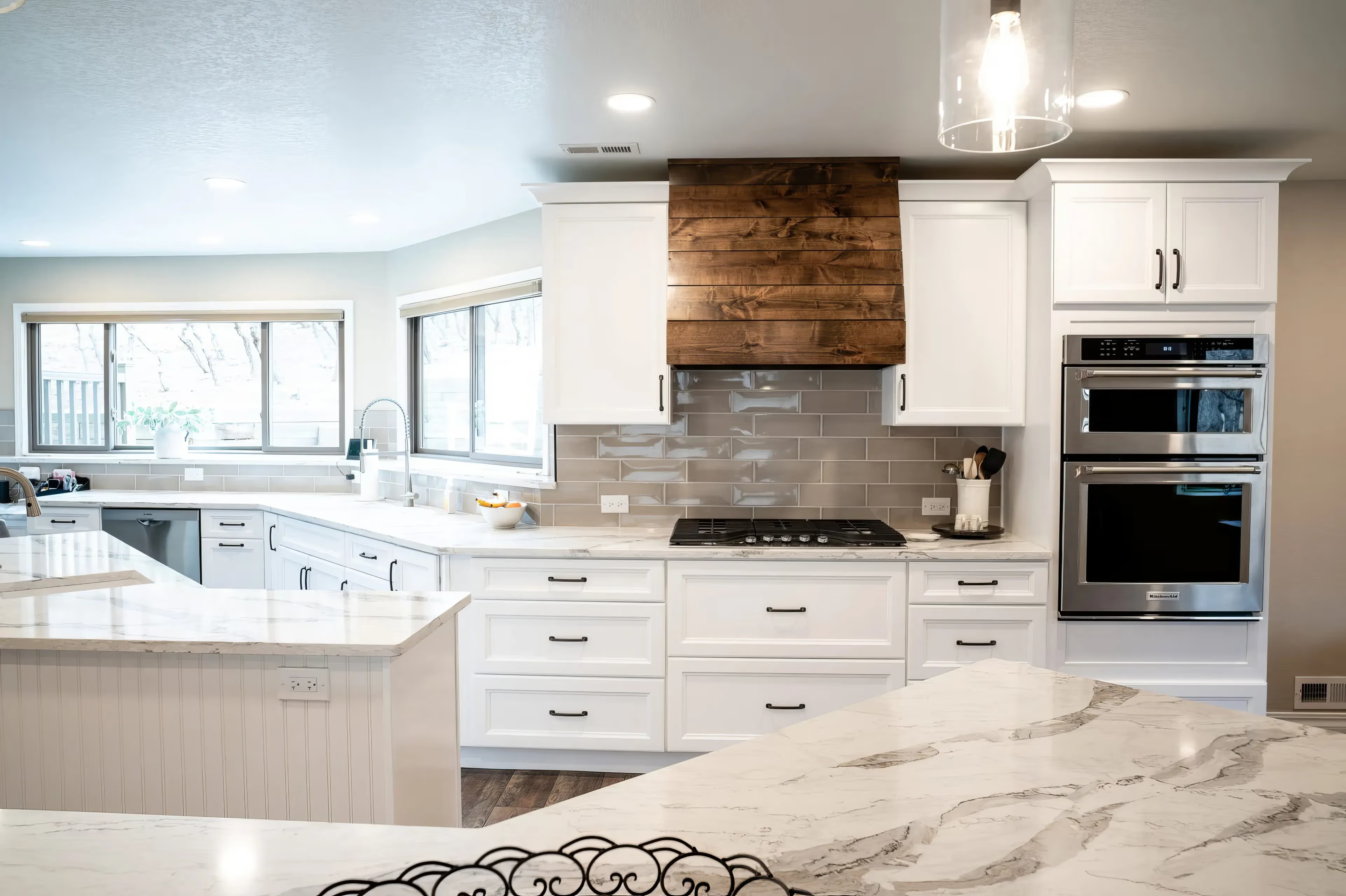
Let’s be honest — the range hood is the workhorse of your kitchen that doesn’t always get the respect it deserves. It pulls smoke, grease, steam, and odors out of the air so you’re not coughing up stir fry fumes three hours later. But somewhere along the line, homeowners and designers got wise to the idea that a range hood doesn’t have to be a boxy appliance shoved under a cabinet.
These days, the custom range hood has gone from "necessary evil" to full-blown design centerpiece. It’s where function meets flair. Done right, it can anchor your entire kitchen aesthetic — but it takes some planning, skill, and knowledge of what not to do (which we’ve learned the hard way, more than once). So let’s break it down.
Why the Range Hood Deserves Star Treatment
In most remodels, people obsess over cabinets and countertops — and fair enough, they’re expensive and visual. But the range hood sits at eye level, dead-center between your uppers. In many kitchens, it's the first thing people notice. And because it juts out from the wall or ceiling, it naturally draws the eye.
You can either ignore that and let it stick out like a sore thumb… or you can turn it into a sculptural focal point.
Step 1: Material Selection — The Soul of the Statement
Choosing materials for your custom hood is a bit like picking out the right shoes for a tailored suit — it needs to match, but not disappear. And it’s got to work hard under pressure.
🔨 Popular Material Options:
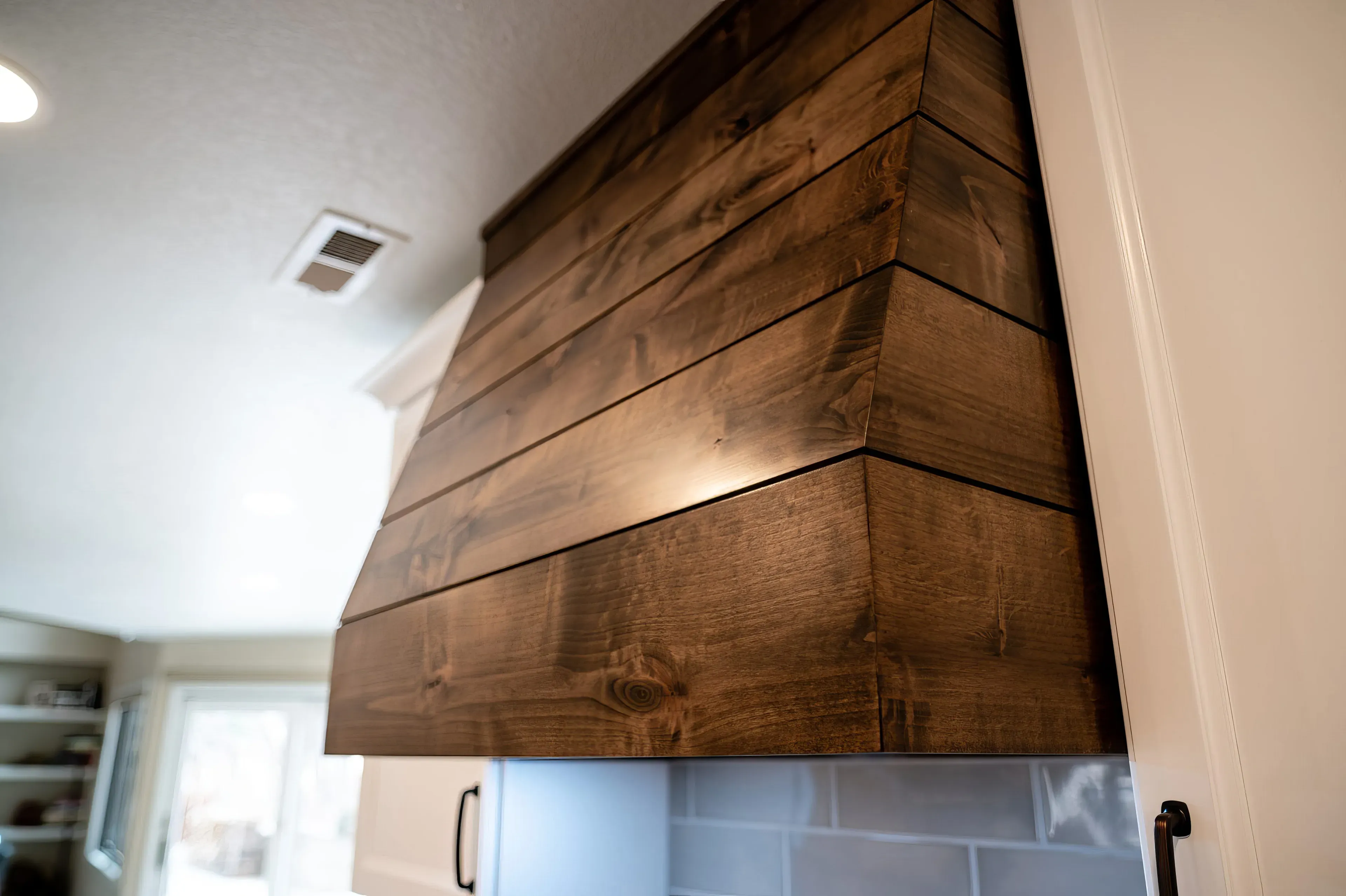
1. Wood (Wrapped or Framed)
Pros: Warm, timeless, customizable. Can be painted, stained, or paneled to match cabinetry.
Cons: Needs a metal liner underneath (because grease + wood = nope). Can warp if poorly sealed.
2. Metal (Stainless, Zinc, Copper, Brass, Blackened Steel)
Pros: Sleek, durable, and inherently fire-resistant. Perfect for modern or industrial styles.
Cons: Scratches show, fingerprints are a thing. And good custom metalwork ain’t cheap.
3. Plaster or Stucco
Pros: Seamless, sculptural, and perfect for old-world, European, or modern organic styles.
Cons: Fragile if you don’t use the right base. Needs touch-ups over time.
4. Tile or Stone Clad
Pros: Great if you’re extending your backsplash up. Can be super dramatic with marble or handmade tiles.
Cons: Weight is a consideration — especially on a ceiling-mounted hood.
Step 2: Venting — Where Style Meets Science
Listen, we can make your range hood look like a freakin’ work of art, but if it doesn’t move air properly, it’s just an expensive box. You’re gonna want to get this right — especially if you like searing steaks indoors or cooking anything with garlic (so, all of us).
Key Venting Considerations:
1. CFM (Cubic Feet per Minute)
Most home ranges need a hood that’s between 300–900 CFM, depending on your BTU output.
For pro-style ranges or serious cooks, 1200+ CFM is not overkill.
2. Duct Size & Length
Don’t undersize your duct. A 900 CFM blower needs a minimum 8" round duct. Short, straight runs = good. Long, bendy ones = bad. Use rigid ducting, not flexible foil.
3. Makeup Air (Yes, Really)
In many areas (especially over 400 CFM), building code requires a makeup air system. Basically: for every cubic foot of air you suck out, you have to bring some back in — or your house turns into a vacuum, and your HVAC starts acting weird.
4. External vs. Internal Blower
Internal: Quieter up front, but more noise in the kitchen.
External (roof/wall mounted): Quieter inside, but can be pricey and harder to install.
Step 3: Fabrication & Installation — Bring in the Pros
Designing a custom range hood is fun — you get to pick the pretty stuff, dream up shapes, and scroll Pinterest for hours. But none of that matters if the install falls flat. And let me be blunt: this is not a DIY project. You need a real crew, with real experience — because the fabrication and installation of a custom hood is where jobs either succeed… or spiral.
We’re talking about a design element that needs to look flawless, function under heat and grease, and meet code — all while hiding a full ventilation system inside. That’s not a weekend project. From proper venting and ductwork, to structural framing, to working with metal, plaster, or custom millwork — this is specialized work. One wrong move and you’ve got a hood that rattles, leaks grease, or pulls right off the wall.
A good contractor won’t just install it — they’ll coordinate the HVAC, electrical, and finish trades so everything fits, flows, and lasts. Bottom line? If the range hood is going to be the crown jewel of your kitchen, don’t trust it to guesswork. Bring in someone who’s done it before — and done it well.
Final Thoughts
Custom range hoods are where form and function collide in the best way. They’re not just exhaust fans anymore — they’re sculptural elements, focal points, and a big ol’ flex in a well-designed kitchen.
But they’re also complex. There’s airflow science, code compliance, structural framing, and specialty finishes — and if you mess any of those up, you’re redoing the job (or at least apologizing to a client who can’t get the garlic smell out of their curtains).
So take your time, plan thoroughly, and partner with good trades. When you nail a custom range hood, you don’t just complete the kitchen — you elevate it. At HOMEfix, we know how to make custom range hoods that not only work but wow. From tailored materials to whisper-quiet venting systems, we coordinate every detail with craftsmanship and care. If you're dreaming of a kitchen centerpiece that turns heads and clears the air, let’s talk. We’re here to build it right — the first time.