When you're planning a kitchen remodel, it's easy to focus on the big decisions first.
What color should the cabinets be? Which countertop should you choose? Do you want an island? What kind of backsplash do you like?
Those decisions certainly matter, but sometimes the details that make the biggest difference in a kitchen are the ones that are easiest to overlook.
The placement of a drawer. The size of an island overhang. Where you put your outlets. The way cabinet hardware feels in your hand. The lighting you use under your cabinets. These seemingly small choices can have a major impact on how your kitchen looks, functions, and feels every day.
A beautiful kitchen isn't just about choosing attractive materials. It's about creating a space that works naturally with the way you cook, entertain, clean, gather, and live.
If you're planning a kitchen renovation, here are seven kitchen design details worth thinking about before construction begins.
1. Cabinet Storage Designed Around How You Actually Use Your Kitchen
Kitchen cabinets are one of the largest investments in a kitchen remodel, so it's worth putting some thought into what goes inside them.
A standard cabinet layout might give you plenty of storage, but that doesn't necessarily mean it's good storage. The best kitchen storage ideas are based on what you actually own and how you use it.
Think about your current kitchen.
What drives you crazy?
Maybe you're constantly digging through a deep cabinet for pots and pans. Maybe your cutting boards are leaning against the wall because there's nowhere convenient to store them. Maybe your spices are scattered throughout three different cabinets. Or maybe your favorite appliances are always sitting on the countertop because putting them away is more trouble than it's worth.
A kitchen remodel gives you the opportunity to fix those problems.
Consider drawers instead of traditional lower cabinets
Deep drawers can make lower cabinet storage much easier to access. Rather than getting on your hands and knees to reach the back of a cabinet, you can pull the entire drawer toward you.
Drawers can work particularly well for:
- Pots and pans
- Plates and bowls
- Food storage containers
- Cooking utensils
- Small appliances
- Baking supplies
You can also incorporate specialized storage into custom cabinetry, including pull-out trash and recycling bins, tray dividers, spice storage, and organizers for baking sheets.
Think about your work zones
Instead of designing your kitchen storage cabinet-by-cabinet, think about it by activity.
Where do you prepare food?
Where do you make coffee?
Where do you unload groceries?
Where do you store dishes?
Where do you keep your pots and pans?
Keeping the things you use together can make a kitchen feel dramatically more efficient.
For example, if your coffee maker lives on one side of the kitchen, it makes sense to store mugs, coffee beans, filters, and other coffee essentials nearby.
The goal isn't simply to create more storage. It's to create storage that makes sense.
Custom cabinetry can make a difference
This is one area where custom cabinets can really shine.
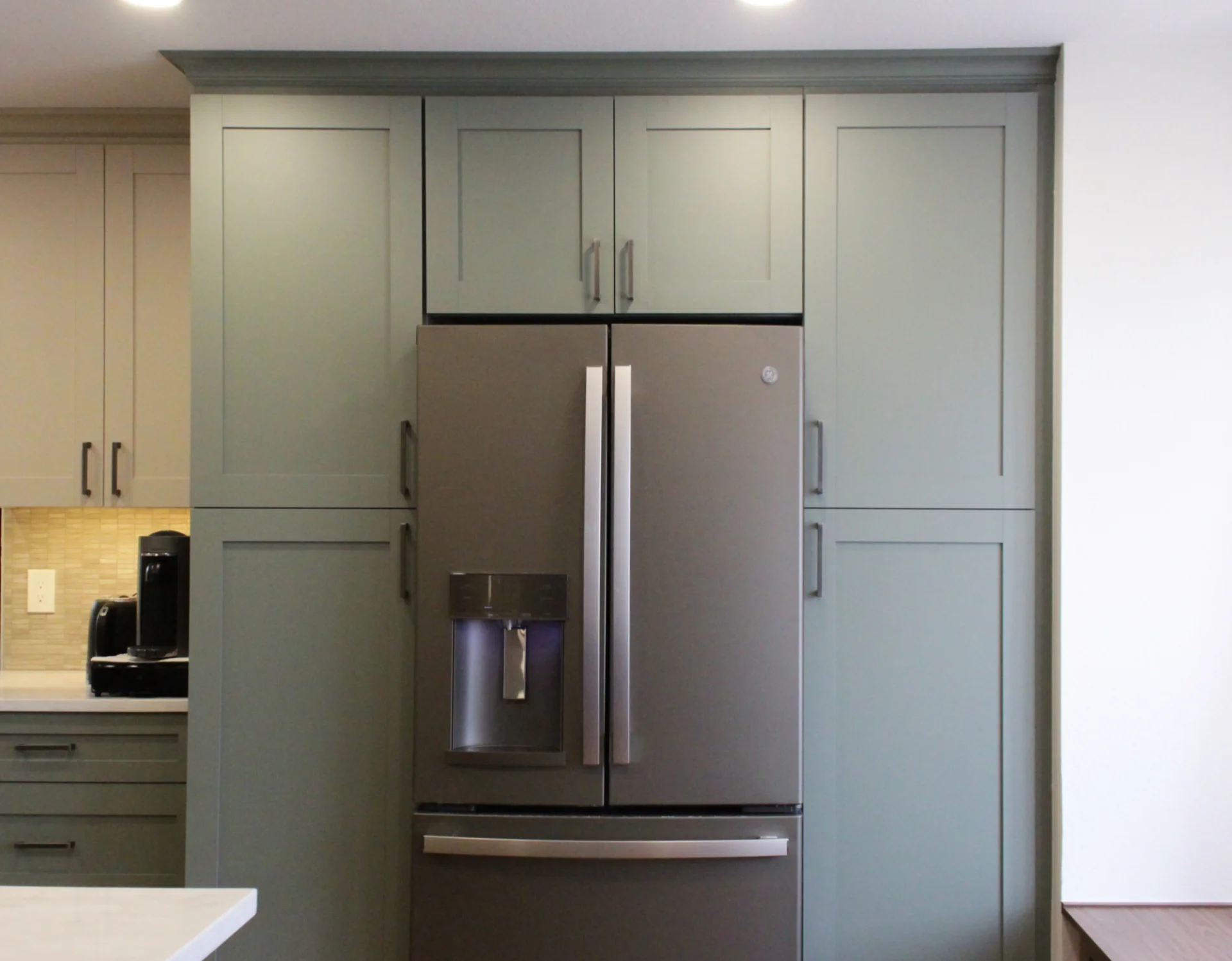
Instead of designing around predetermined cabinet sizes, custom cabinetry can be tailored to your space, your belongings, and your routines. You can take advantage of awkward corners, unusual wall dimensions, ceiling height, and other areas that might otherwise become wasted space.
Good kitchen design asks, “Where should everything go?” before asking, “What should everything look like?”
2. The Right Kitchen Lighting Can Change the Entire Room
Lighting is one of the most overlooked elements of kitchen design.
You can spend thousands of dollars on beautiful cabinets, countertops, and tile, but poor lighting can keep those finishes from looking their best.
A well-designed kitchen should have multiple layers of lighting rather than relying on one central ceiling fixture.
Ambient lighting
Ambient lighting provides general illumination throughout the kitchen.
Recessed lights are a common choice, but they aren't the only option. Depending on the design, you might also use flush-mount fixtures, chandeliers, or other decorative ceiling lighting.
The important thing is placement.
A row of lights centered in the room doesn't necessarily mean your work surfaces will be well lit. Think about where you'll actually be standing when you're preparing food.
Task lighting
Task lighting is designed to illuminate specific work areas.
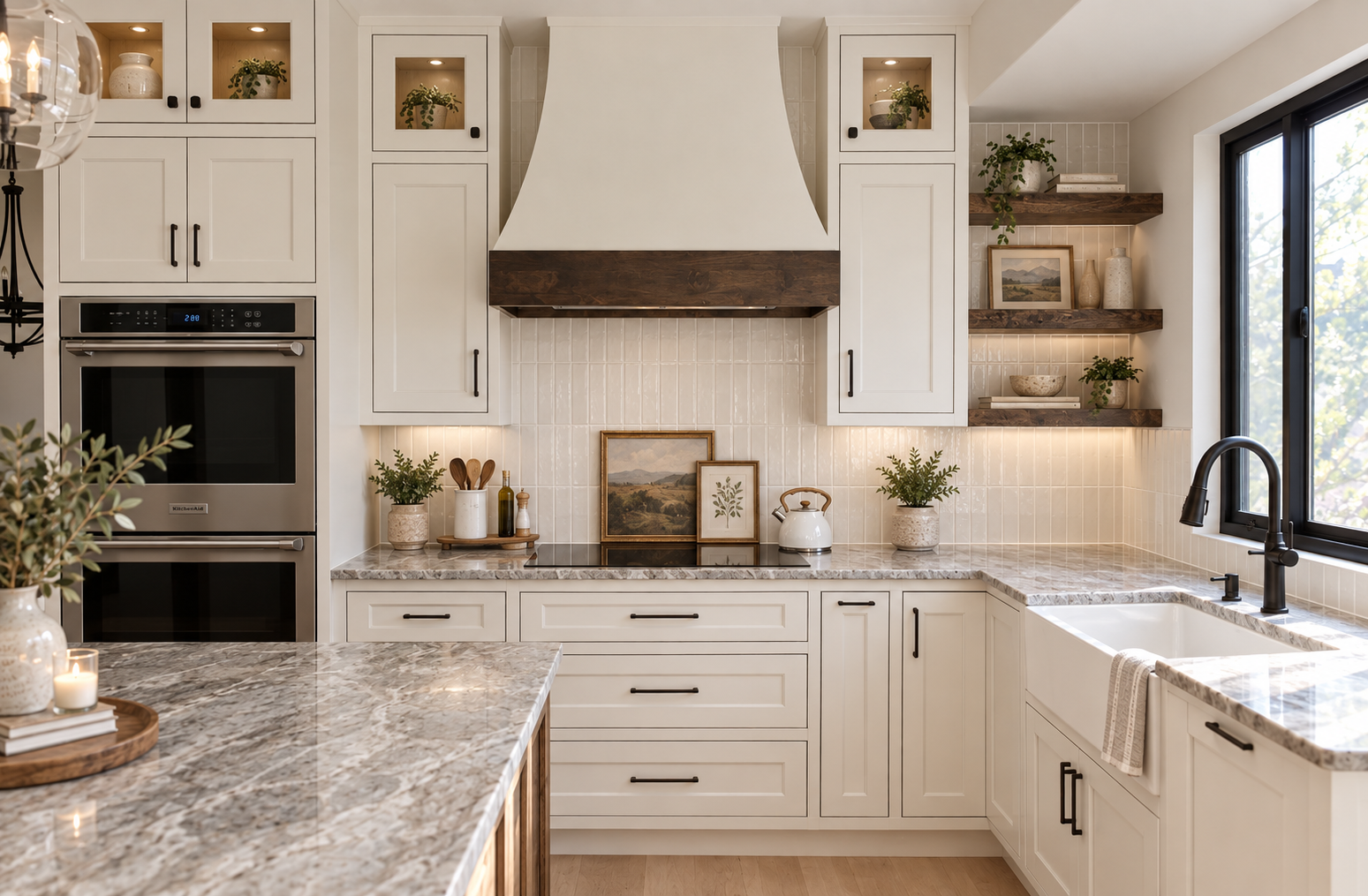
Under-cabinet lighting is particularly useful because it puts light directly onto countertops without creating as much shadow as overhead lighting can.
This is one of those details you might not think much about until you have it. Once you do, it's hard to imagine preparing food without it.
Decorative lighting
Then there's the fun part.
Pendant lights over a kitchen island can become one of the room's biggest design features. A statement fixture can introduce shape, texture, metal finishes, or personality without changing the entire kitchen.
And decorative lighting doesn't have to mean oversized or dramatic. A simple fixture can have just as much impact when it's thoughtfully selected.
Don't forget the color temperature
The color temperature of your bulbs can also affect how the kitchen feels.
Cooler light tends to feel crisp and bright, while warmer light can create a softer, more inviting atmosphere.
If your kitchen is intended to be a gathering space, warmer lighting can help create a comfortable atmosphere in the evening.
Good kitchen lighting should work during the day, during meal preparation, and when the kitchen becomes a gathering space at night.
3. Don't Underestimate the Kitchen Island
For many homeowners, the kitchen island becomes the heart of the kitchen.
It's where people gather, where meals get prepared, where kids do homework, where groceries get unloaded, and where guests inevitably end up standing during a party.
But an island isn't automatically a good addition just because you have enough room to fit one.
Its size, shape, placement, and function all matter.
Start with the layout
A kitchen island needs enough clearance around it to allow people to move comfortably.
You should be able to open your refrigerator, dishwasher, and cabinets without creating a traffic jam.
This is particularly important in open-concept kitchens, where the island may be positioned between the kitchen and another major living area.
Decide what the island is actually for
Before choosing its dimensions, determine what you want the island to do.
Is it primarily:
- Food preparation space?
- Seating?
- Storage?
- A cooking zone?
- A sink station?
- A gathering spot?
- A combination of several functions?
Your answer should influence the design.
If you want seating, you'll need an appropriate countertop overhang and enough room for people to sit comfortably.
If you're incorporating a sink or cooktop, you'll need to consider plumbing, electrical, ventilation, and workflow.
If storage is the priority, drawers and cabinets can be incorporated into the island.
Bigger isn't always better
One of the biggest kitchen design mistakes is assuming that a larger island automatically creates a better kitchen.
An oversized island can actually make a room feel cramped and interfere with traffic flow.
The best kitchen island is one that's appropriately sized for the room and designed around how you use it.
4. Hardware Is Small, but It Has a Big Visual Impact
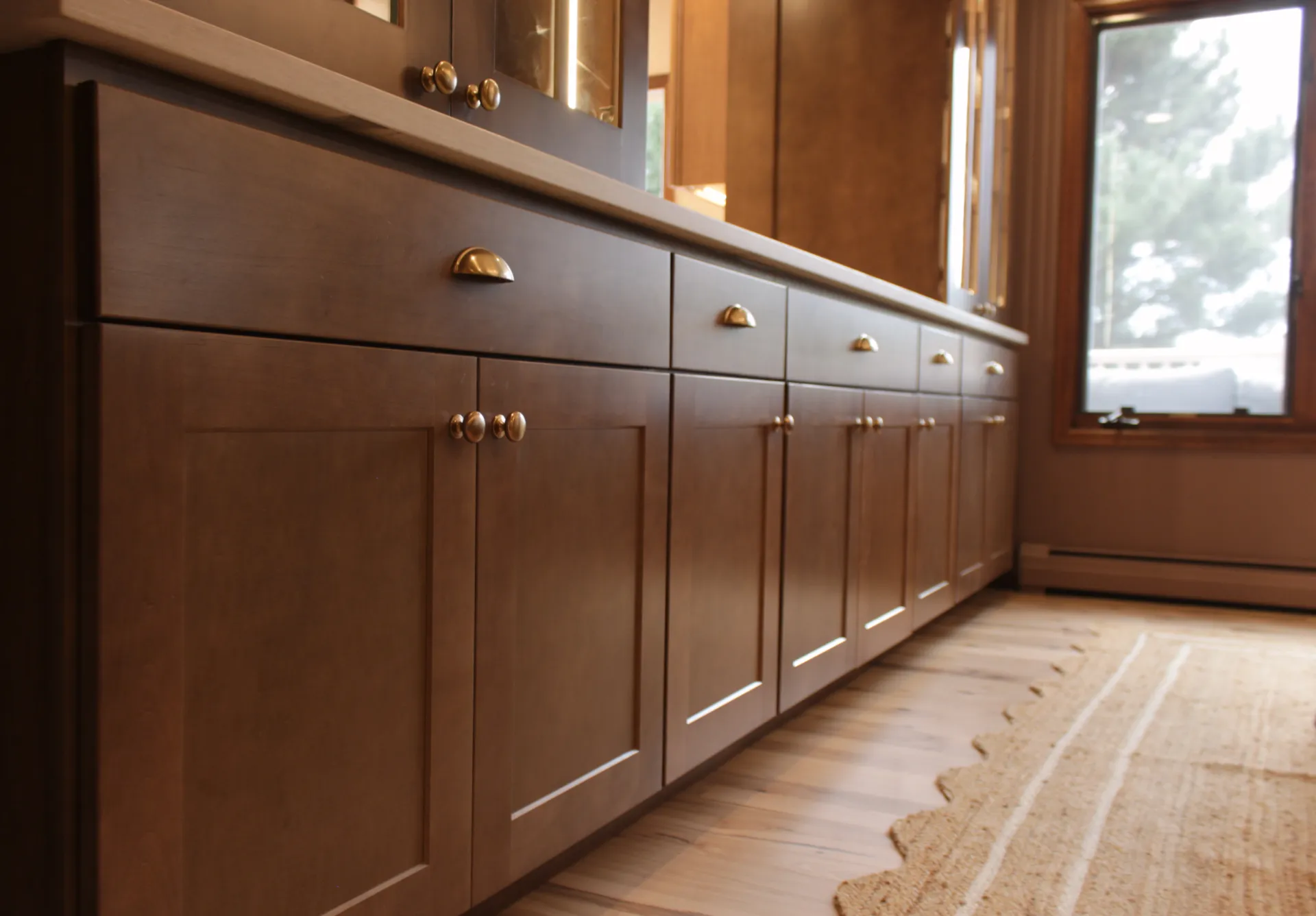
Cabinet hardware might seem like a finishing touch, but it can completely change the personality of a kitchen.
Imagine the same cabinetry with three different hardware choices.
One might make it feel traditional. Another could make it feel modern. A third might give it a more vintage or collected look.
That's a lot of influence for something that's only a few inches long.
Choose hardware for both style and function
Hardware needs to look good, but it also needs to feel good.
You'll be opening cabinet doors and drawers hundreds of times. The size and shape of the handle matters.
Consider whether you prefer:
- Knobs
- Pulls
- Cup pulls
- Bar pulls
- Integrated handles
- Edge pulls
You don't necessarily have to use the same hardware everywhere.
For example, a kitchen might use pulls on drawers, knobs on cabinet doors, and larger pulls on oversized drawers.
Coordinate your finishes
Your cabinet hardware doesn't exist in isolation.
Think about how it relates to your faucet, lighting, appliances, and other metal finishes.
That doesn't mean every metal in your kitchen needs to match perfectly.
Mixing metals can create a layered, intentional look. The key is to make the combination feel deliberate rather than accidental.
Think beyond the trend
Hardware is relatively easy to replace compared with cabinets or countertops, which makes it a good place to express your personal style.
If you love a trend, use it.
But if you're looking for a kitchen design that will still feel like you several years from now, choose hardware that complements your overall aesthetic rather than simply following what's currently popular.
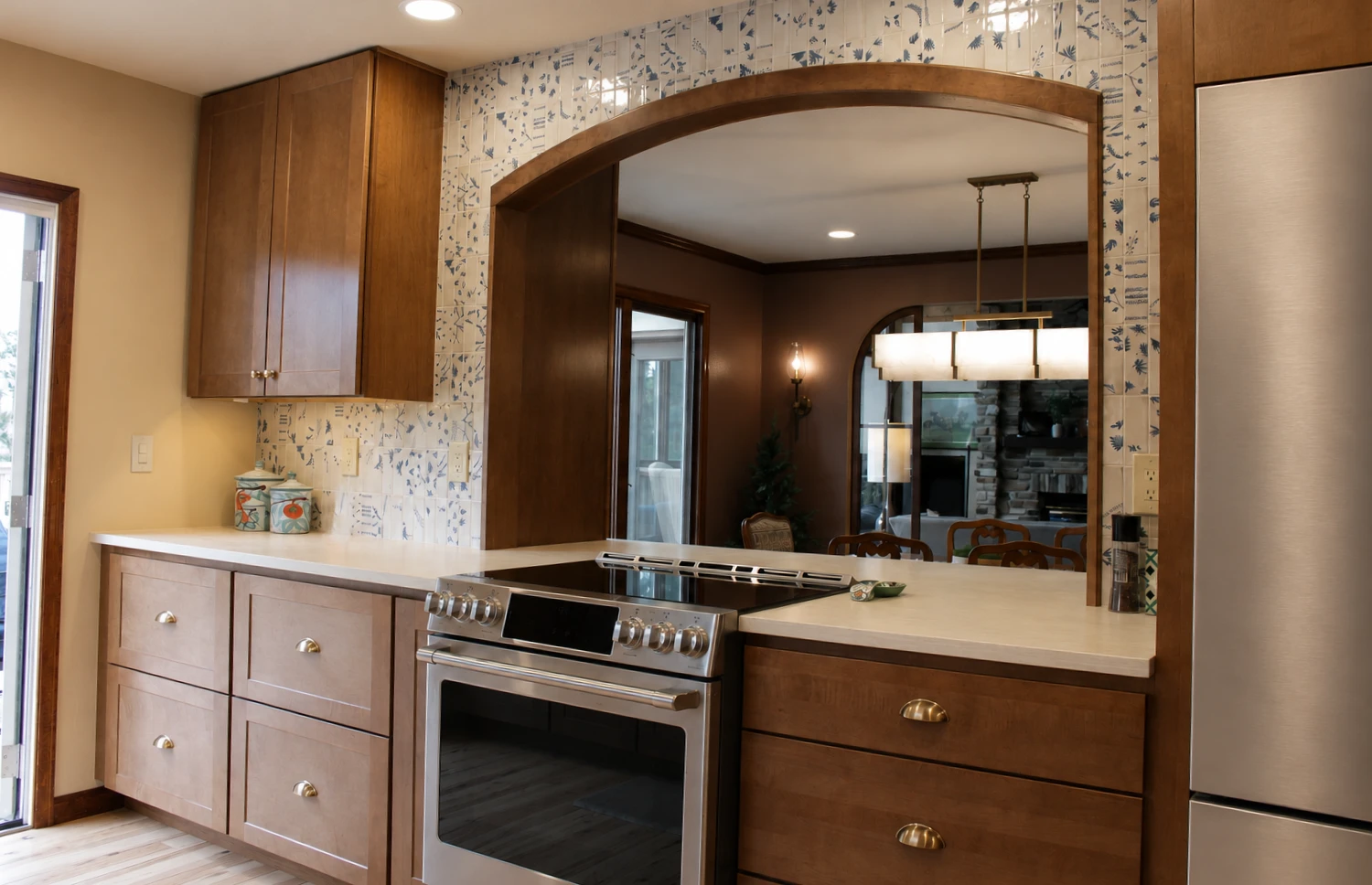
5. The Backsplash Is More Than a Protective Surface
A kitchen backsplash serves an obvious practical purpose: it protects the wall behind your countertops from water, food, and everyday messes.
But it can also be one of the most important design elements in the room.
Because the backsplash occupies a relatively concentrated area, it gives you an opportunity to introduce color, texture, pattern, or movement without committing to it throughout the entire kitchen.
Consider the scale of the tile
The size of your tile can dramatically affect the appearance of the kitchen.
Large-format tile can create a cleaner, more streamlined look, while smaller tile can introduce more visual texture.
Classic subway tile can feel timeless, while handmade-look tile can add warmth and variation.
Patterned tile can create a focal point.
And slab backsplashes can create a particularly seamless, high-end appearance.
Don't forget grout
Grout color can change the appearance of your backsplash more than you might expect.
A contrasting grout can emphasize the shape and pattern of individual tiles, while a closely matched grout creates a more continuous appearance.
It's a small decision, but it's worth considering alongside the tile rather than as an afterthought.
Consider how the backsplash meets the cabinets
Another detail to think about is where the backsplash begins and ends.
Should it stop at the underside of the cabinets?
Should it extend to the ceiling?
Should it wrap around a corner?
Should it continue behind open shelving?
The answer depends on your kitchen's architecture and overall design.
In some kitchens, extending a backsplash higher can create a strong focal point. In others, a more restrained installation keeps the room feeling clean and simple.
The backsplash is one of the places where you can have a little fun with your kitchen remodel.
6. Plan Your Outlets Before You Plan Your Countertop Styling
This may not be the most glamorous kitchen design detail, but it is one of the most useful.
Electrical outlets are something you don't want to realize you need after the kitchen is finished.
Think about everything that lives on your countertops.
Maybe you regularly use:
- A coffee maker
- Toaster
- Blender
- Stand mixer
- Air fryer
- Electric kettle
- Phone charger
- Laptop
- Small kitchen appliances
Then think about where those items actually live.
Your outlet placement should support the way you use the kitchen rather than simply meeting the minimum requirements.
Consider the island
If your kitchen island includes seating or is used for food preparation, think about whether you need electrical access there.
Island outlets can be useful for appliances, charging devices, or other everyday needs.
There are also different ways to incorporate outlets into a kitchen design so they don't become a visual distraction.
Don't forget hidden appliances
Maybe you want a coffee station with an appliance garage. Maybe your toaster is tucked beneath a cabinet. Maybe you plan to store a blender in a dedicated appliance cabinet.
If an appliance is designed to stay plugged in, make sure the electrical plan accounts for it.
This is another reason it's helpful to plan your kitchen around your actual habits.
The most successful kitchen renovations aren't just visually appealing. They anticipate how the homeowner will use the room five, ten, or fifteen years from now.
7. Use Small Design Details to Make the Kitchen Feel Custom
You don't necessarily need an extravagant kitchen to make it feel custom.
Often, it's the smaller details that make the space feel considered.
Think about the features you don't necessarily notice at first glance but appreciate every time you use the kitchen.
Maybe it's a drawer specifically designed for your utensils.
Maybe it's a built-in cutting board.
Maybe it's a pull-out shelf for your stand mixer.
Maybe it's a hidden charging drawer.
Maybe it's a cabinet designed specifically for your trash and recycling.
Maybe it's lighting inside your glass-front cabinets.
Maybe it's a built-in spice rack located exactly where you need it.
These details can make the difference between a kitchen that simply looks good and one that feels like it was designed specifically for you.
Add personality through materials
Custom doesn't have to mean complicated.
You can create a distinctive kitchen by combining materials thoughtfully.
For example:
Cabinetry + countertop + backsplash + hardware + lighting
Each element contributes something different.
Your cabinets establish the foundation. Your countertop adds texture and durability. The backsplash introduces visual interest. Hardware adds detail. Lighting creates atmosphere.
The trick is to let each material have a purpose.
If everything is competing for attention, the kitchen can feel busy.
If everything is identical, the space can feel flat.
A balanced combination of materials creates depth.
Consider details outside the kitchen
If your kitchen opens into a dining room or living room, think about how the design transitions between spaces.
You don't have to match every finish, but repeating subtle elements can create continuity.
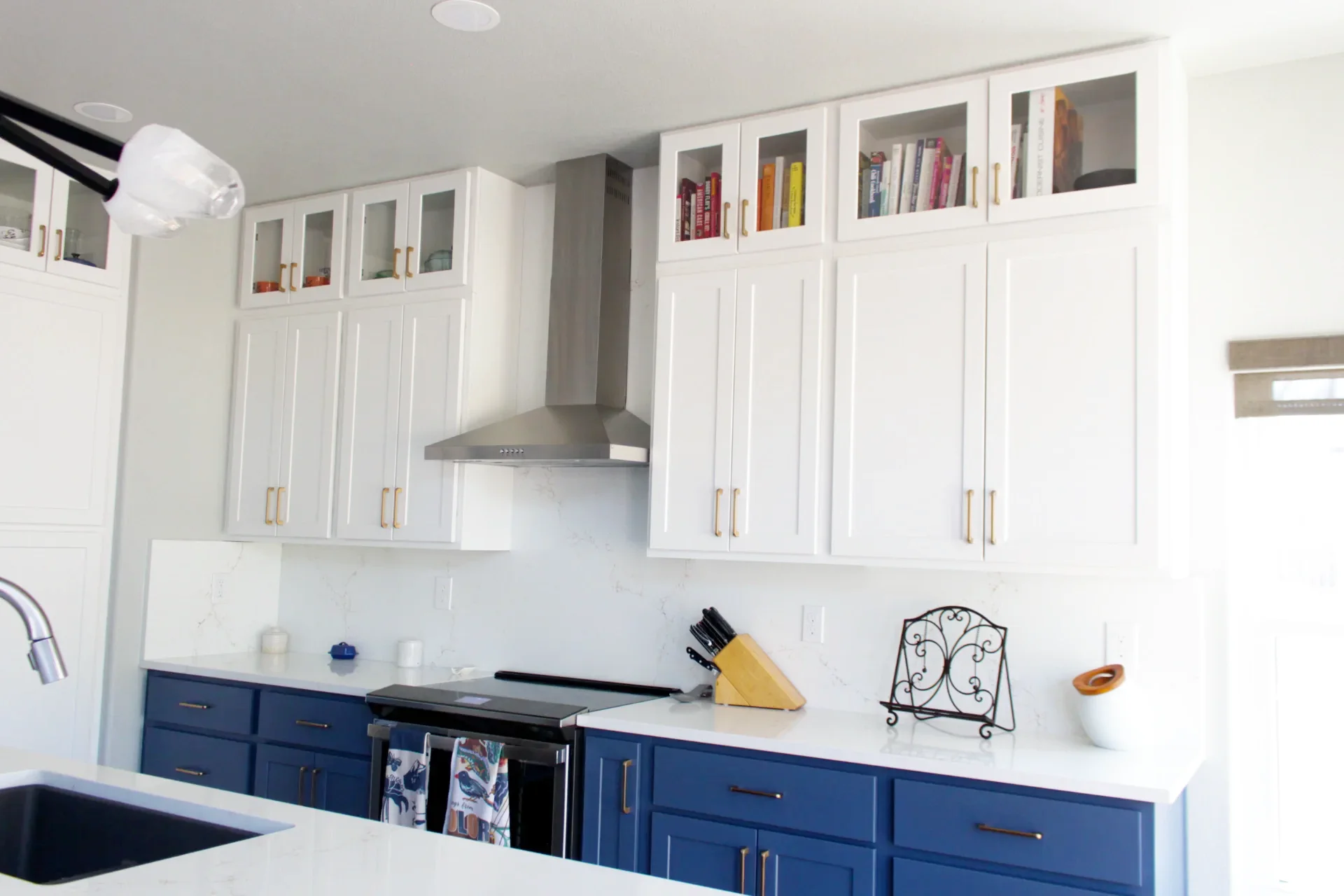
The same cabinet color might appear in a nearby built-in. A metal finish might repeat in the dining room lighting. Wood tones can carry from the kitchen into surrounding furniture.
These connections make an open-concept home feel more cohesive.
The Best Kitchen Design Starts With How You Live
It's easy to get caught up in kitchen trends when you're planning a remodel.
You start saving inspiration photos. You notice cabinet colors. You compare countertops. You find a backsplash you love.
And suddenly you're trying to recreate someone else's kitchen.
Instead, start with your own.
Think about your morning routine.
Where do you make coffee?
Think about dinner.
How many people are usually in the kitchen?
Think about entertaining.
Where do your guests naturally gather?
Think about storage.
What do you have too much of?
Think about cleanup.
What part of your current kitchen makes you crazy?
These questions can tell you more about your ideal kitchen design than a dozen inspiration boards.
The most successful kitchen remodels combine aesthetics with function. They look beautiful in photographs, but they also make everyday life easier.
And that's where the small details matter most.
A well-placed drawer. A properly sized island. A backsplash that ties the room together. Lighting exactly where you need it. Hardware that feels right in your hand. An outlet where you actually use one.
None of these decisions is likely to be the first thing someone notices when they walk into your new kitchen.
But together, they create a kitchen that feels effortless.
Planning a Kitchen Remodel?
A kitchen renovation is a major investment, and the best time to think about the details is before construction begins.
Start by considering how you use your kitchen today, what isn't working, and what you wish you had. Then build your kitchen layout, cabinetry, lighting, materials, and storage around those needs.
The result doesn't have to follow every kitchen trend or look like a showroom.
It should look and feel like your kitchen.
Because sometimes, the difference between a good kitchen and a great one isn't a dramatic design feature.
It's getting the little things right.