A basement can be so much more than extra storage space. With the right design, an unfinished or underused lower level can become one of the most functional and inviting areas of your home. And one feature that can completely change the way you use the space? A basement wet bar.
Whether you want a dedicated entertaining area, a cozy spot for weekend drinks, a convenient beverage station for movie nights, or simply a place to keep snacks and refreshments organized, a wet bar can add both function and personality to a basement remodel.
Unlike a dry bar, a wet bar includes a water supply and sink, making it much easier to rinse glasses, fill water bottles, clean up, or prepare drinks without having to walk upstairs to the kitchen. Add cabinetry, countertops, refrigeration, lighting, and thoughtful storage, and you can create a compact bar that feels like a fully designed part of your home.
The best part? A basement wet bar does not have to take up a huge amount of space. A simple wall-mounted setup can work beautifully in a smaller basement, while a larger lower level may have room for an expansive entertaining area with an island, beverage refrigerator, wine storage, and custom cabinetry.
If you're planning a basement remodel, here are 10 basement wet bar ideas to inspire your design.
1. Create a Moody, Sophisticated Wet Bar
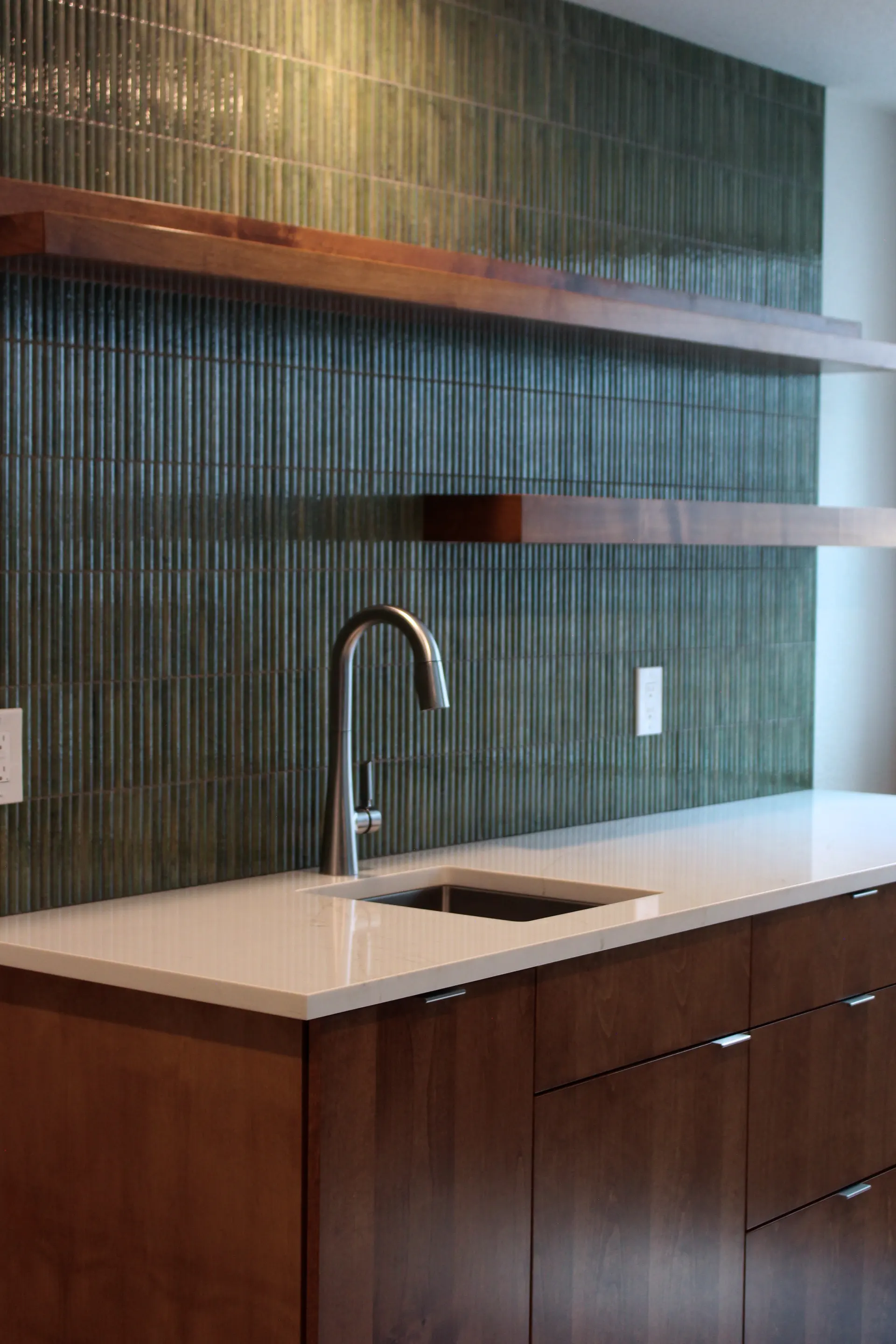
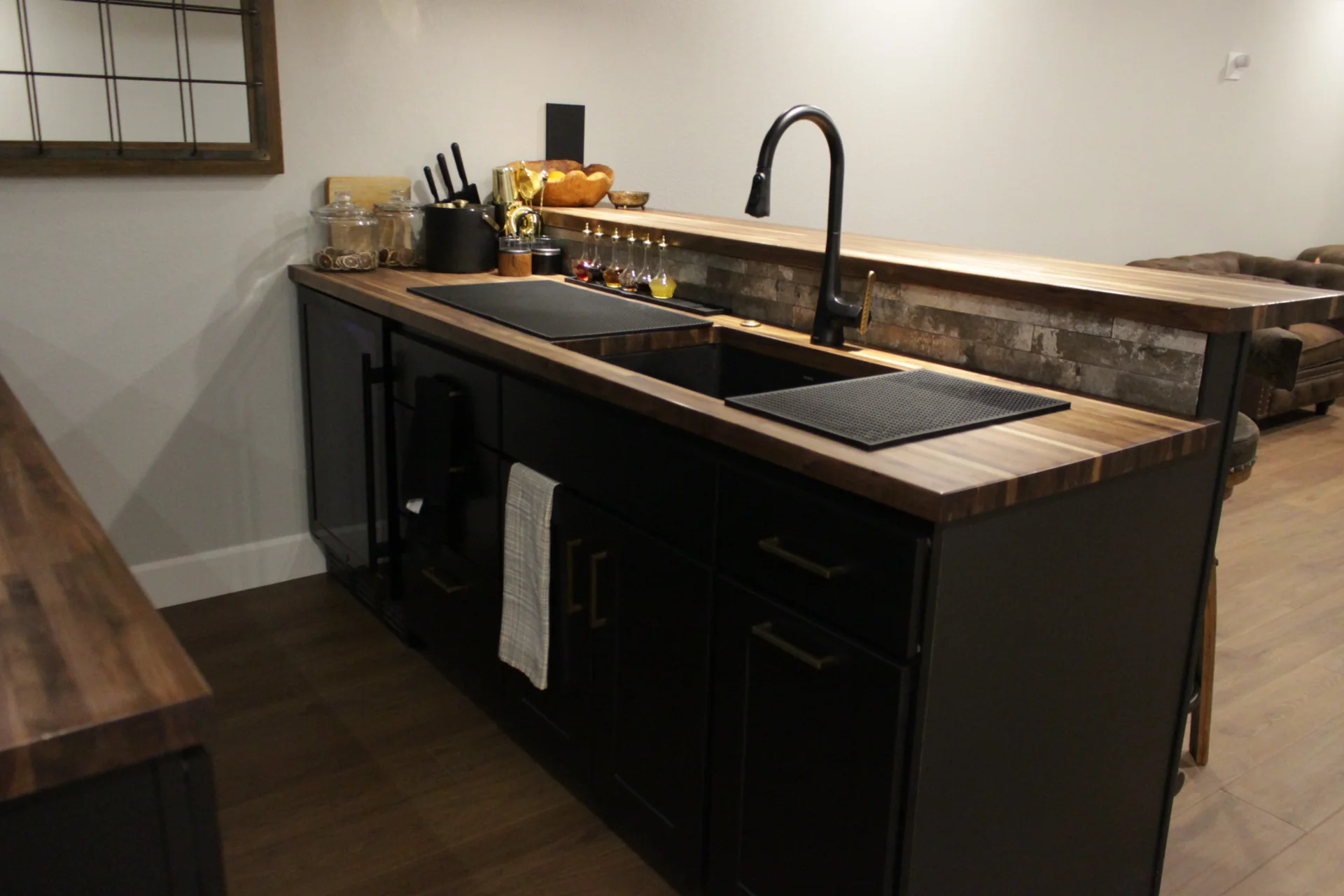
Basements naturally lend themselves to darker, more dramatic design choices. Because many basements have limited natural light, embracing the darker atmosphere rather than fighting it can create a sophisticated and intentional space.
Consider pairing deep-colored cabinetry with a contrasting countertop and warm lighting. Charcoal, espresso, deep green, navy, and other rich cabinet colors can give the wet bar a more intimate feel, particularly when paired with natural wood or stone-inspired materials.
A dark backsplash can add even more depth. Large-format tile, marble-look porcelain, textured tile, or even a dramatic slab backsplash can become a focal point behind the bar.
Lighting is especially important in a darker wet bar. Rather than relying on a single overhead fixture, layer several types of lighting:
- Under-cabinet lighting
- Pendant lights
- Wall sconces
- Recessed ceiling lights
- Interior cabinet lighting
Warm lighting can keep the space from feeling cold or overly dark while highlighting the materials and architectural details you've chosen.
For a basement designed around entertaining, a moody wet bar can feel more like a destination than an extension of the kitchen.
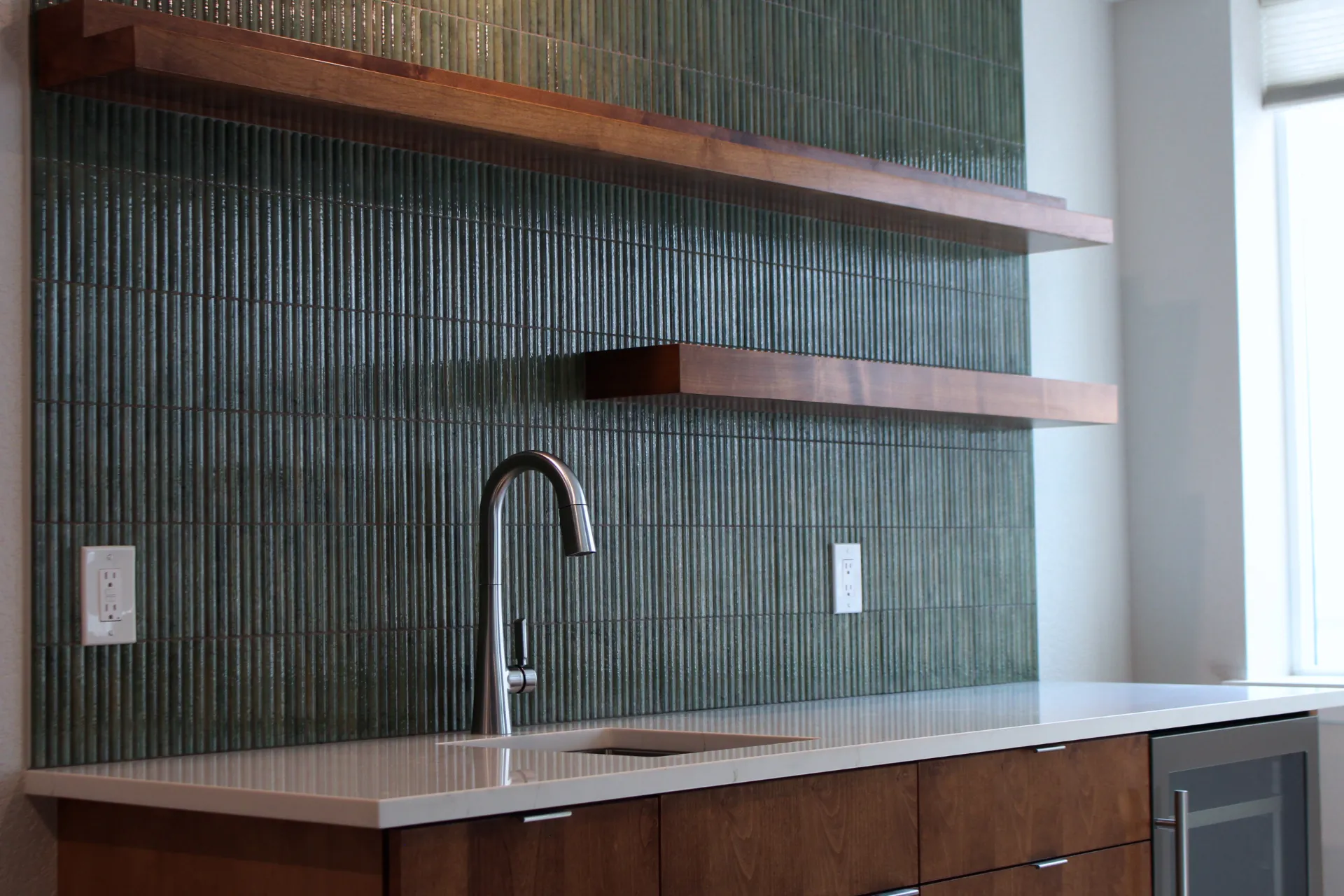
2. Make the Backsplash the Star
If you want your basement wet bar to make an impression, the backsplash is a great place to take a design risk.
Because a wet bar is typically smaller than a full kitchen, you can often use a more distinctive material without overwhelming the room. A unique backsplash can establish the entire design direction while allowing the rest of the bar to remain relatively simple.
Consider:
- Handmade-look ceramic tile
- Patterned tile
- Fluted or textured tile
- Marble or quartz slabs
- Stone-look porcelain
- Classic subway tile
- Geometric tile
- Small-format mosaic tile
For an especially high-end look, consider extending the countertop material vertically up the wall as a slab backsplash. This creates a seamless appearance and can make a compact wet bar feel more custom.
You can also use the backsplash as an opportunity to bring in color. If your basement has neutral flooring, furniture, and walls, a green, blue, burgundy, or earthy-toned tile can give the space personality without requiring a major commitment throughout the entire room.
The key is to choose a backsplash that works with the cabinetry and countertop rather than treating each material as a separate design decision.
3. Add a Beverage Refrigerator
A refrigerator can make a basement wet bar significantly more functional.
Instead of constantly walking upstairs for drinks, you can keep everything you need right at the bar. A compact beverage refrigerator can be installed underneath the countertop and used for bottled or canned beverages, mixers, sparkling water, or other refreshments.
Depending on how you use your basement, you might also consider:
- A wine refrigerator
- An under-counter refrigerator
- A beverage cooler
- An ice maker
- A combination refrigerator and freezer
For families, the wet bar does not have to be exclusively about cocktails or wine. The refrigerator can be stocked with soda, water, sports drinks, snacks, or anything else your household regularly reaches for.
If you have children, guests, or family members who don't drink alcohol, designing the refrigerator around a variety of beverages makes the wet bar useful for more than adult entertaining.
When planning the layout, place the refrigerator somewhere that is easy to access without interfering with the sink or primary workspace. In a larger wet bar, you may even be able to create separate zones for preparation, refrigeration, and storage.
4. Design a Wet Bar Around a Basement Entertainment Area
A wet bar doesn't have to exist on its own.
If your basement includes a television area, home theater, game room, pool table, or lounge, consider designing the wet bar as part of the overall entertainment space.
This can make the basement feel more cohesive and give guests an easy place to grab drinks without interrupting the rest of the room.
For example, a basement entertainment area might include:
TV lounge + wet bar + game area + bathroom
This type of layout is particularly useful for homeowners who frequently host friends and family.
You can also use the wet bar to create a natural transition between different areas of the basement. A bar positioned between a lounge and game area can visually connect the two spaces while providing a practical purpose.
If you're remodeling the entire basement, think about the bar early in the planning process. Plumbing, electrical connections, lighting, cabinetry, and appliances are much easier to coordinate when they're considered as part of the overall floor plan rather than added at the end.
5. Keep It Small With a One-Wall Wet Bar
You don't need an enormous basement to have a beautiful wet bar.
A one-wall wet bar can be an excellent solution for smaller basements or spaces where you want to preserve as much open floor area as possible.
A compact layout might include:
- Base cabinets
- A small sink
- A countertop
- Upper cabinets or open shelving
- An under-counter refrigerator
- A backsplash
- Decorative lighting
Even a relatively short wall can accommodate the essentials.
One-wall bars are also a great option when you want the wet bar to blend into the surrounding room. Matching the cabinetry to another built-in feature, such as a media console or storage cabinets, can make the entire basement feel intentionally designed.
For a smaller footprint, prioritize the features you will actually use. You may not need a wine refrigerator, ice maker, extensive glassware storage, and multiple appliance zones.
A well-designed small wet bar can be just as functional as a large one.
6. Mix Closed Cabinets With Open Shelving
Storage is one of the easiest ways to make a wet bar more functional, but that doesn't mean everything needs to be hidden behind cabinet doors.
Combining closed cabinetry with open shelving can give you the best of both worlds.
Use lower cabinets and drawers to store less attractive essentials such as:
- Cleaning supplies
- Extra beverages
- Paper goods
- Bar tools
- Appliances
- Serving pieces
Then use open shelving to display items you actually want to see.
Glassware, cocktail books, decorative bottles, artwork, plants, and serving dishes can all become part of the design.
Open shelving can also make a basement wet bar feel less visually heavy. This can be particularly helpful if you're working with dark cabinetry or a smaller space.
However, there is a practical consideration: open shelves require organization. If you don't want to constantly style and rearrange your shelves, incorporate more closed storage.
The goal isn't to create a showroom. It's to create a bar that works for your household.
7. Go for a Classic Look With Timeless Materials
Trendy materials can be fun, but a wet bar is an investment that you may want to enjoy for many years. If you're looking for a design that will age well, consider a classic combination of cabinetry, tile, and natural or natural-looking materials.
A timeless basement wet bar might include:
- Shaker-style cabinetry
- Neutral quartz countertops
- Classic subway tile
- Brass or polished chrome hardware
- Simple pendant lights
- Natural wood accents
This doesn't mean the design has to be boring.
You can introduce personality through the backsplash, hardware, lighting, artwork, or styling while keeping the major elements relatively timeless.
For example, a neutral cabinet color paired with an interesting backsplash can give you flexibility if your style changes later.
Another approach is to choose materials that mimic natural materials without requiring the same level of maintenance. Quartz and porcelain options can provide the look of marble or stone while offering practical benefits for a busy household.
When selecting materials, think about how the bar will actually be used. A basement wet bar is a working space, so durability and maintenance should be part of the design conversation.
8. Add a Statement Countertop
If the backsplash isn't your preferred place to make a statement, let the countertop do the work.
A dramatic countertop can turn a relatively simple wet bar into a major focal point.
Depending on your style, consider:
- Veined quartz
- Marble
- Quartzite
- Granite
- Butcher block
- Concrete
- Soapstone
- Porcelain slab
A highly patterned stone or stone-look surface can pair beautifully with simple cabinetry. Alternatively, a quieter countertop can balance a bold backsplash.
If you're working with a smaller wet bar, you may actually have more flexibility with your countertop selection because you don't need a large amount of material.
This is one reason smaller spaces can be fun to design. A material that might feel overwhelming or expensive throughout a full kitchen could become a manageable feature when used on a compact bar.
Don't forget the edge detail, either. A simple eased edge creates a clean, modern appearance, while more decorative edges can contribute to a traditional or classic design.
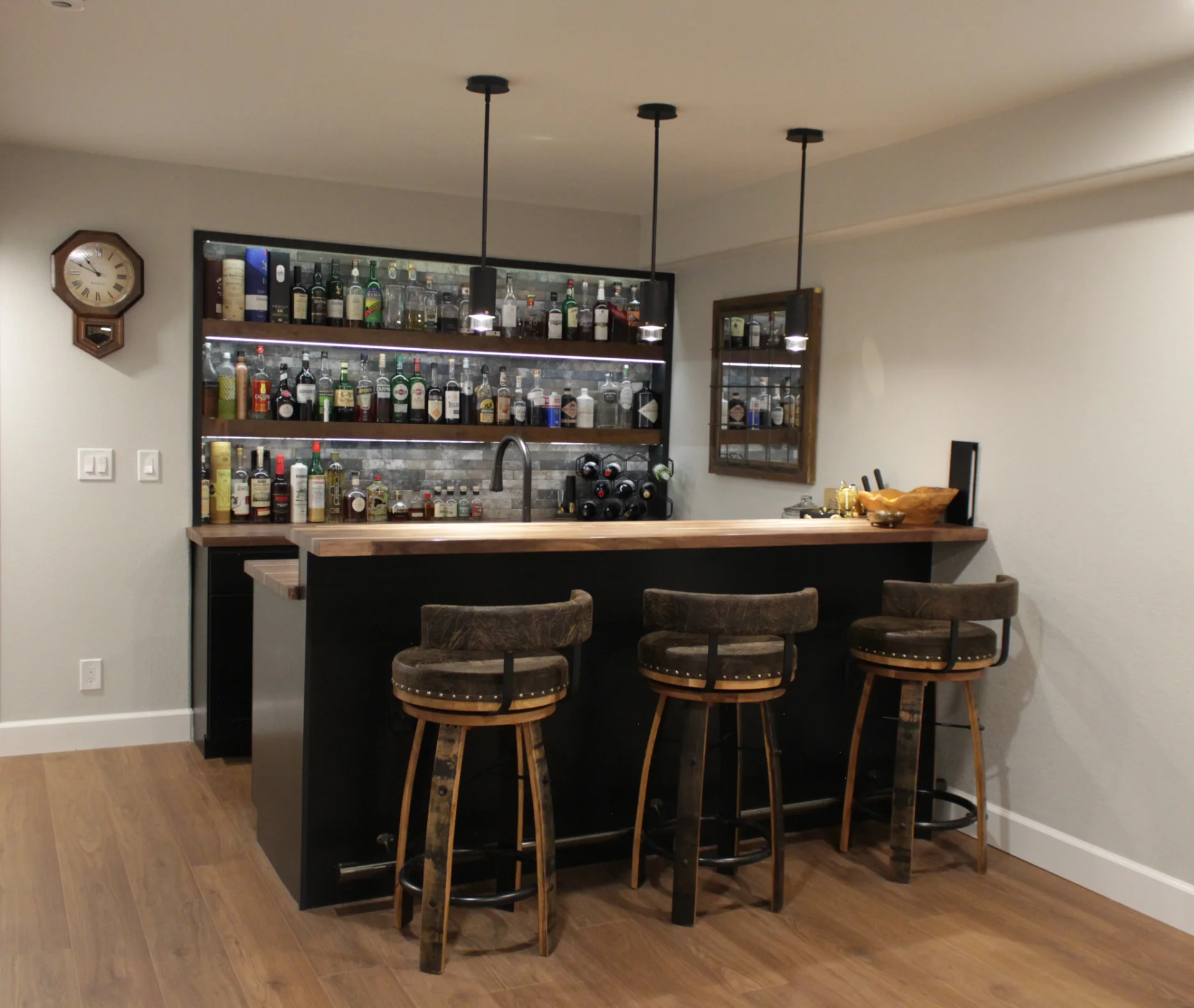
9. Create a Custom Bar With Built-In Details
If you want your basement wet bar to feel truly integrated into the home, custom cabinetry and built-in details can make a major difference.
Rather than simply placing a few cabinets along a wall, think about how the bar can be designed specifically for your space.
Custom features might include:
- Built-in wine storage
- Dedicated glassware racks
- Appliance garages
- Pull-out trash and recycling
- Deep drawers for bottles
- Adjustable shelving
- Integrated lighting
- Hidden outlets
- Custom refrigerator panels
- Display cabinets
- A dedicated coffee station
You can also incorporate architectural details around the bar, such as decorative molding, wood accents, or a ceiling treatment.
If your basement has an unusual wall, a structural column, or an awkward corner, custom cabinetry can help turn that challenge into an advantage.
For example, a narrow alcove that would otherwise be difficult to furnish could become the perfect location for a compact wet bar.
This is where thoughtful space planning becomes especially valuable. The goal isn't simply to fit cabinets into the available area. It's to make the bar feel like it belongs there.
10. Give Your Wet Bar Its Own Personality
Perhaps the most important basement wet bar idea is also the simplest: don't be afraid to make it yours.
A basement is often a more relaxed part of the home, which means you can experiment with design choices that might feel too bold for your kitchen.
Your wet bar could have a completely different personality from the rest of your house.
Maybe you want something vintage-inspired with dark wood and antique-style hardware. Maybe you prefer a clean, modern design with flat-panel cabinets and minimal hardware. Or perhaps your basement is all about entertaining and you want the bar to feel like your own private lounge.
Think about what you want people to feel when they walk into the space.
Do you want it to feel:
Warm and inviting?
Choose natural wood, warm lighting, and earthy colors.
Modern and sophisticated?
Try streamlined cabinetry, a dramatic countertop, and minimal hardware.
Classic and timeless?
Consider shaker cabinetry, traditional tile, and understated fixtures.
Playful and unexpected?
Use a colorful backsplash, statement lighting, or vintage-inspired details.
Luxurious?
Consider full-height stone, custom cabinetry, integrated appliances, and layered lighting.
The design doesn't have to follow a specific trend. It should support the way you actually use the basement.
What Should You Include in a Basement Wet Bar?
Before you start choosing finishes, make a list of the features you actually need.
At minimum, a wet bar typically includes a sink, faucet, countertop, and cabinetry. From there, the possibilities are almost endless.
Sink and Faucet
A compact sink is usually sufficient for a basement wet bar. You don't need the same size sink you would use in a kitchen.
Consider how you'll use it. Will you primarily rinse glasses? Fill water bottles? Wash cocktail shakers? If so, a smaller sink may be all you need.
A stylish faucet can also serve as a design feature, particularly when paired with a statement backsplash.
Countertop
The countertop provides the primary work surface, so durability matters.
Look for a material that can handle spills, frequent cleaning, and everyday use. The right choice will depend on your budget, style, and maintenance preferences.
Cabinetry
Cabinets provide storage while establishing much of the visual character of the wet bar.
Drawers are especially useful for bar tools and smaller accessories, while larger cabinets can store serving pieces and extra supplies.
Refrigerator
An under-counter refrigerator is one of the most convenient additions to a basement wet bar. It keeps drinks cold and reduces trips upstairs.
Lighting
Good lighting can completely change the atmosphere of a basement.
Consider a combination of task lighting and decorative lighting rather than relying on a single overhead fixture.
Electrical
Don't forget outlets.
You'll want enough electrical access for refrigerators, ice makers, coffee machines, blenders, lighting, and other appliances you may eventually add.
Planning this before installation is much easier than trying to add outlets later.
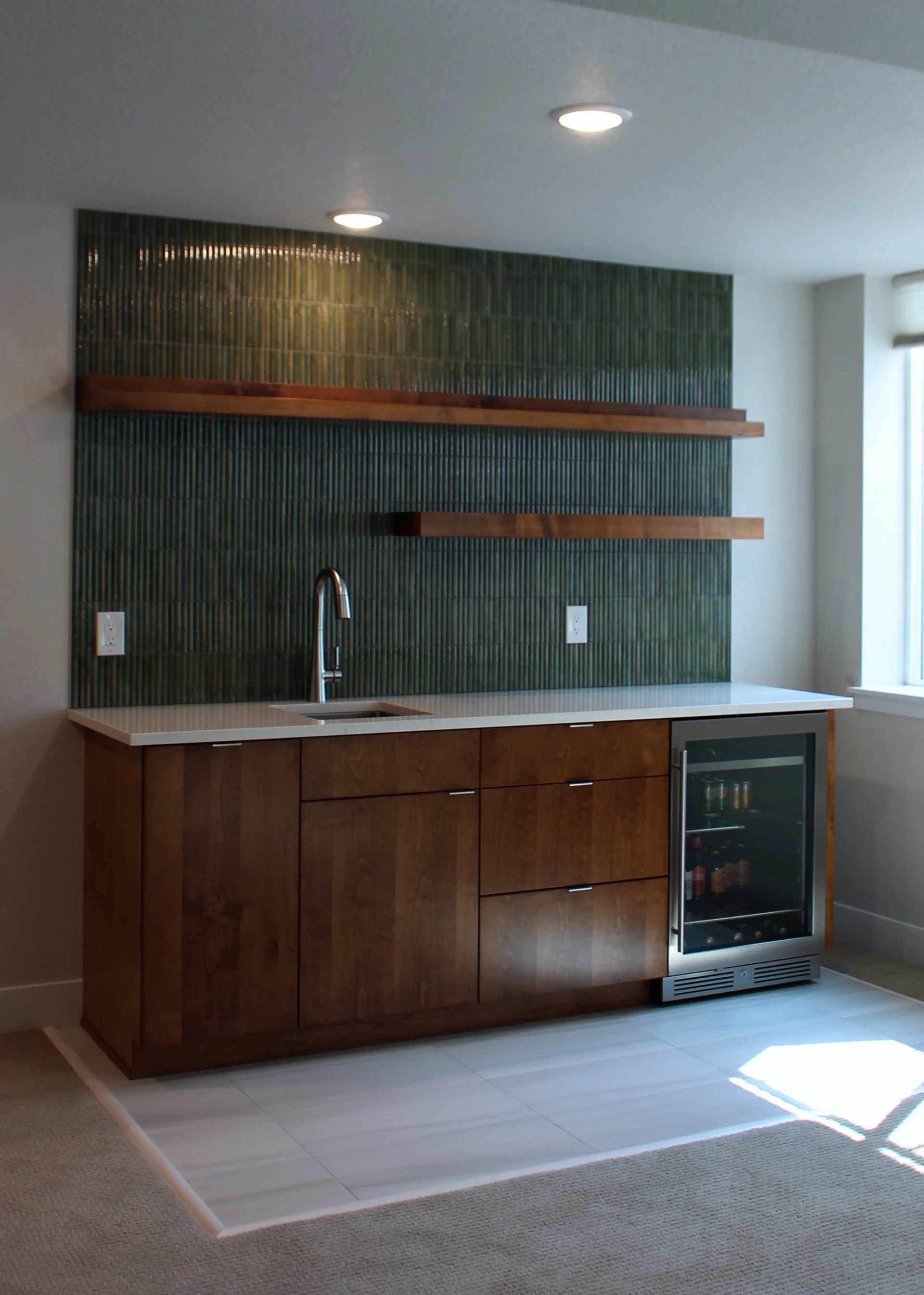
How Much Space Do You Need for a Basement Wet Bar?
The amount of space required depends heavily on the type of bar you want.
A compact one-wall wet bar can fit into a relatively small area, while a larger bar with seating or an island will require significantly more room.
Before finalizing your design, consider:
- How much counter space you want
- Whether you need seating
- Appliance dimensions
- Cabinet depth
- Door and drawer clearances
- Walking paths
- Sink and plumbing locations
- Electrical requirements
Don't forget about traffic flow.
A beautiful wet bar won't function well if guests constantly have to squeeze around open refrigerator doors or bar stools to get through the basement.
If your basement is also used for entertaining, think about how people will naturally move through the room. The bar should be convenient without becoming an obstacle.
Don't Forget the Rest of the Basement
A wet bar can be a major feature, but it works best when it feels connected to the rest of the basement.
Consider coordinating the bar with other finishes throughout the space.
For example, you could repeat the same cabinet color in a media console, use the same flooring throughout the basement, or bring the bar's hardware finish into the lighting and plumbing fixtures.
You don't have to match everything exactly.
In fact, a little contrast can make the space more interesting. The goal is simply to create a visual connection between the different areas.
If you're remodeling the entire basement, this is also the time to consider other features such as:
- A home theater
- Fireplace
- Game room
- Exercise space
- Guest bedroom
- Bathroom
- Office
- Storage
- Entertainment area
A wet bar can become the centerpiece that ties several of these spaces together.
Ready to Build Your Basement Wet Bar?
A basement wet bar can be as simple or elaborate as you want it to be. From a compact one-wall setup to a fully customized entertaining space, the possibilities are almost endless.
The key is to start with how you want to use the space and then build the design around that.
Think about the drinks and food you'll store, how many people you'll typically entertain, how much storage you need, and what design style fits the rest of your home. From there, you can choose the cabinetry, countertops, backsplash, plumbing fixtures, appliances, lighting, and finishing details that bring the space together.
And don't overlook the practical side of the project. Plumbing, electrical work, cabinetry, ventilation, and layout all need to work together for the finished bar to function properly.
Whether your goal is a sophisticated entertaining space, a cozy family hangout, or simply a convenient place to keep drinks and snacks downstairs, a thoughtfully designed wet bar can turn an underused basement into a space you'll actually want to spend time in.
Thinking about adding a wet bar to your basement? Start with the space you have, the way you live, and the features you'll actually use. The best wet bar isn't necessarily the biggest one. It's the one that makes your basement work better for you.